
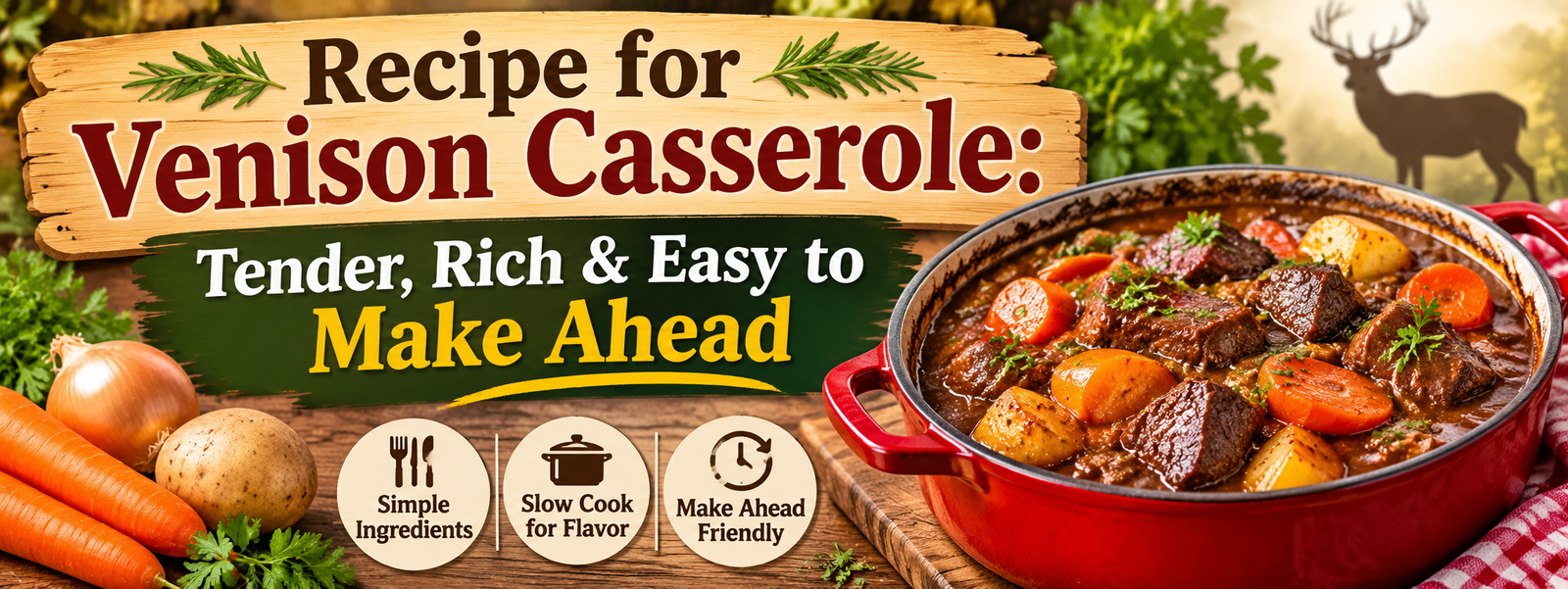
A warming casserole is one of the most satisfying meals to prepare when you want something hearty, flavorful, and comforting. This Recipe for Venison Casserole combines tender pieces of deer meat with carrots, potatoes, onions, herbs, and a rich savory gravy. Slow cooking allows the ingredients to develop deep flavor while helping tougher venison cuts become wonderfully tender.
Venison has a naturally distinctive taste and is often leaner than beef. With the right preparation, it makes an excellent choice for a traditional casserole. Browning the meat first, adding aromatic vegetables, and cooking everything gently in stock creates a delicious meal that is ideal for family dinners, cold evenings, or weekend cooking.
Another advantage is that this dish can be prepared ahead of time. Make it the day before, refrigerate it safely, and reheat it when you need a convenient homemade meal. Here is everything you need to make a rich venison casserole successfully.
Why You’ll Love This Recipe for Venison Casserole
Venison casserole is a practical way to turn a relatively inexpensive stewing cut into a satisfying meal. Instead of cooking the meat quickly, this recipe uses gentle oven heat and a flavorful cooking liquid.
The result is a hearty dish with several appealing qualities:
- Rich flavor: Onions, garlic, herbs, stock, and tomato paste create a deep savory gravy.
- Tender meat: Slow cooking gives tougher venison cuts time to soften.
- Simple ingredients: Most of the vegetables and seasonings are easy to find.
- Make-ahead convenience: The casserole can be prepared in advance and reheated.
- Flexible serving options: Enjoy it with mashed potatoes, bread, rice, or seasonal vegetables.
Ingredients for a Rich Venison Casserole
This recipe serves approximately four people. Choose diced venison suitable for stewing, such as shoulder or another slow-cooking cut.
Main Ingredients
- 750 g diced venison
- 2 tablespoons vegetable oil
- 1 large onion, chopped
- 2 carrots, peeled and sliced
- 2 celery sticks, chopped
- 2 garlic cloves, minced
- 2 tablespoons plain flour
- 1 tablespoon tomato paste
- 500 ml beef or game stock
- 150 ml dry red wine or additional stock
- 2 medium potatoes, cut into chunks
- 1 teaspoon dried thyme
- 1 bay leaf
- Salt and black pepper to taste
- 150 g mushrooms, sliced
- 1 tablespoon Worcestershire sauce
Optional: Add a small handful of chopped fresh parsley before serving for freshness and color.
Choosing the Best Venison Cut
The cut of meat makes a difference to the final texture. Shoulder and other working-muscle cuts are suitable for slow cooking because their connective tissue gradually softens during a long, moist cooking process.
Lean steaks or tender backstrap are better suited to quicker cooking methods. Using them in a long casserole may produce a drier result.
If your venison is frozen, thaw it safely in the refrigerator before cooking. Pat the meat dry with kitchen paper before browning to help it develop a good surface color.
How to Make the Recipe for Venison Casserole
<text weight=”medium” color=”default” size=”sm”>Preparation time: 25 minutes</text>
<text weight=”medium” color=”default” size=”sm”>Cooking time: Approximately 2½–3 hours</text>
<text weight=”medium” color=”default” size=”sm”>Servings: 4</text>
<text weight=”medium” color=”default” size=”sm”>Oven temperature: 160°C / 325°F</text>
Step 1: Prepare the Venison
Cut the venison into evenly sized pieces if it is not already diced. Remove any tough connective tissue or unwanted silver skin.
Pat the pieces dry and season them lightly with salt and black pepper. Keeping the pieces similar in size helps them cook more evenly.
Step 2: Brown the Meat
Heat the vegetable oil in a large, oven-safe casserole dish or Dutch oven over medium-high heat.
Add the venison in small batches. Avoid overcrowding the pan because too much meat at once can release moisture and prevent proper browning.
Turn the pieces until they develop a rich brown surface. Transfer them to a plate and repeat with the remaining meat.
This step is worth the extra time. Browning creates flavorful browned bits in the pan that contribute to the finished gravy.
Step 3: Cook the Vegetables
Add the chopped onion, carrots, and celery to the same pan. Cook for approximately five minutes, stirring occasionally.
Add the garlic and mushrooms, then cook for another two minutes. The vegetables should begin to soften and release their aroma.
Stir in the tomato paste and cook briefly to develop its flavor.
Step 4: Create the Gravy
Sprinkle the flour over the vegetables and stir until everything is lightly coated.
Gradually pour in the red wine, if using, while scraping the bottom of the pan to release the browned bits. Allow it to bubble briefly.
Add the stock and Worcestershire sauce, stirring until the mixture is smooth. The liquid should become slightly thicker as it heats.
If you prefer not to cook with wine, simply replace it with an equal amount of additional stock.
Step 5: Combine the Ingredients
Return the browned venison to the casserole dish. Add the potatoes, dried thyme, and bay leaf.
Stir gently so the meat and vegetables are distributed throughout the cooking liquid.
The liquid should mostly cover the meat and vegetables. If necessary, add a little more stock, but avoid making the casserole excessively watery.
Step 6: Slow Cook Until Tender
Cover the casserole with a lid and place it in a preheated oven at 160°C (325°F).
Cook for approximately 2½–3 hours, checking the meat after two hours. Cooking time varies according to the cut, size of the pieces, and oven.
The venison should become tender when tested with a fork. The vegetables should be soft without completely losing their shape.
For food safety, use a food thermometer and ensure the casserole reaches at least 74°C (165°F) throughout. This is the recommended temperature for casseroles containing meat. <Cite refs={[“turn549801search2″,”turn549801search6”]}/>
Step 7: Adjust and Serve
Remove the bay leaf and taste the gravy. Add more salt or black pepper if needed.
If the sauce is thinner than you prefer, simmer the casserole uncovered on the stovetop for a few minutes, stirring carefully. Alternatively, use a small amount of flour mixed with cold water to thicken it.
Finish with fresh parsley and serve while hot.
Venison Casserole Cooking Guide
The following table provides a quick reference for preparing the dish.
| Recipe detail | Information |
| Preparation time | 25 minutes |
| Cooking time | 2½–3 hours |
| Servings | 4 |
| Oven temperature | 160°C / 325°F |
| Main meat | 750 g diced venison |
| Vegetables | Carrots, onion, celery, potatoes, mushrooms |
| Cooking method | Covered, slow oven cooking |
| Food-safety temperature | 74°C / 165°F throughout |
Cooking times are estimates. Always check that the meat is tender and the casserole has reached a safe internal temperature.
How to Make Venison Casserole Ahead of Time
One of the best features of this recipe is that you can prepare it before you need it.
Prepare It the Day Before
Cook the casserole completely, then cool it promptly. Transfer it into shallow containers if necessary to help it cool more quickly.
Refrigerate within two hours of cooking, keeping the food covered. For best quality, use refrigerated leftovers within three to four days.
When ready to serve, reheat until the entire casserole reaches 74°C (165°F). Stir during reheating to distribute the heat evenly. <Cite refs={[“turn549801search6″,”turn549801search5”]}/>
Can You Freeze Venison Casserole?
Yes. Once cooled, place the casserole into freezer-safe containers and label them with the preparation date.
Leave a little room at the top because the contents may expand during freezing. Thaw frozen portions in the refrigerator before reheating.
Potatoes can sometimes become softer after freezing and thawing. If texture is important, you can prepare the casserole without potatoes and cook fresh potatoes separately when serving.
Tips for Making Venison Extra Tender
Venison is naturally lean, so a little care during preparation can make a noticeable difference.
Use a Suitable Cut
Choose shoulder or another cut intended for slow cooking. These cuts generally benefit from long, gentle heat.
Avoid Rushing the Cooking Process
If the meat still feels firm, it may need more time. Continue cooking gently and check it periodically rather than increasing the oven temperature dramatically.
Keep Enough Cooking Liquid
The stock and other liquids help create a moist cooking environment. Check the casserole during cooking and add a little stock if the liquid level becomes too low.
Balance the Stronger Game Flavor
Onions, garlic, thyme, mushrooms, and tomato paste provide savory flavors that complement venison. A little red wine can add depth, but it is optional.
What to Serve With Venison Casserole
The rich gravy makes this dish especially enjoyable with simple sides that absorb its flavor.
Creamy mashed potatoes are a traditional choice. Crusty bread is also useful for soaking up the sauce.
For a lighter plate, serve the casserole with steamed green beans, roasted Brussels sprouts, or seasonal greens. Buttered cabbage and roasted root vegetables are other comforting options.
If you are serving guests, a simple green salad can provide a fresh contrast to the slow-cooked meat and gravy.
Common Mistakes to Avoid
A few small adjustments can make a big difference to the finished casserole.
First, avoid overcrowding the pan when browning the meat. Work in batches to achieve better color.
Second, do not choose a very tender steak cut for a long cooking process. It may become dry rather than developing the soft texture expected from a casserole.
Third, avoid adding too much liquid at the beginning. A watery sauce can dilute the flavor and take longer to reduce.
Finally, do not judge tenderness by cooking time alone. Different venison cuts require different amounts of time to soften.
Final Thoughts
This Recipe for Venison Casserole is a wonderful way to turn diced venison into a rich, satisfying homemade meal. Slow cooking brings together tender meat, vegetables, herbs, and savory gravy to create a comforting dish that works well for family dinners and special gatherings.
Serve it with creamy mashed potatoes, fresh vegetables, or warm crusty bread for a complete and memorable meal.
Frequently Asked Questions
1. How long should venison casserole cook?
Allow approximately 2½–3 hours in an oven at 160°C (325°F). The exact time depends on the meat cut and size. Continue cooking until tender and check that the casserole reaches 74°C (165°F) throughout.
2. How do you stop venison from becoming tough?
Use a suitable slow-cooking cut, brown it in batches, and cook gently with enough liquid. If the meat remains firm, it may need additional cooking time.
3. Can I make venison casserole without red wine?
Yes. Replace the wine with additional beef or game stock. The casserole will still develop a rich flavor from the browned meat, vegetables, herbs, and tomato paste.
4. Can venison casserole be made in advance?
Yes. Cook it completely, cool it promptly, and refrigerate it in covered containers. Reheat thoroughly to 74°C (165°F) before serving.
5. Can I freeze homemade venison casserole?
Yes. Cool it, portion it into freezer-safe containers, and freeze it. Thaw in the refrigerator and reheat until piping hot throughout, reaching 74°C (165°F).
1 thought on “Recipe for Venison Casserole: Tender Rich & Easy to Make Ahead ”