
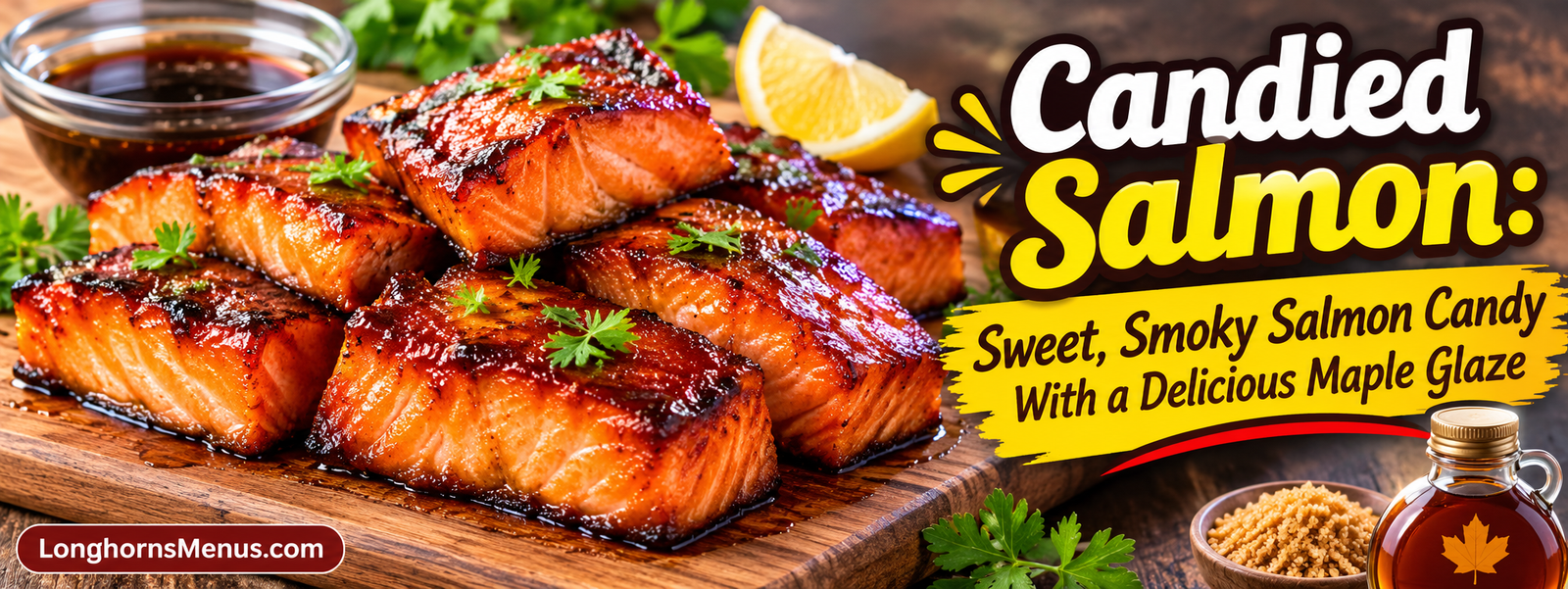
Candied Salmon is a delicious seafood treat that combines the natural richness of salmon with a sweet, smoky, and slightly savory coating. Prepared with fresh salmon, maple syrup, brown sugar, and carefully selected seasonings, this flavorful dish develops a glossy glaze and a tender texture that makes every bite memorable. Whether served as an appetizer, a party snack, or part of a special meal, salmon candy offers a wonderful balance of sweetness and smoky flavor.
One of the best things about making Candied Salmon at home is that you can adjust the sweetness, smokiness, and seasoning according to your taste. The preparation involves marinating salmon pieces in a flavorful mixture before slowly smoking or cooking them until the glaze becomes beautifully caramelized.
This guide covers everything you need to prepare homemade salmon candy, including ingredients, preparation techniques, cooking temperatures, storage advice, serving suggestions, and helpful tips for achieving excellent results.
What Makes Candied Salmon So Special?
Candied Salmon is a preparation in which salmon is coated with a sweet marinade, often featuring maple syrup, brown sugar, and smoky seasonings. The fish absorbs these flavors before being cooked or smoked to create a rich, slightly chewy exterior and a moist interior.
The combination of sweet and savory ingredients gives this dish its distinctive character. Maple syrup adds a natural sweetness, while smoked paprika or wood smoke creates depth. A little salt balances the glaze and helps bring all the flavors together.
Unlike ordinary baked salmon, salmon candy is generally prepared in smaller pieces, allowing the glaze to cover more surface area. This creates a concentrated flavor in every bite.
Ingredients for Homemade Candied Salmon
You do not need complicated ingredients to make delicious salmon candy. Most of the ingredients are easy to find at grocery stores.
Main Ingredients
| Ingredient | Amount | Purpose |
| Fresh salmon fillet | 2 pounds | Main ingredient |
| Pure maple syrup | ½ cup | Sweet glaze |
| Brown sugar | ¼ cup | Rich sweetness |
| Soy sauce | ¼ cup | Savory flavor |
| Smoked paprika | 1 teaspoon | Smoky taste |
| Garlic powder | ½ teaspoon | Added depth |
| Black pepper | ½ teaspoon | Mild heat |
| Lemon juice | 1 tablespoon | Brightness |
| Salt | To taste | Flavor balance |
For the best results, choose fresh salmon with firm flesh and a pleasant, mild smell. Skinless fillets are convenient, although skin-on salmon can also be used.
Optional Ingredients for Extra Flavor
You can customize your maple glaze with a few additional ingredients:
- Red pepper flakes for a gentle spicy kick.
- Dijon mustard for a slightly tangy finish.
- Honey for extra sweetness.
- Fresh ginger for a warm, aromatic flavor.
- A small amount of liquid smoke if you are using an oven instead of a smoker.
These additions are optional. Start with small quantities so they do not overpower the natural flavor of the salmon.
How to Make Candied Salmon Step by Step
Making homemade Candied Salmon is straightforward when you prepare the marinade properly and control the cooking temperature. Follow these steps for a delicious result.
Step 1: Prepare the Salmon
Begin by checking the salmon fillets for any remaining pin bones. Remove them carefully with clean tweezers.
Cut the salmon into evenly sized strips or bite-sized cubes. Pieces approximately 1 to 1½ inches wide work well because they are easy to coat and serve.
Pat the salmon dry with paper towels. Removing excess moisture helps the marinade cling to the fish.
Step 2: Prepare the Maple Marinade
In a medium-sized bowl, combine maple syrup, brown sugar, soy sauce, smoked paprika, garlic powder, black pepper, and lemon juice.
Whisk everything until the brown sugar begins to dissolve and the mixture becomes smooth.
Taste the marinade and adjust it if necessary. Add a little more maple syrup for sweetness or a small amount of lemon juice for brightness.
Step 3: Marinate the Salmon
Place the salmon pieces in a shallow glass or food-safe container. Pour the maple mixture over the fish, making sure every piece is coated.
Cover the container and refrigerate for approximately 4–8 hours.
For deeper flavor, you can leave the salmon overnight, provided it remains properly refrigerated. Avoid using the marinade after it has contacted raw fish unless you bring it to a full boil first.
Step 4: Prepare Your Smoker or Oven
For traditional salmon candy, a smoker provides an excellent smoky flavor.
Preheat your smoker to approximately 180–200°F. If you prefer an oven, preheat it to around 200°F and use a wire rack over a lined baking tray.
Remove the salmon from the marinade and let excess liquid drip away. Arrange the pieces with enough space between them for air circulation.
Step 5: Cook the Salmon Slowly
Place the salmon pieces in the smoker or oven.
Cooking time depends on the thickness of the pieces, the appliance, and the temperature. Smaller pieces may cook more quickly, while thicker pieces require additional time.
For food safety, cook salmon to an internal temperature of 145°F, measured with a food thermometer at the thickest part.
The surface should become glossy and slightly caramelized. Avoid relying only on color or texture to determine whether the fish is safely cooked.
Step 6: Apply the Final Maple Glaze
During the final stage of cooking, brush the salmon lightly with a fresh portion of maple glaze.
This creates an attractive shiny coating and adds another layer of sweetness.
Continue cooking until the glaze becomes sticky and lightly caramelized. Watch carefully because maple syrup and brown sugar can burn if exposed to excessive heat.
Allow the salmon to rest briefly before serving.
Tips for Perfect Sweet and Smoky Salmon Candy
A few simple techniques can make a noticeable difference in the final flavor and texture.
Choose the Right Salmon
Fresh salmon with firm flesh is ideal. Atlantic salmon is often appreciated for its rich texture, while sockeye salmon offers a stronger flavor and firmer bite.
Balance Sweet and Savory Flavors
Too much sugar can make the glaze overpowering. Maple syrup, brown sugar, soy sauce, and lemon juice should work together rather than compete.
Avoid Overcooking
Salmon can become dry when exposed to excessive heat. Use a reliable food thermometer and monitor the thickest pieces.
Give the Marinade Enough Time
Allowing the salmon to rest in the marinade helps the seasoning develop throughout the preparation. Keep it refrigerated during this process.
Use Clean Glazing Equipment
Never brush cooked salmon with marinade that has touched raw fish unless it has first been boiled. Reserving a separate portion of glaze is a safer and easier approach.
Smoker vs. Oven: Which Cooking Method Should You Choose?
Both cooking methods can produce delicious salmon candy, but the final flavor will be slightly different.
| Feature | Smoker Method | Oven Method |
| Flavor | Deep, natural smoky taste | Mild smoky flavor |
| Equipment | Food smoker | Regular oven |
| Preparation | Requires smoker setup | Simple home preparation |
| Temperature | Around 180–200°F | Around 200°F |
| Texture | Can develop a firmer exterior | Often remains softer |
| Best for | Traditional salmon candy | Convenient homemade version |
A smoker is an excellent choice if you enjoy authentic wood-smoked flavors. However, an oven is a practical alternative for anyone who wants to prepare this recipe without purchasing additional equipment.
Best Ways to Serve Candied Salmon
Candied Salmon is versatile and can be served in several delicious ways. Its sweet and smoky flavor pairs well with fresh, savory, and mildly acidic ingredients.
Here are five serving ideas:
- As an appetizer: Arrange salmon pieces on a serving platter with lemon wedges and fresh herbs.
- With rice: Serve over steamed jasmine rice with green onions and sesame seeds.
- In a salad: Add small pieces to a fresh salad with cucumber, leafy greens, and citrus dressing.
- On crackers: Place salmon candy on crackers with cream cheese for an easy party snack.
- As a main dish: Pair it with roasted vegetables, potatoes, or a fresh green salad.
For an attractive presentation, sprinkle chopped parsley or green onions over the finished salmon.
How to Store and Reheat Candied Salmon
Proper storage helps maintain the flavor and quality of homemade salmon candy.
Refrigeration
Allow the cooked salmon to cool slightly, then place it in an airtight container. Refrigerate within two hours of cooking.
Cooked salmon should generally be consumed within 3–4 days when stored at 40°F or below.
Freezing
For longer storage, freeze the cooked salmon in an airtight freezer-safe container or tightly wrapped portions. For the best quality, use it within approximately 2–3 months.
Thaw frozen salmon in the refrigerator rather than leaving it at room temperature.
Reheating
Reheat salmon gently in an oven at a low temperature until it reaches 165°F. Avoid overheating because it can dry out the fish and make the glaze overly sticky.
You can also enjoy properly refrigerated salmon cold as part of a salad or snack.
Common Mistakes to Avoid When Making Salmon Candy
Even a simple recipe can become disappointing if a few important details are overlooked.
- Using too much sugar: Excessive sweetness can hide the natural salmon flavor.
- Skipping refrigeration: Always marinate raw fish in the refrigerator.
- Cutting uneven pieces: Different-sized pieces cook at different speeds.
- Applying contaminated marinade: Keep raw-fish marinade separate from finishing glaze.
- Cooking at excessive heat: High temperatures can burn the maple coating before the salmon is properly cooked.
Avoiding these mistakes will help you achieve a more consistent result.
Original Recipe Ideas to Try
Once you become comfortable with the basic recipe, experiment with different flavor combinations.
Spicy Maple Salmon Candy
Add red pepper flakes, cayenne pepper, or a little hot sauce to the marinade. The gentle heat balances the maple sweetness and creates a bold flavor.
Garlic and Honey Salmon Candy
Replace some of the maple syrup with honey and increase the garlic slightly. This version creates a rich, aromatic glaze that pairs beautifully with rice and roasted vegetables.
Orange Maple Salmon Candy
Add fresh orange zest and a little orange juice to the marinade. Citrus brings brightness to the sweet coating and creates a refreshing flavor combination.
These variations are easy ways to make the recipe your own without changing the basic cooking process.
Final Thoughts
Candied Salmon is a wonderful way to transform ordinary salmon into a sweet, smoky, and flavorful dish. The combination of maple syrup, brown sugar, savory seasonings, and slow cooking creates an appealing glaze that complements the natural richness of the fish.
Whether you use a traditional smoker or a regular oven, the key to success is choosing quality salmon, preparing a balanced marinade, controlling the cooking temperature, and avoiding overcooking.
You can serve this homemade salmon candy at family gatherings, holiday dinners, parties, or as a special everyday snack. With a few simple ingredients and some preparation time, you can create a memorable seafood recipe that is easy to customize and enjoy.
Frequently Asked Questions (FAQs)
1. What is Candied Salmon made of?
Candied Salmon is typically made with salmon, maple syrup, brown sugar, soy sauce, and seasonings. It is marinated and then smoked or cooked until glazed.
2. Can I make salmon candy without a smoker?
Yes. A regular oven works well as an alternative. You can add smoked paprika to the marinade for a smoky flavor.
3. How long should salmon marinate?
Approximately 4–8 hours in the refrigerator is a useful starting point for developing flavor.
4. Is Candied Salmon sweet or savory?
It has both flavors. Maple syrup and brown sugar provide sweetness, while soy sauce, garlic, and seasonings create a savory balance.
5. How long does homemade salmon candy last?
Properly refrigerated cooked salmon generally lasts 3–4 days in an airtight container. Always refrigerate it promptly and discard it if there are signs of spoilage.