
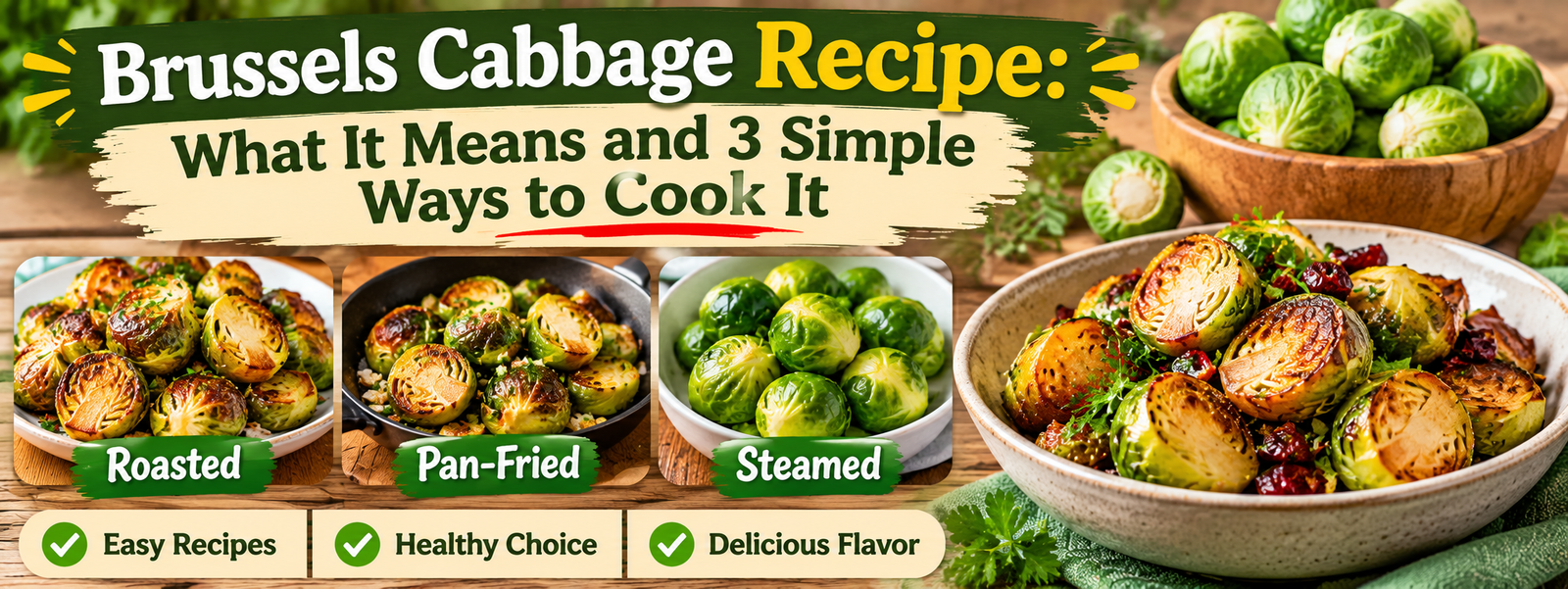
A good Brussels cabbage recipe does not need complicated ingredients or advanced cooking skills. With fresh Brussels sprouts, a little oil or butter, salt, and a few seasonings, you can prepare a tasty side dish at home. The cooking method makes a noticeable difference: roasting creates crisp edges, pan-frying gives the vegetables a golden surface, and steaming keeps them tender.
In this guide, you will learn what Brussels cabbage means, how to prepare it, and three simple ways to cook it. Each method uses everyday ingredients and can be adjusted to suit your preferred flavor.
What Does Brussels Cabbage Mean?
The term Brussels cabbage generally refers to Brussels sprouts. These vegetables grow along a tall stalk, with small round buds attached at regular intervals. Each bud resembles a miniature cabbage because its leaves form a compact, layered head.
Brussels sprouts belong to the Brassica family, which also includes broccoli, cauliflower, kale, and regular cabbage. They are commonly sold loose in bags or attached to their original stalks.
Their flavor can be mildly sweet, nutty, earthy, or slightly bitter, depending on freshness and preparation. Cooking them until tender and allowing their outer leaves to brown can make them especially enjoyable.
Brussels Sprouts vs. Regular Cabbage
Although Brussels sprouts and traditional cabbage are related, they are not interchangeable in every recipe. Regular cabbage forms one large head, while Brussels sprouts develop as multiple small heads along a stalk.
Brussels sprouts are often served whole, halved, or quartered. Regular cabbage is more commonly sliced or shredded for salads, soups, stir-fries, and other dishes.
Ingredients for a Simple Brussels Cabbage Recipe
The following ingredients are enough to prepare a basic Brussels sprouts side dish. You can use them for roasting or adapt the seasoning for the other cooking methods.
| Ingredient | Amount | Purpose |
| Fresh Brussels sprouts | 500 g | Main ingredient |
| Olive oil | 2 tablespoons | Helps with browning |
| Salt | ½ teaspoon | Enhances flavor |
| Black pepper | ¼ teaspoon | Adds mild heat |
| Garlic | 2 cloves, minced | Provides savory flavor |
| Lemon juice | 1 tablespoon | Adds freshness |
| Butter | 1 tablespoon, optional | Creates a richer finish |
Choose firm Brussels sprouts with tightly packed green leaves. Smaller or medium-sized sprouts are often convenient because they cook more evenly. Avoid vegetables with extensive yellowing, soft spots, or unpleasant odors.
How to Prepare Brussels Sprouts Before Cooking
Good preparation helps the vegetables cook evenly and improves their final texture. Start by rinsing the Brussels sprouts under cool running water to remove dirt or debris.
Trim a small portion from the bottom of each sprout, then remove any damaged or loose outer leaves. Cut larger sprouts in half so that they cook at a similar rate to smaller ones. If the sprouts are particularly large, quartering them can help.
After washing, dry them thoroughly with a clean kitchen towel. This step is especially important when roasting because excess moisture can prevent the outer surfaces from becoming golden and crisp.
You can now choose one of the following three cooking methods.
1. Roasted Brussels Cabbage Recipe
Roasting is one of the easiest ways to bring out the natural flavor of Brussels sprouts. The dry heat helps the cut surfaces turn golden brown while the centers become tender. This method is ideal when you want a side dish with crisp edges and a slightly sweet, nutty taste.
Ingredients
Use 500 g of prepared Brussels sprouts, two tablespoons of olive oil, half a teaspoon of salt, a quarter teaspoon of black pepper, and two minced garlic cloves. Lemon juice can be added after cooking.
Cooking Instructions
Preheat your oven to 200°C (400°F). Cut the Brussels sprouts in half and place them in a mixing bowl. Add olive oil, salt, black pepper, and garlic. Toss everything until the vegetables are evenly coated.
Arrange the sprouts in a single layer on a baking tray, placing many of the cut sides facing down. Leave a little space between the pieces so that they roast instead of steaming.
Bake for approximately 20–30 minutes, turning them once if needed. Cooking time depends on their size and your oven, so check for tender centers and browned outer leaves.
Remove the tray from the oven and finish with a little lemon juice. You can also add a small amount of grated Parmesan cheese if you enjoy a savory topping.
Tips for Better Roasted Brussels Sprouts
Avoid overcrowding the baking tray. If the sprouts are packed too closely together, moisture can collect around them and make them softer. Use two trays when necessary.
For extra flavor, sprinkle a little smoked paprika or dried herbs over the vegetables before roasting. Add delicate toppings, such as lemon juice or fresh herbs, after cooking.
2. Pan-Fried Brussels Cabbage Recipe
Pan-frying is a useful method when you do not want to turn on the oven. It creates browned surfaces and tender centers in a relatively short time. A frying pan, a little oil, and a few basic seasonings are all you need.
Ingredients
Prepare 500 g of Brussels sprouts, one tablespoon of olive oil, one tablespoon of butter, two minced garlic cloves, salt, and black pepper. You may also need two or three tablespoons of water to help soften the vegetables.
Cooking Instructions
Wash, trim, and halve the Brussels sprouts. Heat the olive oil in a large frying pan over medium heat. Add the sprouts with their cut sides facing down where possible.
Allow them to cook for several minutes until the cut surfaces become golden. Avoid moving them constantly because they need contact with the hot pan to develop color.
Add the butter and minced garlic. Stir gently to distribute the flavor, then add a small splash of water. Cover the pan and cook for a few more minutes until the sprouts become tender.
Remove the lid and allow any remaining water to evaporate. Season with salt and black pepper, then serve warm.
How to Make the Flavor More Interesting
Pan-fried Brussels sprouts work well with simple additions. A small amount of lemon juice can brighten the taste, while red pepper flakes provide gentle heat.
For a slightly sweet and savory finish, you can add a teaspoon of honey or maple syrup near the end of cooking. Stir carefully so the sweetener coats the vegetables without burning.
3. Steamed Brussels Cabbage Recipe
Steaming is a straightforward option when you prefer soft, tender vegetables without browning them. It also requires very little added fat, making it useful for meals where you want a lighter side dish.
Ingredients
You will need 500 g of Brussels sprouts, water for steaming, a little salt, black pepper, and one teaspoon of butter or olive oil. Lemon juice is optional.
Cooking Instructions
Prepare the Brussels sprouts by washing them, trimming their ends, and removing any damaged leaves. Keep small sprouts whole and cut larger ones in half to help them cook evenly.
Add a small amount of water to a saucepan and place a steamer basket above it. Make sure the water does not reach the bottom of the basket. Bring the water to a gentle boil.
Place the Brussels sprouts in the basket, cover the saucepan, and steam for approximately 6–10 minutes. The exact time depends on their size and whether they are whole or halved.
Check their texture with a fork. They should be tender but not falling apart. Transfer them to a serving bowl and season with salt, black pepper, butter or olive oil, and a little lemon juice.
Avoid Overcooking
Overcooked Brussels sprouts can become mushy and develop a stronger cabbage-like smell. Check them before the expected cooking time is finished, especially if the pieces are small.
Steamed sprouts are delicious with grilled chicken, fish, roasted potatoes, or other vegetable dishes. You can also add them to grain bowls for a simple lunch.
Which Cooking Method Should You Choose?
Each cooking method produces a different result. Roasting is best for browned edges, pan-frying is convenient for quick meals, and steaming is ideal when you want soft vegetables with minimal added oil.
Your choice can depend on the time available, the equipment in your kitchen, and the texture you enjoy most.
| Cooking Method | Approximate Time | Final Texture | Best For |
| Roasting | 20–30 minutes | Golden and crisp outside, tender inside | Flavorful side dishes |
| Pan-frying | 10–15 minutes | Browned and slightly tender | Quick everyday meals |
| Steaming | 6–10 minutes | Soft and tender | Light meals |
These times are estimates. The size of the sprouts, cooking equipment, and temperature can affect the final result.
Helpful Tips for Making Brussels Cabbage Taste Better
Brussels sprouts can taste very different depending on how they are prepared. A few small adjustments can improve their flavor and texture without making the recipe complicated.
- Choose fresh vegetables: Look for firm, compact sprouts with green leaves and minimal discoloration.
- Dry them before roasting: Removing surface moisture helps the cut sides brown more effectively.
- Cut large sprouts evenly: Similar-sized pieces are more likely to finish cooking at the same time.
- Use balanced seasoning: Garlic, black pepper, lemon, herbs, and a little butter can complement their earthy flavor.
- Serve them promptly: Freshly cooked sprouts generally have a better texture than vegetables left sitting for too long.
What Can You Serve with Brussels Sprouts?
Brussels sprouts are versatile enough to accompany many everyday meals. Their earthy taste works well with roasted meats, chicken, fish, potatoes, rice, and other vegetables.
For a simple dinner, serve roasted Brussels sprouts with baked chicken and mashed potatoes. If you prefer a meat-free meal, combine pan-fried sprouts with rice, chickpeas, or roasted sweet potatoes.
You can also chop leftover cooked sprouts and add them to pasta, warm grain bowls, or vegetable stir-fries. A little lemon juice or dressing can help refresh their flavor.
Storage and Reheating Tips
If you prepare more Brussels sprouts than you need, allow the cooked vegetables to cool and place them in a covered container in the refrigerator within two hours. For best quality, use refrigerated cooked leftovers within three to four days.
Reheat them in a frying pan over medium heat with a small amount of oil or butter. This can help restore some of the browned texture. You can also use a microwave, although the vegetables may become softer.
For meal preparation, you can wash and trim fresh sprouts ahead of time and keep them refrigerated in a suitable container. Cooking them closer to serving time usually produces a better texture.
Common Mistakes to Avoid
One common mistake is cooking Brussels sprouts without removing damaged outer leaves or trimming the hard stem ends. Another is overcrowding the pan or baking tray, which can lead to uneven cooking.
Using too much water when pan-frying can also make the vegetables soggy. Add only a small splash when needed, and uncover the pan toward the end so excess moisture can evaporate.
Finally, avoid relying only on cooking time. Check the vegetables with a fork and adjust the method according to their size and texture.
Final Thoughts
A Brussels cabbage recipe is a simple way to prepare Brussels sprouts as a flavorful side dish. Although the name sounds like a separate type of cabbage, it generally refers to the small vegetables known as Brussels sprouts.
Roasting gives them golden, crisp edges, pan-frying creates a savory browned surface, and steaming produces a softer result. All three methods can be prepared with everyday ingredients and adjusted with garlic, butter, herbs, lemon, or your favorite seasonings.
Start with fresh vegetables, prepare them carefully, and avoid overcooking. With a little practice, you can make Brussels sprouts a delicious addition to lunch, dinner, and meal-prep dishes.
Frequently Asked Questions
1. Is Brussels cabbage the same as Brussels sprouts?
Yes. Brussels cabbage is an informal name sometimes used for Brussels sprouts. They are small, cabbage-like vegetables that grow along a tall stalk.
2. How long should Brussels sprouts be cooked?
It depends on the method and their size. Roasting usually takes 20–30 minutes, pan-frying around 10–15 minutes, and steaming approximately 6–10 minutes.
3. Should Brussels sprouts be cut before cooking?
Cutting larger Brussels sprouts in half helps them cook more evenly. Small sprouts can often be cooked whole, although halving them can help with browning.
4. How can I make Brussels sprouts less bitter?
Choose fresh sprouts, avoid overcooking, and try roasting or pan-frying them until their surfaces become golden. Lemon juice, garlic, and a little butter can also balance their earthy flavor.
5. Can I prepare Brussels sprouts ahead of time?
Yes. You can wash and trim fresh Brussels sprouts ahead of cooking and refrigerate them. You can also cook them in advance and store the leftovers in a covered container in the refrigerator for three to four days.
1 thought on “Brussels Cabbage Recipe: What It Means and 3 Simple Ways to Cook It”