
McDonald’s French fries are a popular side dish for burgers, chicken sandwiches, and quick meals. Their crispy texture and golden appearance make them a familiar favorite, but if you are tracking your daily food intake, understanding their calorie content can help you make informed choices. McDonald’s Calories in Small Fries is an important detail for anyone who wants to enjoy this classic side while keeping an eye on portion sizes and nutrition.
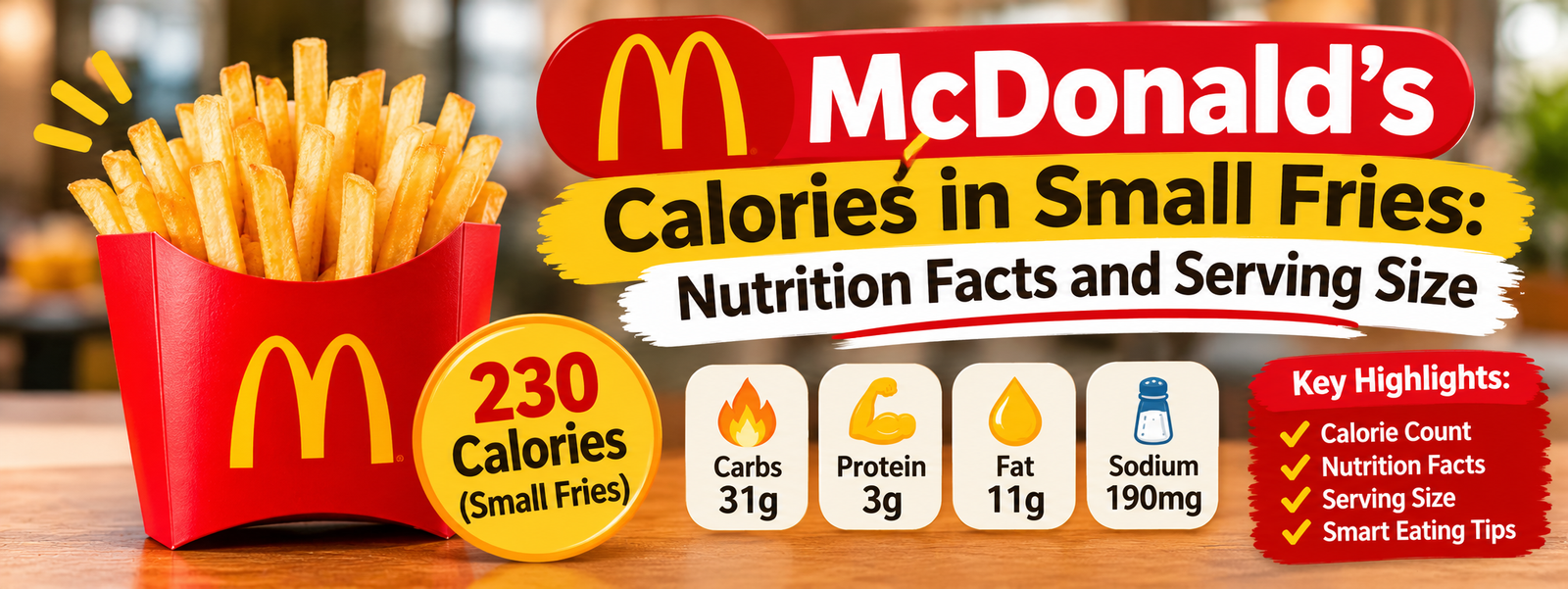
According to McDonald’s official U.S. menu, a small serving of World Famous Fries contains 230 calories. These fries also provide carbohydrates, fat, a small amount of protein, and sodium. Although a small order may seem modest, its nutritional contribution can change depending on what you eat alongside it.
This guide covers the calories, nutrition facts, serving size, ingredients, and practical ways to fit small McDonald’s fries into your eating routine. It also explains why the figures can differ between countries and restaurants.
How Many Calories Are in McDonald’s Small Fries?
A small order of McDonald’s World Famous Fries contains 230 calories in the United States. This is the official figure published on McDonald’s U.S. product page.
For context, 230 calories represent approximately 11.5% of a 2,000-calorie daily reference diet. This percentage is only a general comparison because individual calorie requirements depend on factors such as age, body size, activity level, and personal health goals.
The calories mainly come from the potatoes and vegetable oil used during preparation. The fries also contain carbohydrates, which provide energy, and fat from the cooking oil.
It is worth remembering that 230 calories refers to the fries alone. A complete meal containing a burger, dipping sauce, and soft drink will have a higher total calorie count.
McDonald’s Small Fries Nutrition Facts
Calories provide a useful starting point, but they do not explain everything about a food. Looking at carbohydrates, fat, protein, fiber, and sodium gives a clearer picture of what a serving contributes to your daily diet.
McDonald’s U.S. nutrition information provides the following figures for its small fries.
Small Fries Nutrition Table
| Nutrient | Amount per small serving |
| Calories | 230 kcal |
| Total Fat | 11 g |
| Saturated Fat | 1.5 g |
| Trans Fat | 0 g |
| Cholesterol | 0 mg |
| Sodium | 190 mg |
| Total Carbohydrates | 31 g |
| Dietary Fiber | 3 g |
| Total Sugars | 0 g |
| Protein | 3 g |
These figures represent the U.S. product listing and may change if McDonald’s updates its recipe or serving information. Nutrition values in other markets can be different.
Carbohydrates in Small Fries
A small serving contains approximately 31 grams of carbohydrates. Most of these carbohydrates come from the potatoes.
Carbohydrates are one of the body’s main energy sources. They are not automatically unhealthy, but the overall quality and balance of your diet matter.
The fries provide approximately 3 grams of dietary fiber. This is a useful contribution, although they should not be considered a major fiber source. Vegetables, fruits, beans, and whole grains can help provide more fiber throughout the day.
Fat Content
McDonald’s small fries contain approximately 11 grams of total fat, including 1.5 grams of saturated fat.
Most of the fat comes from the vegetable oil used during cooking. Fat contributes to the fries’ texture and taste, but it is also energy-dense, which is why cooking methods and serving sizes can influence calorie intake.
The official U.S. nutrition listing reports zero grams of trans fat per serving. This does not mean the fries contain no fat; it means the listed trans-fat amount is zero under the applicable labeling rules.
Protein and Sodium
A small order provides approximately 3 grams of protein. This is a relatively small amount, so fries are generally eaten as a side rather than as a main protein source.
The sodium content is approximately 190 milligrams. Salt contributes to the familiar flavor, but sodium intake can add up when fries are combined with burgers, sandwiches, sauces, and other restaurant foods.
People who need to monitor sodium for medical reasons should check the current local nutrition information and follow their healthcare professional’s advice.
McDonald’s Small Fries Serving Size
Serving size is important when comparing calories. A small order is not the same as a medium or large order, and the amount of food served can differ across countries.
McDonald’s describes its fries using size options, including small, medium, and large. The small portion is designed as an individual side, but its actual weight may vary according to the market and restaurant.
This is why calorie information should always be connected to the correct serving size. A nutrition figure without a portion description can be misleading.
Why Serving Size Matters
Imagine ordering a small fries and then sharing a few with someone else. You may eat less than the full serving, so your actual calorie intake would also be lower.
On the other hand, eating from a larger shared container can make portion tracking more difficult. It is easy to lose track of how much you have eaten when the serving is not clearly divided.
If you are recording food in a calorie-tracking app, choose the small serving rather than entering a generic entry for McDonald’s fries.
Small vs. Medium and Large McDonald’s Fries
The size of your order makes a noticeable difference to the total calorie count. McDonald’s U.S. menu lists 230 calories for small fries and 320 calories for medium fries.
The following comparison uses the official U.S. small and medium figures. The large-size figure should be checked on the current local menu rather than assumed to be identical across locations.
Choosing a small serving instead of a medium one means consuming 90 fewer calories based on these published U.S. figures.
That difference may seem modest, but it can be useful when repeated food choices are considered as part of a larger eating pattern.
What Ingredients Are Used in McDonald’s Fries?
McDonald’s U.S. ingredient information lists potatoes, vegetable oil, dextrose, sodium acid pyrophosphate, and salt in its French fries.
Each ingredient has a particular purpose:
Potatoes
Potatoes are the main ingredient and provide the natural carbohydrate content of the fries. McDonald’s identifies varieties such as Russet Burbank and Shepody in its U.S. product information.
Vegetable Oil
A vegetable oil blend is used to cook the fries. The oil contributes to their crisp exterior and adds fat and calories.
Dextrose
Dextrose is a type of sugar used in small amounts in food preparation. In fries, it helps support a consistent golden appearance during cooking.
Sodium Acid Pyrophosphate
This ingredient helps maintain the color of the potatoes. It is used as part of the product formulation rather than as a main source of nutrition.
Salt
Salt adds flavor and contributes to the sodium content. The amount of salt added during preparation may affect the final serving.
How to Fit Small McDonald’s Fries Into Your Daily Diet
Enjoying fries does not mean you have to ignore your nutritional goals. A practical approach is to consider portion size, meal composition, and your overall eating habits.
Here are five useful ways to make a more informed choice:
- Choose the portion that suits your appetite: A small order contains 230 calories, making it easier to account for than a larger serving.
- Consider your complete meal: Add the calories from your burger, sandwich, sauce, and drink instead of tracking fries alone.
- Be mindful of dipping sauces: Sauces can contribute extra calories, fat, sugar, or sodium depending on the variety.
- Add nutritional variety: Include vegetables, fruit, or another nutrient-rich food during the day.
- Check local nutrition information: Use the official McDonald’s menu for your country because recipes and serving sizes may differ.
Small Fries for a Quick Lunch
Small fries can be a convenient side when you are having lunch away from home. Pairing them with a suitable main dish and a drink you enjoy can help you build a meal that matches your preferences.
For example, choosing water instead of a sugary soft drink can reduce the extra calories in a meal. Adding a vegetable-based option elsewhere in the meal can also improve its nutritional variety.
Small Fries and Weight Management
Weight management depends on your overall energy intake, activity, and individual needs. No single serving of fries determines whether someone gains or loses weight.
If you are following a calorie target, include the fries in your food record. The official 230-calorie figure can help you estimate the contribution of a U.S. small serving.
You do not necessarily need to eliminate favorite foods to follow a balanced routine. Paying attention to frequency, portion sizes, and the rest of your meals can be a more realistic long-term approach.
Why McDonald’s Fries Calories Can Differ by Country
One important detail that many nutrition articles overlook is that McDonald’s does not use identical nutrition figures everywhere.
Different countries can have different potato suppliers, cooking oils, portion weights, recipes, and preparation standards. Even when the product name is the same, the serving may not be identical.
For example, McDonald’s Canada publishes a small World Famous Fries serving with 240 calories and a serving weight of 75 grams. This differs from the U.S. listing of 230 calories.
The difference demonstrates why readers should not automatically use U.S. nutrition figures when ordering in another country.
If you live outside the United States, visit your country’s official McDonald’s website or nutrition information page. This is especially important if you track calories closely or need specific allergen details.
Common Mistakes When Counting Fries Calories
A few simple mistakes can make food tracking less accurate.
One common mistake is confusing small fries with a medium serving. Another is recording only the fries while forgetting the rest of the meal.
Some people also assume that every restaurant portion weighs exactly the same. However, McDonald’s explains that variations in serving sizes, preparation techniques, and regional conditions can affect nutritional values.
Finally, online nutrition databases may contain older figures. Whenever possible, use the latest official information for the restaurant and country where you are ordering.
Final Thoughts
Understanding McDonald’s Calories in Small Fries makes it easier to decide how this popular side fits into your eating routine. In the United States, a small order of World Famous Fries contains 230 calories, along with 31 grams of carbohydrates, 11 grams of fat, 3 grams of protein, and 190 milligrams of sodium.
Serving size is one of the most important details when comparing fries. Choosing a small portion instead of a medium one can reduce your calorie intake, while considering sauces and drinks helps you understand the complete meal.
Most importantly, nutrition figures can vary by country and preparation. Check the official local menu for the most accurate information, and enjoy your favorite foods as part of an overall balanced approach.
Frequently Asked Questions
1. How many calories are in McDonald’s small fries?
A small serving of McDonald’s World Famous Fries contains 230 calories according to the official U.S. menu.
2. How much fat is in small McDonald’s fries?
The U.S. nutrition listing reports approximately 11 grams of total fat and 1.5 grams of saturated fat per small serving.
3. How many carbohydrates are in small McDonald’s fries?
A small U.S. serving contains approximately 31 grams of total carbohydrates, including 3 grams of dietary fiber.
4. Are McDonald’s small fries lower in calories than medium fries?
Yes. U.S. small fries contain 230 calories, compared with 320 calories in a medium serving.
5. Do McDonald’s fries have the same calories in every country?
No. Recipes, serving weights, and nutrition information can differ by country. Always check the official local menu for accurate figures.