
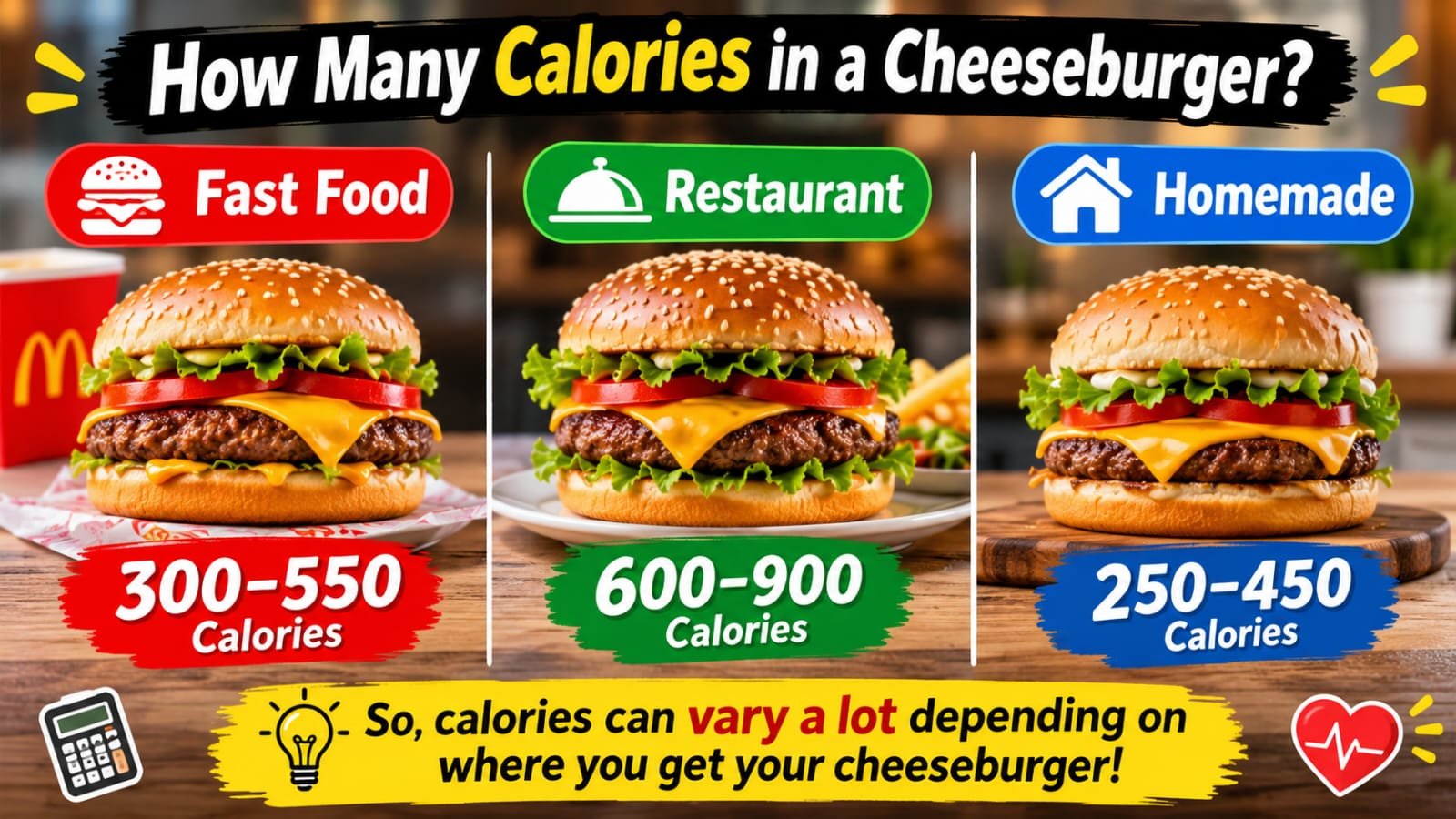
A cheeseburger is a familiar comfort food, combining a juicy beef patty, melted cheese, a soft bun, and flavorful toppings. But if you are watching your food intake, you may wonder: How Many Calories in a Cheeseburger should you count? The answer depends on the patty size, cheese, bun, cooking method, sauces, and portion you choose.
A small fast-food cheeseburger can contain around 280–300 calories, while a larger restaurant burger or homemade version with generous toppings can contain considerably more. Even two burgers with similar ingredients may have different calorie counts because their weights and recipes are not identical.
This guide compares fast-food, restaurant-style, and homemade cheeseburgers. It also explains their nutritional components, the ingredients that increase calories, and practical ways to enjoy a cheeseburger while making informed food choices.
How Many Calories in a Cheeseburger?
There is no single calorie count for every cheeseburger. A basic version made with one beef patty, one slice of cheese, and a bun is different from a double cheeseburger with bacon, extra cheese, and creamy sauce.
For a useful starting point, McDonald’s U.S. lists its standard Cheeseburger at 300 calories. A USDA FoodData Central reference for a plain fast-food cheeseburger lists approximately 280 calories for a 91-gram sandwich. These are useful reference points, not universal values for every restaurant or recipe.
A larger homemade cheeseburger can contain more calories because people often use bigger beef patties, thicker cheese slices, buttered buns, and additional sauces.
The most accurate estimate comes from the actual ingredients and serving weights rather than the name of the burger alone.
Fast-Food Cheeseburger Calories
Fast-food restaurants usually prepare cheeseburgers using standardized ingredients and serving sizes. This makes their published nutrition information a useful starting point when tracking calories.
McDonald’s Cheeseburger
A standard McDonald’s Cheeseburger in the United States contains 300 calories, according to its published nutrition information. It includes a beef patty, a slice of cheese, a bun, pickles, onions, ketchup, and mustard.
The sandwich also provides protein, carbohydrates, and fat. Its calorie count applies to the burger itself, not a complete meal with fries and a drink.
McDonald’s provides an official nutrition calculator that allows customers to check calories and other nutrients for menu items. <Cite refs={[“turn604985search0″,”turn604985search3”]}/>
Why Fast-Food Burgers Can Differ
Not every fast-food cheeseburger has the same nutritional profile. Differences can come from:
- Beef patty size and fat percentage.
- Number and type of cheese slices.
- Bun weight and ingredients.
- Mayonnaise, special sauces, or other condiments.
- Additional toppings such as bacon or fried onions.
A simple single cheeseburger may be relatively modest in size, while a premium burger can contain multiple patties and several high-calorie additions.
Restaurant Cheeseburger Calories
Restaurant cheeseburgers can vary more widely than standardized fast-food options. Independent restaurants often prepare burgers according to their own recipes, so portion sizes and ingredients may not be consistent.
A casual restaurant might serve a single-patty cheeseburger with a standard bun and basic toppings. Another restaurant may use a thick beef patty, artisan bread, multiple cheese slices, and a rich house sauce.
What Increases Restaurant Burger Calories?
Larger beef patties: A heavier patty generally contains more calories than a smaller one, especially when the beef has a higher fat content.
Extra cheese: Additional slices increase the burger’s fat and calorie content.
Special sauces: Mayonnaise-based sauces and creamy dressings can add considerable energy, depending on the amount used.
Brioche or buttered buns: These can contain more calories than smaller or simpler buns.
Premium toppings: Bacon, fried onions, and other additions can make a restaurant cheeseburger substantially more filling and energy-dense.
If a restaurant provides nutrition information, use that figure rather than assuming its burger matches a fast-food version.
Homemade Cheeseburger Calories
Homemade cheeseburgers give you greater control over the ingredients and serving size. You can select the beef, choose the cheese, adjust the bun, and decide how much sauce to add.
A nutrition reference for a medium homemade cheeseburger weighing approximately 180 grams lists about 441 calories. This is an example rather than a fixed value for all homemade burgers. A smaller homemade burger may contain less, while a large burger with extra toppings can contain considerably more. <Cite refs={[“turn604985search4”]}/>
Ingredients That Affect Homemade Burger Calories
The beef patty is often one of the biggest contributors. A leaner ground-beef option may provide a different calorie and fat profile from a higher-fat blend.
Cheese also matters. Cheddar, American-style cheese, Swiss, and other varieties differ in serving weight and nutritional composition.
The bun contributes carbohydrates and calories. A large brioche bun or a buttered roll may add more than a smaller standard bun.
Finally, toppings can change the total. Lettuce, tomato, and onion generally add relatively few calories, while mayonnaise, bacon, and creamy sauces can increase the total more quickly.
How to Estimate Your Homemade Burger
For a more accurate calculation, record the weight of each ingredient before cooking where practical.
Add the calories for the beef, cheese, bun, sauces, and toppings. Use the nutrition label or a reliable food database for each ingredient.
Remember that cooking can change the weight of the patty because moisture and fat may be lost. For consistent tracking, use ingredient information that matches the raw or cooked weight you are measuring.
Fast-Food vs. Restaurant vs. Homemade Cheeseburger
The following comparison shows why portion size and recipe details matter.
| Cheeseburger type | Example calories | Serving or reference |
|---|---|---|
| McDonald’s U.S. Cheeseburger | 300 kcal | One standard sandwich |
| USDA fast-food cheeseburger reference | 280 kcal | 91 g plain sandwich |
| Medium homemade cheeseburger | About 441 kcal | 180 g example |
| Restaurant cheeseburger | Varies by recipe | Check restaurant nutrition details |
These figures come from different reference products and serving sizes. They are not a controlled comparison of identical burgers. The homemade figure is an example, and restaurant burgers should be checked individually. <Cite refs={[“turn604985search3″,”turn604985search6″,”turn604985search4”]}/>
The key lesson is that a burger’s size and ingredients matter more than whether it comes from a restaurant or a home kitchen.
Cheeseburger Nutrition Facts: Calories, Protein, Fat, and Carbs
Calories tell only part of the story. A cheeseburger also contains nutrients that contribute to its overall nutritional profile.
Protein
Beef and cheese provide protein, which supports the maintenance and repair of body tissues. The amount depends on the patty’s size and the type of cheese.
A larger patty generally provides more protein, but it may also contain more fat and calories.
Fat
Beef and cheese are important sources of fat in a traditional cheeseburger. The amount depends on the beef’s fat percentage, cheese portion, and cooking method.
Mayonnaise and butter-based sauces can add further fat. Choosing smaller portions of these ingredients can change the burger’s nutritional profile.
Carbohydrates
Most carbohydrates in a cheeseburger come from the bun and certain condiments. The exact amount varies with bread size and ingredients.
If you want to understand the burger’s carbohydrate content, check the bun’s nutrition label and include any sweet sauces.
Sodium
Cheese, seasoned beef, pickles, ketchup, mustard, and other condiments can all contribute sodium.
A burger with several processed toppings may contain more sodium than a simpler homemade version. People who need to monitor sodium should check the complete nutrition information rather than focusing only on calories.
Five Practical Ways to Make a Cheeseburger Lighter
You do not have to give up cheeseburgers to make informed food choices. Small adjustments can change the overall nutritional content while preserving the familiar taste.
- Choose a suitable patty size: A smaller beef patty can reduce the calories compared with a larger portion.
- Use one cheese slice: This keeps the classic cheeseburger flavor without automatically adding extra cheese.
- Be mindful of sauces: Use a moderate amount of mayonnaise or creamy dressing.
- Add fresh vegetables: Lettuce, tomato, and onion add texture and variety.
- Consider the full meal: Choose sides and drinks that fit your overall eating preferences.
These changes are flexible. The best combination is one that you enjoy and can maintain without making meals unnecessarily restrictive.
Does a Cheeseburger Fit Into a Balanced Diet?
A cheeseburger can fit into a balanced eating pattern. Overall food choices, portion sizes, and eating habits matter more than judging one meal in isolation.
If you enjoy a cheeseburger for lunch, you can balance the rest of your day with vegetables, fruits, whole grains, and other foods that provide different nutrients.
It is also useful to consider how often you eat restaurant meals and what comes with them. A burger served with a large fries and sugary drink has a different total calorie count from the same burger served on its own with water.
Why the Complete Meal Matters
People sometimes track only the burger and forget about the sides. Fries, onion rings, milkshakes, soft drinks, and dipping sauces can add substantial calories.
For accurate food tracking, record the entire order. If you are eating at a restaurant, use its published nutrition information whenever it is available.
Common Mistakes When Counting Cheeseburger Calories
A few common mistakes can make calorie estimates less accurate.
First, people sometimes assume that all single cheeseburgers contain roughly the same calories. In reality, patty weight and bun size can differ considerably.
Second, they may overlook sauces and cooking fats. A burger prepared with extra butter or mayonnaise can contain more calories than a basic version.
Third, they may compare nutrition figures without checking serving weights. A 280-calorie burger weighing 91 grams is not directly equivalent to a 441-calorie burger weighing 180 grams.
Finally, online nutrition databases may describe different recipes. Always match the entry to the food you actually ate.
Final Thoughts
Understanding How Many Calories in a Cheeseburger depends on looking beyond the name of the food. A standard McDonald’s U.S. Cheeseburger contains 300 calories, while a USDA fast-food reference lists 280 calories for a 91-gram sandwich. A medium homemade example weighing 180 grams contains approximately 441 calories.
These figures show how strongly portion size and ingredients can influence the final result. Restaurant burgers can vary even more because recipes, toppings, and serving sizes are not standardized.
If you enjoy cheeseburgers, focus on practical choices: check serving sizes, understand sauces and toppings, and consider the complete meal. With accurate information and a balanced approach, you can enjoy this classic favorite while staying aware of your overall food intake.
Frequently Asked Questions
1. How many calories are in an average cheeseburger?
There is no universal average. A basic fast-food cheeseburger may contain around 280–300 calories, while larger restaurant and homemade versions can contain more.
2. How many calories are in a McDonald’s Cheeseburger?
A standard McDonald’s Cheeseburger in the United States contains 300 calories according to its published nutrition information.
3. Are homemade cheeseburgers higher in calories?
Not necessarily. Homemade burgers can be smaller or larger than restaurant versions. Their calories depend on beef weight, cheese, bun, cooking fat, and toppings.
4. Does removing cheese reduce cheeseburger calories?
Yes. Removing the cheese reduces calories and fat, although the exact amount depends on the cheese type and portion size.
5. Can I eat a cheeseburger while managing my weight?
Yes. A cheeseburger can fit into a weight-management routine when considered alongside your overall food intake, portion sizes, and individual energy needs.