
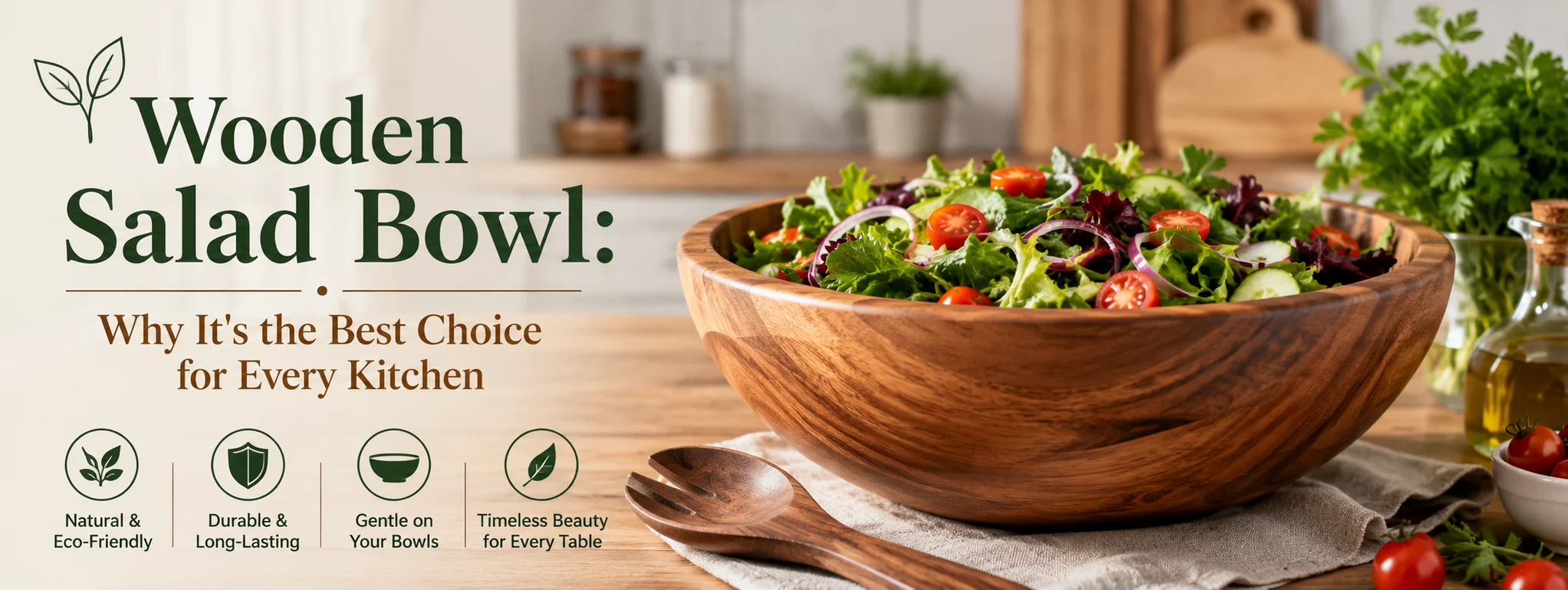
A wooden salad bowl is more than just a serving dish—it’s a timeless kitchen essential that combines beauty, functionality, and durability. Whether you’re preparing a fresh garden salad, serving fruit, or presenting pasta at a family gathering, a wooden bowl adds warmth and elegance to your table. Unlike plastic or metal alternatives, wooden bowls have a natural charm that complements both modern and traditional kitchens.
Over the years, wooden salad bowls have become increasingly popular because they are eco-friendly, long-lasting, and gentle on food. Their natural grain patterns make every bowl unique, while their sturdy construction ensures they can withstand years of regular use with proper care.
What Is a Wooden Salad Bowl?
A wooden salad bowl is a serving bowl crafted from natural hardwoods such as acacia, teak, maple, olive wood, or bamboo. These bowls are designed specifically for tossing and serving salads but are versatile enough to be used for many other foods.
Unlike ceramic or glass bowls, wooden bowls are lightweight yet durable. They resist breaking if accidentally dropped and provide a rustic appearance that enhances food presentation.
Many people appreciate wooden bowls because they are handcrafted, making each piece one of a kind with unique wood grain patterns and colors.
Why Choose a Wooden Salad Bowl?
There are many reasons why wooden salad bowls remain a popular choice in kitchens around the world.
Natural Beauty
Every wooden bowl has its own unique grain, texture, and color. This gives your dining table a warm, elegant appearance that synthetic materials simply cannot match.
Eco-Friendly Option
Wood is a renewable resource when sourced responsibly. Choosing a wooden salad bowl helps reduce dependence on plastic products and supports a more sustainable lifestyle.
Durable Construction
High-quality hardwood bowls can last for decades when properly maintained. They resist cracking better than many ceramic bowls and won’t rust like metal containers.
Gentle on Ingredients
Wood doesn’t react with acidic ingredients like vinegar or citrus dressings. This helps preserve the fresh taste of salads without affecting flavor.
Lightweight and Comfortable
Despite their strength, wooden bowls are relatively light, making them easy to carry from the kitchen to the dining table.
Popular Types of Wood Used
Different woods offer different appearances and levels of durability.
Acacia Wood
Acacia is known for its rich colors and excellent durability. It’s naturally water-resistant and one of the most popular choices for salad bowls.
Olive Wood
Olive wood features beautiful swirling grain patterns and exceptional hardness. Each bowl has a unique appearance that makes it a decorative centerpiece.
Maple Wood
Maple provides a smooth, light-colored finish that fits well in contemporary kitchens. It’s durable and easy to maintain.
Teak Wood
Teak contains natural oils that help resist moisture. It’s highly durable and often used in premium kitchen products.
Bamboo
Although technically a grass, bamboo is commonly used for salad bowls because it is lightweight, sustainable, and environmentally friendly.
Benefits of Using a Wooden Salad Bowl
Owning a wooden salad bowl offers advantages beyond simple food serving.
Keeps Salads Fresh
Wood naturally provides insulation that helps keep salads cool for longer periods compared to metal bowls.
Safe for Serving
Wood doesn’t become extremely hot or cold, making it comfortable to handle during meals.
Multipurpose Usage
Besides salads, wooden bowls can be used for:
- Fruit displays
- Bread serving
- Popcorn
- Pasta dishes
- Snacks
- Decorative centerpieces
Adds Rustic Charm
Whether hosting dinner parties or enjoying everyday meals, a wooden bowl instantly enhances table presentation.
How to Choose the Right Wooden Salad Bowl
Not all wooden bowls are created equal. Here are important factors to consider before buying.
Size
Choose a bowl that matches your household needs.
- Small (6–8 inches): Individual servings
- Medium (10–12 inches): Family meals
- Large (13–16 inches): Parties and gatherings
Wood Quality
Look for solid hardwood rather than composite wood. Hardwood bowls generally last much longer.
Finish
Food-safe mineral oil or beeswax finishes help protect the wood while keeping it safe for serving food.
Smooth Surface
A quality wooden bowl should have a smooth finish without rough edges, splinters, or visible cracks.
How to Care for a Wooden Salad Bowl
Proper maintenance significantly extends the life of your wooden bowl.
Wash by Hand
Always wash with warm water and mild dish soap. Avoid soaking the bowl for extended periods.
Dry Immediately
Use a clean towel to dry the bowl right after washing to prevent moisture damage.
Oil Regularly
Apply food-grade mineral oil every few weeks to maintain the wood’s natural moisture and prevent drying.
Avoid Dishwashers
Dishwashers expose wood to excessive heat and moisture, which may cause cracking or warping.
Store Properly
Keep your bowl in a dry area away from direct sunlight or excessive humidity.
Common Mistakes to Avoid
Many people accidentally shorten the lifespan of their wooden bowls by making simple mistakes.
Soaking in Water
Leaving the bowl submerged for hours allows moisture to penetrate the wood, leading to cracks.
Using Harsh Cleaners
Strong chemicals may damage the natural finish and alter the appearance of the wood.
Ignoring Maintenance
Without occasional oiling, the wood can become dry, dull, and more likely to crack.
Extreme Temperature Changes
Avoid placing hot foods directly into very cold bowls or exposing them to sudden temperature shifts.
Wooden Salad Bowl vs Plastic Bowl
Here’s how wooden bowls compare with plastic alternatives.
| Feature | Wooden Salad Bowl | Plastic Bowl |
|---|---|---|
| Appearance | Elegant and natural | Basic and synthetic |
| Durability | Long-lasting | Can crack over time |
| Eco-Friendly | Yes | Limited |
| Food Safety | Non-reactive | Depends on plastic quality |
| Sustainability | Renewable material | Petroleum-based |
Wooden bowls generally offer better aesthetics, longer lifespan, and a more environmentally friendly option.
Who Should Buy a Wooden Salad Bowl?
Wooden salad bowls are suitable for many different users.
They are ideal for:
- Home cooks
- Professional chefs
- Families
- Restaurant owners
- Wedding gift buyers
- Housewarming gift shoppers
- Interior decorators
- Healthy lifestyle enthusiasts
Because they combine beauty and practicality, they make thoughtful gifts for many occasions.
Tips for Making Your Wooden Bowl Last Longer
Following a few simple habits can keep your bowl looking beautiful for years.
- Clean immediately after use.
- Never place it in a microwave.
- Avoid prolonged exposure to water.
- Reapply food-safe mineral oil regularly.
- Store in a cool, dry location.
- Use wooden or silicone utensils to avoid scratches.
With proper care, many wooden salad bowls remain beautiful for decades.
Conclusion
A wooden salad bowl is a smart investment for anyone who values quality, style, and sustainability in the kitchen. Its timeless appearance, natural durability, and versatility make it far more than just a serving bowl. Whether you’re preparing everyday family meals or entertaining guests, a wooden bowl enhances both the presentation and enjoyment of your food.