
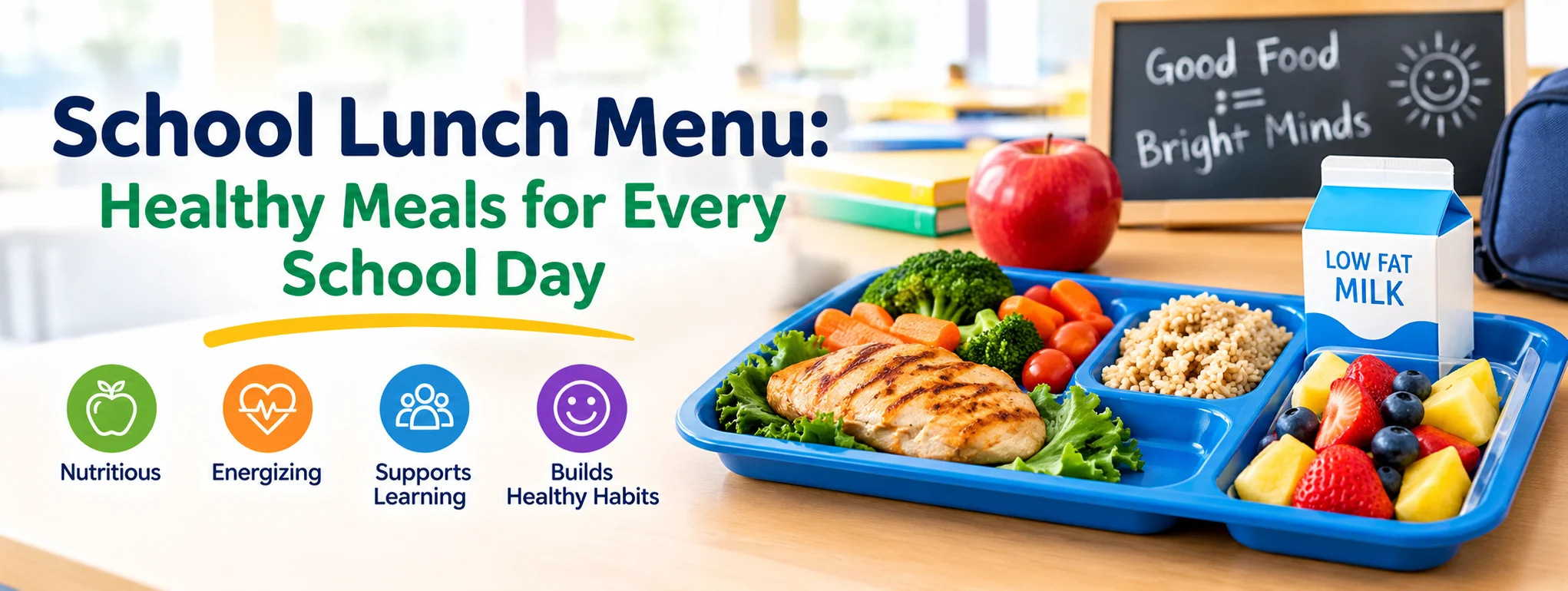
A well-planned school lunch menu can make a big difference in a student’s day. A nutritious school lunch gives children the energy they need for classes, activities, sports, and social time. The best menus combine wholesome ingredients with familiar flavors so students are more likely to enjoy their meals instead of leaving food untouched.
A balanced lunch usually includes a protein source, whole grains, fruits, vegetables, and a healthy drink. Schools can also introduce different cuisines and seasonal ingredients to keep meals interesting. Whether the goal is better nutrition, affordable meals, or greater variety, a thoughtful school lunch menu can support healthy eating habits from an early age.
Why a School Lunch Menu Matters
School meals are more than just a break between classes. For many students, lunch provides an important source of daily nutrition. A carefully designed menu can help children stay focused and active throughout the afternoon.
Supporting Energy and Concentration
Students need sufficient energy to participate in lessons and extracurricular activities. Meals containing whole grains, lean proteins, fruits, and vegetables can provide lasting nourishment rather than a quick burst of energy followed by tiredness.
Encouraging Healthy Eating Habits
Children develop many of their eating preferences during their school years. Offering colorful vegetables, fresh fruit, nutritious grains, and varied proteins can introduce students to foods they may continue enjoying later in life.
What Should Be Included in a School Lunch Menu?
An effective school lunch menu should offer variety while maintaining nutritional balance. Different food groups can be combined to create meals that are satisfying without being unnecessarily complicated.
Protein-Rich Foods
Protein helps support growth and development. Schools can include options such as grilled chicken, beans, lentils, eggs, turkey, fish, or low-fat cheese.
Whole Grains
Whole-grain bread, brown rice, whole-wheat pasta, and other grains can provide fiber and sustained energy. They can easily become the foundation of sandwiches, bowls, pasta dishes, and other popular school meals.
Fruits and Vegetables
Fresh produce adds important vitamins, minerals, and fiber. Apples, oranges, bananas, berries, carrots, cucumbers, broccoli, and leafy greens can provide both nutrition and appealing color.
Healthy Drinks
Water should be readily available with lunch. Depending on school policies, low-fat milk or other nutritious beverages may also be included.
Sample School Lunch Menu Ideas
Creating a rotating menu can prevent students from becoming bored with the same meals. A five-day schedule can include familiar favorites while gradually introducing new flavors.
| Day | Main Meal | Fruit or Vegetable | Side | Drink |
|---|---|---|---|---|
| Monday | Grilled Chicken Sandwich | Apple Slices | Carrot Sticks | Water |
| Tuesday | Turkey & Cheese Wrap | Orange | Cucumber Salad | Milk |
| Wednesday | Vegetable Pasta | Mixed Berries | Green Salad | Water |
| Thursday | Bean & Rice Bowl | Banana | Steamed Broccoli | Milk |
| Friday | Baked Chicken with Rice | Apple | Corn & Peas | Water |
This type of school lunch menu provides variety throughout the week while giving students several important food groups. Schools can adjust ingredients according to local availability, dietary requirements, age groups, and budget.
How Schools Can Make Lunch More Appealing
Nutritious food does not have to be boring. Presentation, variety, and familiar flavors can make a significant difference in how students respond to their meals.
Use Colorful Ingredients
A plate containing different colors can look more appealing than a meal dominated by one ingredient. Fresh fruit, vegetables, grains, and protein can create an attractive combination.
Offer Familiar Favorites
Popular foods can be prepared in healthier ways. For example, baked chicken can replace heavily fried chicken, while whole-grain wraps can be used for sandwiches.
Introduce New Foods Gradually
Not every student will immediately enjoy unfamiliar ingredients. Schools can introduce new foods alongside familiar favorites, allowing students to explore different flavors without making the entire meal unfamiliar.
Planning a School Lunch Menu on a Budget
Cost is an important consideration when schools create weekly meal plans. Affordable ingredients such as beans, lentils, rice, seasonal vegetables, eggs, and whole grains can provide excellent nutritional value.
Buying seasonal produce can also reduce costs while keeping meals fresh. Schools can use certain ingredients across multiple meals without making the dishes repetitive. For example, cooked vegetables might be used in a rice bowl one day and a pasta dish later in the week.
Bulk preparation can further improve efficiency and reduce unnecessary food waste. Careful planning allows schools to provide satisfying meals while keeping expenses manageable.
Handling Dietary Needs and Allergies
A modern school lunch menu should consider students with different dietary requirements. Some children may have food allergies, while others may follow vegetarian, religious, or medically recommended diets.
Schools should clearly identify common allergens and provide suitable alternatives when possible. Staff should also follow established food-safety procedures to reduce the risk of cross-contact.
Clear communication between schools, parents, students, kitchen staff, and nutrition professionals can create a safer and more inclusive lunchtime environment.
Seasonal Ideas for School Lunches
Seasonal foods can bring freshness and variety to the cafeteria. During warmer months, schools might serve fresh salads, fruit cups, chilled vegetables, and lighter sandwiches. Cooler seasons can feature warm soups, roasted vegetables, rice bowls, and hearty pasta dishes.
Rotating seasonal options can make the school lunch menu feel fresh throughout the academic year. It can also encourage students to discover ingredients that they might not normally choose.
Final Thoughts
A successful school lunch menu should balance nutrition, taste, variety, affordability, and practicality. Students need meals that provide nourishment while still being enjoyable enough to eat. Including wholesome proteins, whole grains, fruits, vegetables, and healthy beverages can create a stronger foundation for daily nutrition.
With creative planning, schools can build a powerful lunch program that supports healthy habits, improves variety, and makes lunchtime something students genuinely look forward to.
FAQs About School Lunch Menu
1. What makes a good school lunch menu?
A good menu includes balanced portions of protein, whole grains, fruits, vegetables, and nutritious drinks.
2. How often should a school change its lunch menu?
Many schools use rotating weekly or monthly menus to provide variety while keeping planning manageable.
3. Are school lunches healthy?
They can be healthy when meals are carefully planned around nutritious ingredients and appropriate portions.
4. Can schools provide allergy-friendly meals?
Yes. Schools can offer suitable alternatives and follow established allergy and food-safety procedures.
5. How can schools reduce lunch costs?
Using seasonal produce, affordable proteins, whole grains, bulk purchasing, and careful meal planning can help control costs.
1 thought on “School Lunch Menu: Healthy Meals for Every School Day”