
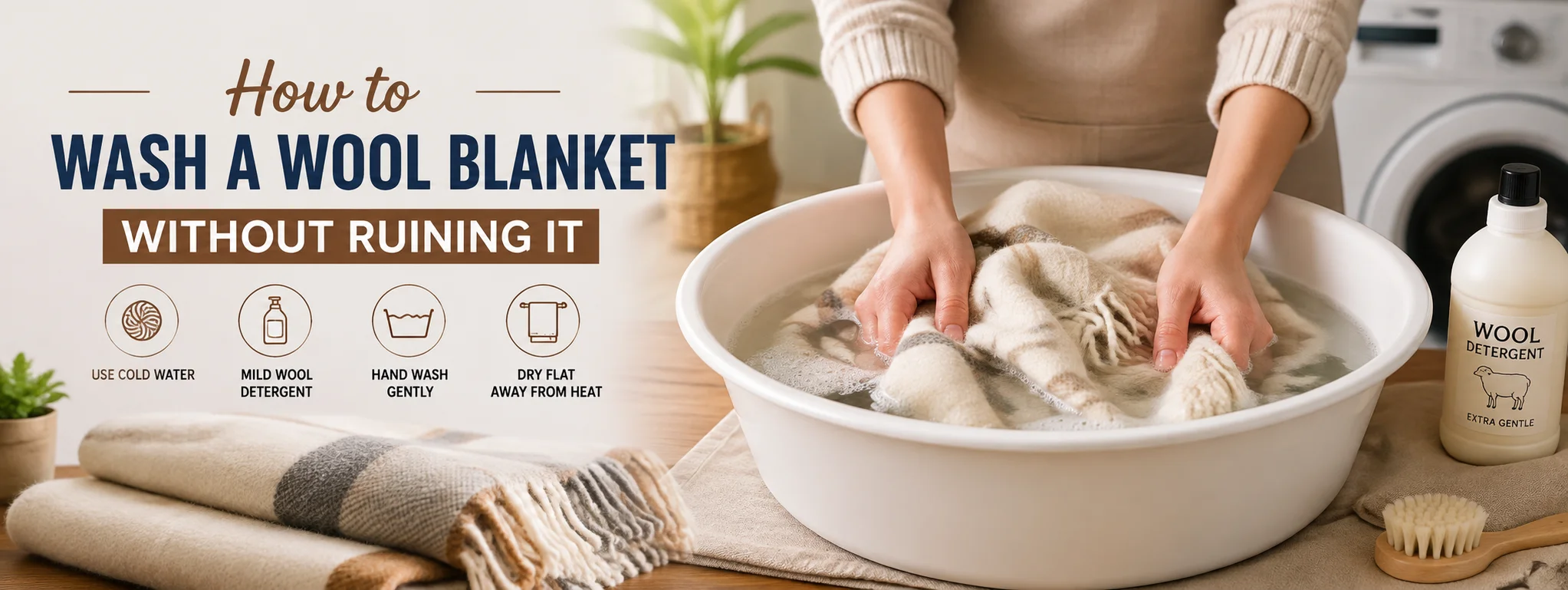
Wool blankets are warm, comfortable, durable, and naturally resistant to odors and moisture. However, they require more care than ordinary cotton or synthetic blankets. Washing wool incorrectly can cause shrinking, felting, stretching, or permanent damage to the fibers.
The good news is that cleaning a wool blanket does not have to be difficult. With the right method, gentle products, and a little patience, you can keep your blanket fresh and soft without ruining its natural texture. Here is a step-by-step guide to safely washing a wool blanket.
Check the Care Label First
Before washing your wool blanket, look carefully at the care label. This is the most important step because not every wool blanket can be washed at home.
Some blankets are labeled dry clean only, while others can be hand-washed or machine-washed on a delicate cycle. Manufacturers may also provide specific instructions about water temperature, detergent, drying, and ironing.
If the label specifically says “dry clean only,” avoid experimenting with home washing. Professional cleaning is usually the safest option.
Inspect the Blanket
Before cleaning, spread the blanket out and inspect it for stains, loose threads, holes, or damaged areas. Washing can make existing damage worse.
If you find a small stain, treat it gently before washing rather than aggressively scrubbing the entire blanket.
Shake and Air Out the Blanket
Wool naturally resists odors, so your blanket may not need frequent washing. Start by taking it outdoors or placing it somewhere with good airflow.
Shake it gently to remove loose dust, hair, and debris. Then allow it to air out for several hours, preferably in a shaded, well-ventilated area.
Avoid leaving wool in strong direct sunlight for long periods because prolonged exposure can affect its color and fibers.
Remove Surface Dirt Carefully
For additional surface cleaning, use a soft-bristled brush or a vacuum cleaner with a suitable upholstery attachment. Move gently across the blanket instead of pressing hard.
This simple step can remove a surprising amount of dirt and may reduce the need for frequent full washing.
Choose the Right Detergent
Regular laundry detergent can be too harsh for wool fibers. Instead, use a mild detergent specifically designed for wool or other delicate fabrics.
Avoid products containing strong bleach, harsh enzymes, or aggressive stain-removing chemicals unless the manufacturer’s instructions specifically recommend them.
Use Only a Small Amount
More detergent does not mean a cleaner blanket. Excess detergent can be difficult to rinse from wool and may leave the fabric stiff or coated.
Use a small amount of wool-safe detergent according to the product instructions. If you’re washing by hand, make sure the detergent is completely dissolved in the water before adding the blanket.
How to Hand-Wash a Wool Blanket
Hand-washing is often one of the safest methods for a washable wool blanket because you have greater control over movement and water temperature.
Step 1: Fill the Tub
Fill a clean bathtub, large basin, or suitable container with cool or lukewarm water. Avoid hot water because heat can cause wool fibers to shrink and become felted.
Add the recommended amount of wool-safe detergent and gently mix it into the water.
Step 2: Submerge the Blanket
Place the blanket into the water and allow it to become completely saturated. Gently press it beneath the surface.
Do not twist, scrub, or aggressively rub the blanket. Let the water and detergent do most of the cleaning.
Step 3: Soak Gently
Allow the blanket to soak according to the detergent instructions, generally for around 10 to 30 minutes. If there are stains, you can gently press the affected area with your fingers.
Avoid excessive handling because wet wool becomes heavier and more vulnerable to stretching.
Step 4: Rinse Thoroughly
Drain the soapy water and refill the tub with cool, clean water. Gently press the blanket to help release detergent.
Repeat the rinsing process until the water is clear and there is no noticeable soap remaining.
Can You Machine-Wash a Wool Blanket?
Some modern wool blankets are specifically designed to be machine-washable. If the care label permits machine washing, use the gentlest available setting.
Select a cold-water or wool cycle and use a wool-safe detergent. Avoid high-speed spinning when possible because aggressive spinning can stretch or distort the blanket.
Never assume that every wool blanket is safe for a washing machine simply because it looks durable. Always follow the manufacturer’s instructions.
How to Remove Excess Water
One of the biggest mistakes people make is wringing a wet wool blanket.
Wool absorbs a significant amount of water, making the blanket extremely heavy when wet. Twisting or wringing it can stretch the fibers and permanently change its shape.
Instead, gently press the blanket against the side of the tub or basin to remove excess water.
Use Towels for Extra Water
For a smaller blanket, place it flat on clean towels. Roll the blanket and towels together loosely, then gently press the roll.
The towels will absorb some of the excess moisture without putting excessive stress on the wool fibers.
How to Dry a Wool Blanket
Drying is just as important as washing. Never put a wool blanket in a hot dryer unless the care label specifically says it is safe.
High heat can cause significant shrinkage and damage.
Dry It Flat
Lay the blanket flat on a clean, dry surface or a suitable drying rack. Reshape it gently while it is still damp.
Do not hang a heavy wet wool blanket from a clothesline or hanger because its weight can cause stretching.
Allow it to dry naturally in a well-ventilated area. Turn it occasionally if necessary so that moisture can escape evenly.
Common Mistakes to Avoid
Several common washing mistakes can ruin a wool blanket.
Avoid Hot Water
Hot water can cause wool fibers to contract, resulting in shrinkage and felting.
Don’t Use Fabric Softener
Fabric softeners can coat wool fibers and interfere with their natural properties. A wool-specific detergent is usually a better choice.
Don’t Scrub Aggressively
Rubbing wool strongly can cause the fibers to become matted. Gentle soaking and pressing are safer.
Don’t Use High Heat
Avoid hot dryers, radiators, and intense direct heat. Natural air drying is generally safer for wool.
How Often Should You Wash a Wool Blanket?
Wool blankets usually do not need to be washed after every use. Because wool naturally resists odors and moisture, regular airing and light cleaning may be enough.
Wash the blanket when it becomes visibly dirty, develops an odor, or according to the manufacturer’s care instructions. Washing it less frequently can help preserve its softness, shape, and durability.
Final Thoughts
Washing a wool blanket safely comes down to using cool water, gentle detergent, minimal agitation, and careful drying. Always check the care label before starting, and never assume that a wool blanket can tolerate the same treatment as ordinary bedding.