
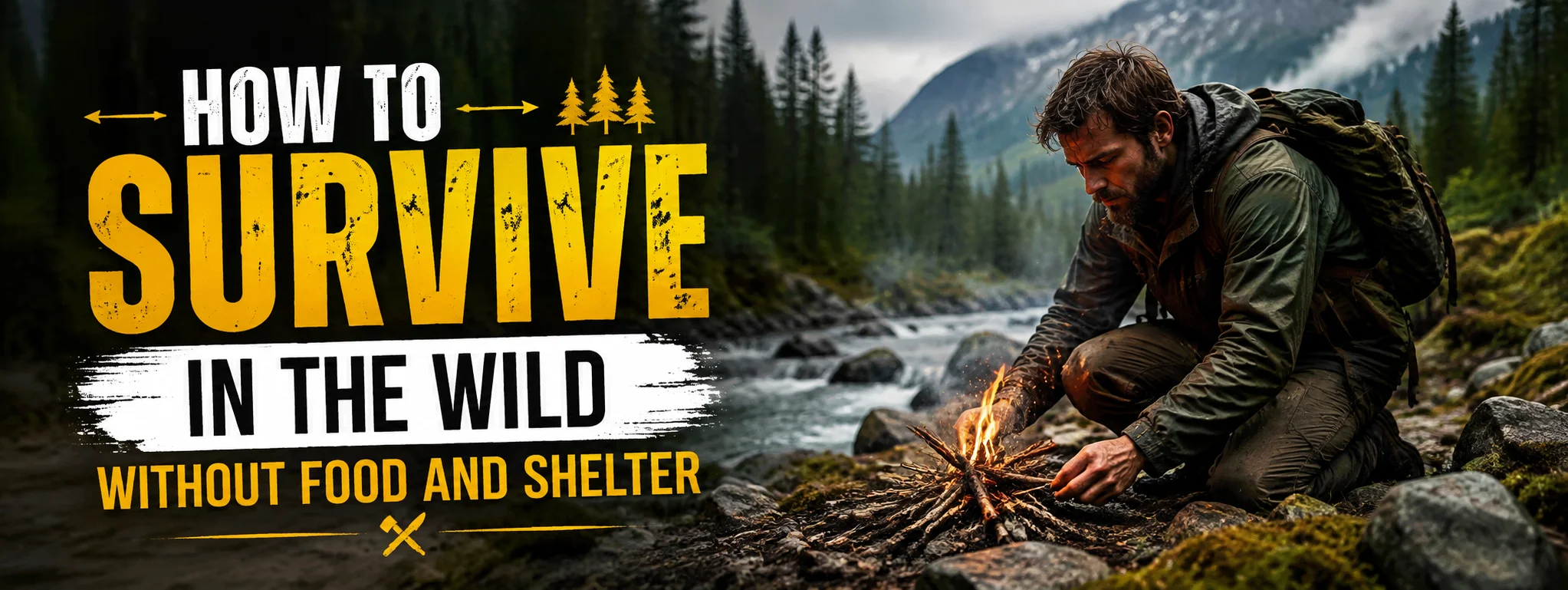
Getting stranded in the wilderness without access to food or immediate shelter is one of the most daunting challenges a human can face. Whether caused by an unexpected detour on a day hike, a sudden vehicle breakdown in a remote area, or a natural emergency, being caught empty-handed forces you to rely entirely on knowledge, resourcefulness, and psychological resilience.
Surviving in the wild without basic supplies requires prioritizing your immediate needs based on how quickly environmental threats can kill you. In survival situational management, experts refer to the Rule of Threes:
-
You can survive for 3 minutes without air.
-
You can survive for 3 hours without shelter in extreme environments.
-
You can survive for 3 days without water.
-
You can survive for 3 weeks without food.
Understanding this sequence is vital. While the lack of food and shelter feels overwhelming, managing your mindset, exposure, and hydration takes immediate precedence over filling an empty stomach.
Phase 1: Mindset and Initial Assessment (S.T.O.P.)
The moment you realize you are lost or stranded, panic will attempt to hijack your decision-making. High stress triggers a physiological “fight or flight” response, leading to rapid breathing, heart acceleration, and impaired judgment. Panic causes lost individuals to wander aimlessly, expend critical energy, and deeper confuse their whereabouts.
To regain control, employ the military-proven acronym S.T.O.P.:
-
S – Stop: Sit down, take deep breaths, and physically freeze. Do not walk another step until your mind is calm.
-
T – Think: Ask yourself critical questions. How did I get here? How many hours of daylight remain? What hazards are nearby?
-
O – Observe: Assess your surroundings. Look for landmarks, listen for running water, check weather patterns, and audit the natural items at your disposal (rocks, fallen branches, foliage).
-
P – Plan: Formulate a simple, deliberate strategy based on your observations. Prioritize immediate threats before taking physical action.
Phase 2: Creating Emergency Shelter
When you lack a tent or tarp, exposure to the elements—hypothermia in cold conditions or hyperthermia/heatstroke in hot climates—is your single greatest threat. Shelter protects your body’s core temperature.
Building a Debris Hut (Cold or Wet Climates)
A debris hut utilizes natural insulation to trap your body heat in cold environments.
-
Find a Ridge Pole: Locate a sturdy branch roughly 9 to 10 feet long. Anchor one end onto a stump, rock, or low tree fork so it sits angled at about waist height.
-
Build the Ribbing: Lean shorter branches along both sides of the main ridge pole at a 45-degree angle, creating an A-frame wedge just wide enough for your body.
-
Add Insulation: Blanket the frame with at least two to three feet of dry leaves, pine needles, grass, and forest debris. The thicker the debris layer, the more trapped dead air space acts as insulation.
-
Insulate the Ground: Do not sleep directly on the bare ground. Cold ground draws warmth from your body via conduction far faster than cold air. Layer a foot of dry leaves, pine boughs, or bark underneath you inside the shelter.
Improvised Sun Shelters (Hot Climates)
In desert or high-heat environments, your shelter must protect against solar radiation and minimize water loss through sweat. Look for natural rock overhangs or dense tree canopies. If constructing a shelter, dig a shallow trench beneath a shady canopy to lie in, as subterranean soil remains cooler than topsoil.
Phase 3: Securing Hydration
While you can go weeks without food, dehydration can incapacitate you within 24 to 48 hours. Dehydration causes headache, lethargy, confusion, and reduced physical capacity.
Finding Water Sources
-
Gravity: Water runs downhill. Look for valleys, ravines, and low-lying ground where water collects.
-
Vegetation & Wildlife: Dense green vegetation often indicates nearby surface or ground water. Watch insect patterns (especially bees and midges) and bird flight paths at dawn and dusk.
-
Dew Collection: Tie absorbent natural materials or clothing around your lower legs and walk through tall grass before sunrise. Squeeze the collected moisture into a vessel or directly into your mouth.
Purifying Water Without Equipment
Untreated wilderness water can contain pathogens such as Giardia or Cryptosporidium. When options are limited, prioritize moving water over stagnant pools. If fire-making capabilities are absent, consider these basic natural filtering techniques:
-
Sediment Settlement: Let turbid water sit in a natural basin (or structured bark cup) until particles settle at the bottom, then siphon off the clear top layer.
-
Ground Filtration: Dig a hole 3 to 4 feet away from a murky water bank. Allow ground seepage to fill the hole; the surrounding soil acts as a natural mechanical filter for sediment.
Phase 4: Managing Hunger and Sustenance
Many beginners panic early on due to stomach rumblings. However, digestion requires water. If you have no water supply, eating solid food accelerates dehydration. Furthermore, your body contains stored fat and glycogen capable of sustaining basic physiological functions for days or weeks.
Energy Conservation Strategy
-
Pace Yourself: Avoid heavy physical exertion during the hottest hours of the day.
-
Foraging Safety: Never consume wild mushrooms or plants unless you have 100% certainty of their identification. Many wild plants contain toxins that induce vomiting and severe diarrhea, rapidly depleting your fluid reserves.
-
Insects and Small Prey: If water is available and long-term survival demands caloric intake, focus on abundant, low-risk sources. Crickets, grasshoppers, and earthworms provide high protein. Always remove outer wings/legs and cook or thoroughly inspect insects, avoiding bright-colored or distinctly foul-smelling species, which often signal toxicity.
Core Survival Priorities Matrix
To balance your efforts effectively throughout the day, refer to the following priority overview:
| Need Category | Primary Threat | Immediate Action Required | Key Resource/Technique |
| Mindset | Panic, irrational decisions | S.T.O.P. protocol, deep breathing | Mental control, observation |
| Regulation / Shelter | Hypothermia, hyperthermia | Construct debris hut or shade canopy | Ridge pole, leaves, pine needles |
| Hydration | Dehydration, organ failure | Locate water runoff, collect morning dew | Low elevation, ground seepage |
| Signaling | Prolonged isolation | Prepare ground signals, smoke fires | Contrast markers, 3-of-anything rule |
| Food / Foraging | Starvation (Long-term) | Conserve energy; avoid unknown plants | Stored body fat, edible insects |
Phase 5: Signaling for Rescue
Unless you possess advanced navigation skills and a clear understanding of your geographic location, staying near your last known position or vehicle gives rescue teams the best probability of finding you.
Visual Signals
-
Rule of Three: Three of any signal is the international code for distress (e.g., three whistles, three distinct piles of rocks, three smoky fires arranged in a triangle).
-
High-Contrast Ground Markers: Use fallen timber, dark rocks on light sand, or trenches dug into snow to create large letters such as “SOS” or “V” (Help). Make these letters at least 10 feet long so they are visible from searching aircraft.
-
Reflective Surfaces: Use polished metals, watch faces, or belt buckles to flash sunlight toward distant hills or aircraft.
Final Thoughts
Surviving in the wild without food or shelter is less about wilderness mastery and more about mental discipline and adherence to basic priorities. Hunger is an uncomfortable distraction, but exposure and dehydration are swift killers. By remaining calm, constructing an insulating debris shelter, securing clean water, and signaling clearly to potential searchers, you maximize your body’s natural resilience. Remember: when stripped of modern conveniences, your most powerful survival tool is a disciplined, adaptable mind.
1 thought on “How to Survive in the Wild Without Food and Shelter”