
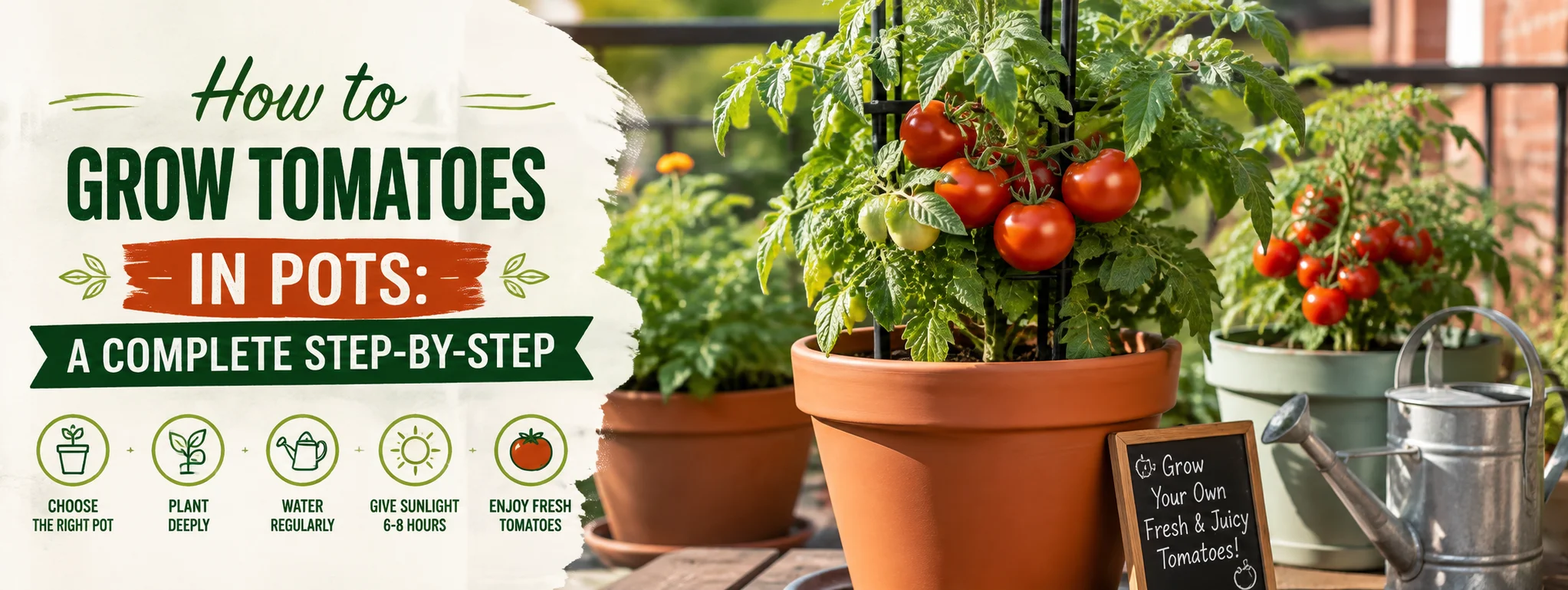
Growing tomatoes is one of the most rewarding experiences for home gardeners. Few things compare to the satisfaction of step-by-step planting, nurturing, and picking sun-warmed, juicy tomatoes directly from the vine. However, not everyone has access to a sprawling backyard or a dedicated garden bed. The good news is that you do not need an acre of land to cultivate a bountiful harvest. Learning how to grow tomatoes in pots allows you to transform small spaces—such as sunny balconies, patios, fire escapes, or paved backyards—into highly productive vegetable gardens.
Container gardening offers several distinct advantages over traditional in-ground planting. Pots give you total control over soil quality, drainage, and location, allowing you to move plants to catch optimal sunlight or shield them from severe weather. Additionally, growing in containers reduces the risk of soil-borne diseases and persistent garden pests. With the right selection of containers, nutrient-dense soil, proper watering techniques, and routine care, you can enjoy an abundance of fresh tomatoes all season long.
Choosing the Right Tomato Variety
Before buying seeds or young nursery plants, it is crucial to understand that tomato varieties fall into two main growth categories: determinate and indeterminate. Choosing the right type will significantly influence container selection and long-term care.
Determinate Tomatoes (Bush Varieties)
Determinate tomato plants grow to a predetermined size, usually reaching between two to four feet in height. They stop growing once fruit sets on the top terminal bud, blooming and fruiting all within a compact timeframe (typically over a few weeks). Because of their compact, bushy stature, determinate varieties are ideal for container gardening. Popular determinate choices include:
-
Roma / Plum Tomatoes: Great for sauces and canning.
-
Patio Choice: Specially bred for container culture.
-
Bush Early Girl: Produces medium-sized fruit early in the season.
-
Tiny Tim: A dwarf variety ideal for smaller pots or window boxes.
Indeterminate Tomatoes (Vining Varieties)
Indeterminate varieties continue growing, blooming, and producing fruit throughout the entire growing season until the first autumn frost kills the plant. These vines can easily reach heights of six to ten feet or more. While they require much larger containers and sturdy support systems like heavy-duty cages or tall stakes, they yield a continuous harvest over several months. Popular indeterminate varieties for containers include:
-
Sweet 100 or Cherry Bomb: Prolific cherry tomato producers.
-
Early Girl: Reliable, medium-sized slicer.
-
Sungold: Famous for exceptionally sweet, orange cherry fruit.
Selecting the Ideal Pot and Materials
Success with potted tomatoes starts with selecting the proper container and growing medium. Tomatoes develop extensive root systems, meaning smaller pots will restrict growth and lead to stress, disease, and low yields.
Container Size and Material
Rule number one for container tomatoes: bigger is always better. A larger volume of soil holds moisture and nutrients more consistently, reducing stress on the root system.
-
Minimum Size: For dwarf or small cherry varieties, a 5-gallon container (about 12 inches in diameter and depth) is the absolute minimum.
-
Recommended Size: For standard determinate and indeterminate tomatoes, aim for a 7- to 10-gallon container (14 to 18 inches in diameter) per plant. Fabric grow bags, plastic buckets, ceramic pots, or wooden planters all work well.
-
Drainage: Ensure your container has ample drainage holes at the bottom. Tomato roots will rot quickly if left standing in waterlogged soil.
The Right Growing Medium
Never use topsoil or garden soil directly from your yard in container pots. Native garden soil becomes dense and compacted inside containers, restricting root expansion and preventing proper water drainage. Instead, use a high-quality commercial potting mix. A well-balanced potting mix is lightweight, porous, and formulated with ingredients like peat moss, coconut coir, perlite, and vermiculite to retain moisture while allowing aeration.
To give your plants a strong head start, blend organic compost or a slow-release, balanced fertilizer into the potting mix before planting.
Quick Reference: Container Growing Guide
| Tomato Category | Container Volume | Recommended Varieties | Support Required | Expected Harvest Pattern |
| Dwarf / Micro | 2 – 3 Gallons | Tiny Tim, Micro Tom | Minimal or None | Concentrated over 2–3 weeks |
| Determinate (Bush) | 5 – 7 Gallons | Roma, Bush Early Girl, Patio Princess | Small Cage or Stake | Harvest arrives all at once |
| Indeterminate (Vining) | 7 – 10+ Gallons | Sweet 100, Sungold, Celebrity, Early Girl | Tall Heavy-Duty Cage or Trellis | Continuous until first frost |
Planting Your Tomatoes Step-by-Step
Planting tomatoes in containers requires a slightly different technique than planting other vegetables. Tomatoes are unique because they can grow roots along any portion of their stems buried underwater or underground.
-
Prepare the Pot: If using a pre-used container, wash it thoroughly with mild soap and water to eliminate potential pathogens. Ensure drainage holes are open and clear.
-
Hydrate the Soil: Fill the container with potting mix up to a few inches below the rim. Add water and mix thoroughly until the soil is evenly damp, not dripping wet.
-
Prune Lower Leaves: Take your nursery seedling and gently clip off the lowest sets of leaves, leaving only the top cluster of foliage intact.
-
Plant Deeply: Dig a hole in the center of the pot deep enough to bury at least half to two-thirds of the plant stem. Burieng the stem deeply encourages adventitious roots to form all along the subterranean stem, developing a much stronger, resilient root architecture.
-
Install Supports Early: Insert your stake, tomato cage, or trellis immediately after planting. Installing support structures early prevents accidentally damaging root networks later when the plant is larger.
-
Water Thoroughly: Water deeply around the base of the plant to settle the soil around the newly buried roots.
Essential Daily Care and Maintenance
Once your tomato plants are established in their pots, ongoing maintenance involves four core areas: light, water, nutrition, and support.
       [ Sunlight ]
     6-8+ hours/day
           │
           ▼
[ Water Management ] ◄── Check daily; water at base
           │
           ▼
[ Balanced Nutrition ] ◄── Bi-weekly low-N, high-P fertilizer
           │
           ▼
[ Structural Support ] ◄── Prune suckers & tie to stakes
1. Sunlight Requirements
Tomatoes are heat-loving plants that thrive in full sun. Place your pots in a location that receives at least 6 to 8 hours of direct sunlight daily. If you are growing on a balcony or patio with limited exposure, position the container where it catches peak afternoon sun.
2. Strategic Watering
Watering is often the most challenging aspect of growing tomatoes in pots. Container soil dries out much faster than ground soil, especially during hot summer days.
-
Check Daily: Stick your finger two inches into the soil. If it feels dry, it is time to water.
-
Water deeply: Apply water at the base of the plant until it drains out of the bottom holes. This encourages deep root growth.
-
Maintain Consistency: Inconsistent watering—alternating between bone-dry and soaked conditions—causes severe issues like blossom end rot (a calcium deficiency triggered by irregular water uptake) and fruit splitting.
-
Avoid Wetting Foliage: Always direct water to the soil, not the leaves. Wet foliage creates an ideal environment for fungal diseases like early blight.
3. Fertilization
Because container plants require frequent watering, essential nutrients leach out of the potting mix faster than in traditional garden beds.
-
Initial Phase: During the first few weeks, use a balanced organic fertilizer (such as a 5-5-5 NPK blend) to support stem and leaf development.
-
Flowering & Fruiting Phase: Once the plant begins blooming, switch to a fertilizer lower in nitrogen and higher in phosphorus and potassium (such as a 5-10-10 formula or dedicated tomato food). Excess nitrogen causes lush, green foliage at the expense of flowers and fruit. Feed every 10 to 14 days following package directions.
4. Pruning and Support
-
Indeterminate Varieties: Prune “suckers”—the small shoots that emerge in the “V” crotch between the main stem and side branches. Removing suckers directs the plant’s energy toward producing larger fruit rather than excessive foliage.
-
Air Circulation: Strip off the lowest leaves within 6 to 12 inches of the soil line once the plant matures. This reduces splash-back from watering, minimizing fungal infections.
Final Thoughts
Growing tomatoes in pots is a practical, enjoyable, and rewarding project that allows anyone—regardless of space constraints—to produce delicious home-grown fruit. By choosing a suitable container, filling it with nutrient-dense potting soil, providing consistent moisture, and ensuring plenty of direct sunlight, your container garden can easily match the productivity of a traditional backyard plot. Pay close attention to your plants’ daily needs, support their growing stems early, and enjoy the unmatched taste of fresh, vine-ripened tomatoes harvested right outside your door.
1 thought on “How to Grow Tomatoes in Pots: A Complete Step-by-Step”