
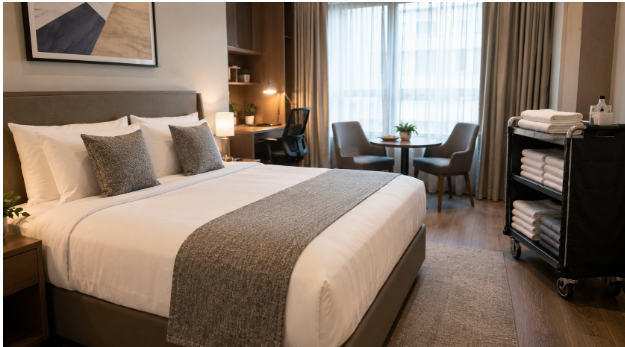
Furnished apartments, corporate housing providers, serviced residences, and property management companies need bedding that works differently from ordinary retail products. The bedsheets must look attractive for new guests, remain comfortable during longer stays, and handle regular washing between occupants.
Because these properties may include many apartments with different bed sizes, bedding decisions can also affect housekeeping, storage, replacement costs, and the overall appearance of each room. Choosing products only by color or initial price can therefore create problems later.
A carefully planned collection can make day-to-day operations much easier. Businesses that require specific dimensions, materials, colors, packaging, or other specifications may choose to work with a Custom Bedsheet Set Manufacturer to develop products around the practical requirements of their properties.
Understand How Furnished Apartments Use Bedding
A furnished apartment may serve business travelers, relocating families, international visitors, or people staying for several weeks or months.
This means bedding has to work for a broad range of guests.
Unlike homeowners, property operators cannot choose sheets based on one person’s preferences. The products need to provide dependable comfort while remaining practical for repeated use.
Before selecting a collection, businesses should consider:
- Average length of guest stays
- Frequency of linen changes
- Number of apartments
- Mattress sizes across properties
- Laundry arrangements
- Typical room interiors
- Replacement frequency
- Storage capacity
These factors provide a better starting point than simply choosing the most attractive bedsheet available.
Standardization Can Make Operations Easier
When a company manages many furnished apartments, too many bedding variations can make operations complicated.
For example, one property may have white sheets, another may use beige sheets, and a third may have a completely different size and fabric. Over time, replacements become difficult to organize.
Standardizing bedsheet specifications can simplify the process.
A business could select one main fabric, several standard sizes, and a limited color range for most apartments.
This allows housekeeping teams to identify products more easily and makes replacement orders more predictable.
Standardization does not mean every apartment needs to look identical. Decorative items such as cushions, throws, artwork, and duvet covers can provide individual character while the core bedsheets remain consistent.
Choose Colors That Work With Different Interiors
Furnished apartments often have different furniture, flooring, curtains, and wall colors.
Bedsheets therefore need to work across several interior styles.
Neutral shades can be particularly useful.
White, cream, light grey, beige, and other soft colors can coordinate with both modern and traditional rooms.
These shades can also make the bed look clean and organized without drawing too much attention away from the rest of the interior.
If a property brand wants a stronger visual identity, one or two signature colors can be introduced carefully.
The key is choosing shades that can still work when furniture or room decor changes.
Fabric Should Balance Comfort and Practicality
Guests expect bedding to feel comfortable, but property managers also need products that are practical to maintain.
The ideal material should be selected according to actual use rather than marketing language.
Businesses should consider:
- Fabric feel
- Breathability
- Durability
- Washing requirements
- Drying time
- Wrinkle behavior
- Expected lifespan
A very delicate fabric may feel excellent but become difficult to manage when used across many apartments.
On the other hand, choosing only for durability may result in sheets that do not provide the level of comfort guests expect.
A balanced option can provide a better long-term experience for both guests and property staff.
Exact Mattress Measurements Are Essential
Beds within furnished apartments may come from different furniture suppliers and may not all have identical dimensions.
Even mattresses carrying the same general size label can vary slightly.
Mattress depth is another important consideration.
Some apartments may use mattress toppers or thicker mattresses to improve guest comfort. A fitted sheet that works perfectly in one room may be too shallow for another.
Businesses should record exact mattress measurements across their properties before finalizing bedding specifications.
Important measurements include:
- Mattress length
- Mattress width
- Mattress depth
- Required fitted-sheet pocket depth
Organized measurement records can prevent repeated sizing problems when new sheets are ordered.
Think About Longer Guest Stays
Serviced apartments often accommodate guests for longer periods than hotels.
Someone staying several weeks may interact with the bedding differently from a guest staying one or two nights.
Longer-stay guests may wash the sheets themselves, request additional sets, or notice product quality more closely over time.
This makes clear care instructions particularly useful.
If guests have access to in-unit washing machines, the sheets should ideally be practical enough for normal household care.
Complicated cleaning requirements can create inconvenience for both guests and management.
Providing straightforward washing information can help maintain the bedding correctly throughout a longer stay.
Maintain Spare Sets for Easy Turnover
Furnished accommodation operators should not depend on one bedsheet set per bed.
Spare inventory is necessary for laundry cycles, unexpected damage, stains, maintenance issues, or rapid guest turnover.
A standardized bedding collection makes this easier because spare products can be used across multiple apartments with the same bed specifications.
Businesses can organize linen stock by:
- Bed size
- Product code
- Color
- Property group
- Sheet type
Clear storage systems reduce the chance of housekeeping staff taking the wrong fitted sheet or pillowcase to an apartment.
This becomes increasingly important as the number of managed properties grows.
Pillowcases Should Be Included in the Planning
Bedsheets often receive most of the attention, but pillowcases are changed and washed just as frequently.
Properties may also use different numbers of pillows depending on the apartment category.
A studio apartment might have two sleeping pillows, while a premium two-bedroom unit may include additional pillows.
Businesses should decide how many pillowcases are required for each bed and whether spare pieces should be ordered separately.
Standardizing pillow dimensions can also simplify replacement.
If every property uses several different pillow sizes, linen management can become unnecessarily complicated.
Consider How Bedding Looks in Property Photography
Furnished apartments are often marketed through online booking platforms, property websites, and rental listings.
The bed frequently appears prominently in these photographs.
Consistent bedding can make property images look more professional and connected.
Neutral, well-fitted sheets can create a clean base for photography, while decorative throws or cushions can introduce individual style.
Businesses should avoid highly distracting patterns unless they are intentionally part of the property design.
The bedsheet should support the overall presentation rather than dominate it.
Good fit matters as well. Loose or poorly sized sheets can make a carefully designed bedroom appear less polished in photographs.
Make Housekeeping Simple
The best bedding system should work for the people who handle it every day.
Housekeeping teams benefit from products that are easy to identify, fit, remove, wash, fold, and store.
Businesses can make operations easier by keeping specifications simple.
For example, the same fitted-sheet construction could be used across all apartments while only the dimensions change for different mattresses.
Labels or product codes can also help staff identify sizes quickly.
When developing products with a Custom Bedsheet Set Manufacturer, businesses can define consistent measurements and construction details that support both guest comfort and daily housekeeping.
Quality Checks Matter Before Larger Orders
A bedsheet may appear suitable from a photograph but perform differently in real use.
Before ordering large quantities, businesses should review samples carefully.
A sample can be tested for:
- Mattress fit
- Fabric feel
- Stitching
- Elastic strength
- Pillowcase sizing
- Color
- Washing performance
- Shrinkage
- Overall appearance
The sample should ideally be placed on the actual mattress type used in the property.
It can then be washed according to the expected laundry process and checked again.
This practical testing provides much more useful information than judging the product only when it is new.
Replacement Planning Can Reduce Emergency Purchases
Bedding does not last forever.
Regular washing, accidental damage, stains, and everyday wear eventually create a need for replacement.
Property managers should plan for this instead of waiting until inventory becomes critically low.
Keeping records of how often bedsheets need to be replaced can help businesses estimate future purchasing requirements.
It can also reveal whether one material or construction performs better than another.
Planned replacement orders are generally easier to manage than emergency purchases, which may force the business to buy products that do not match existing bedding.
Consistent specifications make long-term replacement much simpler.
New Properties Should Follow Existing Standards
When a furnished apartment business expands, new properties can introduce additional complexity.
New mattresses, room designs, and furniture packages may lead to different bedding requirements.
However, businesses can reduce unnecessary variation by applying existing bedding standards wherever practical.
Before purchasing mattresses for a new location, managers can consider whether commonly used dimensions would simplify linen management.
The same approach can apply to pillow sizes and bedroom styling.
Keeping the core bedding system consistent allows new properties to integrate more easily into existing operations.
Guest Feedback Can Guide Future Decisions
Guests may provide useful information about bedding without being asked specifically about sheets.
Reviews may mention that the bed felt comfortable, the room appeared clean, or the bedding was pleasant.
Negative comments can also reveal issues.
Repeated feedback about sheets coming loose, feeling uncomfortable, or appearing worn should be investigated.
Businesses can combine guest comments with housekeeping feedback to identify improvements.
Housekeeping staff may notice practical problems that guests do not mention, such as difficult fitting, excessive shrinkage, or products that take too long to prepare.
Both perspectives can help improve future bedding specifications.
Consider Total Value Rather Than Initial Price
For a multi-property business, purchasing decisions can involve significant quantities.
It may therefore be tempting to choose bedsheets based mainly on the lowest unit price.
However, initial cost is only one part of the overall value.
A cheaper product that needs frequent replacement may become more expensive over time. Bedding that is difficult to wash, dry, or fit can also increase operational effort.
Businesses should consider:
- Purchase cost
- Expected useful life
- Laundry performance
- Ease of housekeeping
- Guest comfort
- Replacement frequency
The right choice is the product that provides an appropriate balance for the property, not automatically the cheapest or most expensive option.
Build a Bedding System That Can Grow With the Business
As a furnished apartment company expands, organized product specifications become increasingly valuable.
Records should include approved materials, colors, dimensions, construction details, pillowcase sizes, and other important information.
This creates a repeatable system for existing and future properties.
Businesses researching tailored production options can explore joyilife.com when considering bedsheet sets developed around commercial sizing, material, and design requirements.
The goal is to create bedding that can be reordered consistently as the property portfolio grows.
Conclusion
Furnished apartment businesses need bedsheets that provide comfort while supporting efficient daily operations.
The right collection should fit mattresses accurately, work across different room interiors, withstand regular washing, and be simple for housekeeping teams to manage.
Standardizing sizes, colors, fabrics, and product specifications can reduce inventory confusion and make replacements easier. Spare sets, organized storage, sample testing, and planned purchasing also help prevent operational problems.
Guest feedback and housekeeping experience can provide useful information for future improvements.
By treating bedding as part of a wider property-management system rather than an isolated purchase, furnished accommodation businesses can create bedrooms that look consistent, feel comfortable, and remain easier to manage as the number of properties grows.