
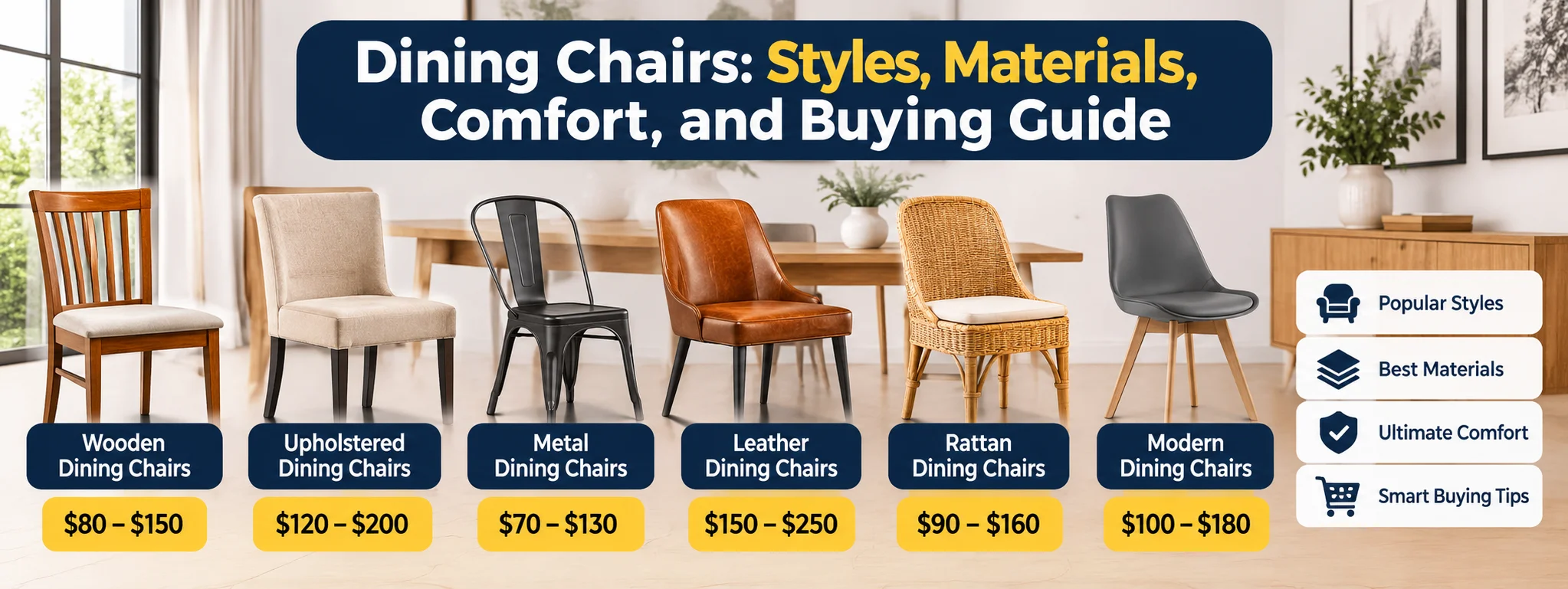
Dining chairs play an important role in creating a comfortable, attractive, and functional dining space. The right dining chairs do more than provide a place to sit; they influence the appearance of your dining room, complement your table, and make everyday meals and special gatherings more enjoyable. Whether you are furnishing a new home, updating an existing dining area, or looking for stylish seating for guests, choosing the right chairs can make a noticeable difference.
With so many designs, materials, colors, and sizes available, finding suitable seating requires more than focusing on appearance alone. Comfort, durability, room dimensions, maintenance, and budget should all be considered before making a purchase. Some homeowners prefer traditional wooden designs, while others choose modern upholstered seating or minimalist metal frames.
Popular Dining Chair Styles for Every Home
Dining furniture comes in many designs, making it easier to find chairs that match different interior styles. Understanding the most popular options can help you narrow down your choices.
1. Modern Dining Chairs
Modern dining chairs feature clean lines, simple shapes, and practical designs. They often include smooth surfaces, neutral colors, and streamlined frames that work well in contemporary homes.
Popular features include:
- Minimalist frames with simple details.
- Neutral shades such as white, gray, and black.
- Curved backs for a softer appearance.
- Plastic, metal, wood, or upholstered construction.
Modern designs are particularly suitable for apartments and dining rooms where homeowners want a clean, uncluttered appearance.
2. Wooden Dining Chairs
Wooden chairs remain a popular choice because they offer a timeless appearance and can complement many types of dining tables. Common wood options include oak, walnut, pine, maple, and beech.
Their appearance depends on the wood species, finish, and construction. Dark wooden frames create a traditional atmosphere, while lighter finishes can make a room feel more relaxed and contemporary.
Solid wood models can provide excellent durability when properly constructed and maintained.
3. Upholstered Dining Chairs
Upholstered chairs include padded seats and sometimes cushioned backrests. They are designed to provide additional comfort, particularly during longer meals and family gatherings.
Common upholstery materials include:
- Polyester fabric.
- Cotton blends.
- Velvet.
- Faux leather.
- Genuine leather.
Fabric options provide different textures and colors, while leather-style finishes can be easier to wipe clean. Consider stain resistance and cleaning requirements before choosing upholstered seating.
4. Industrial Dining Chairs
Industrial designs combine materials such as metal, wood, and sometimes leather. They often feature exposed frames, darker finishes, and straightforward construction.
These chairs work particularly well with wooden dining tables, brick walls, and contemporary industrial interiors.
5. Scandinavian Dining Chairs
Scandinavian-inspired seating focuses on simplicity, natural materials, and functional design. Light wood, soft curves, neutral upholstery, and understated details are common characteristics.
These designs are a good choice for homeowners who prefer bright, welcoming interiors without excessive decoration.
Dining Chair Materials and Their Benefits
The material affects a chair’s appearance, comfort, maintenance, and expected lifespan. Before purchasing, consider how frequently the furniture will be used and how much maintenance you are comfortable performing.
Solid Wood
Solid wood is valued for its natural appearance and structural strength. Oak and maple are often selected for their durability, while walnut offers a rich, darker appearance.
Wooden chairs can be refinished or repaired depending on their construction. However, they should be protected from excessive moisture, heat, and direct sunlight.
Metal
Metal chairs are commonly made from steel or aluminum. They can provide a contemporary appearance and are often suitable for busy dining areas.
Steel generally offers a sturdy frame, while aluminum is lighter and easier to move. Protective finishes are important because exposed metal may become scratched or corroded.
Plastic and Acrylic
Plastic chairs are available in different colors, shapes, and finishes. They are often lightweight and easy to clean, making them useful for casual dining spaces.
Acrylic designs provide a transparent appearance that can help smaller rooms feel less visually crowded. However, some plastic materials may scratch or become discolored over time.
Fabric and Leather Upholstery
Upholstered seating offers a softer experience than many hard-surface alternatives. Fabric provides a wide range of textures, patterns, and colors.
Leather and faux leather are popular for their smooth surfaces and relatively straightforward cleaning. Their quality varies, so inspect stitching, padding, and upholstery construction before purchasing.
Dining Chair Comparison Table
The following table compares common chair materials and their practical characteristics.
| Material | Main Benefits | Maintenance | Suitable For |
|---|---|---|---|
| Solid wood | Classic appearance and sturdy construction | Occasional polishing and cleaning | Traditional and modern homes |
| Metal | Strong frame and contemporary design | Wipe clean and protect the finish | Industrial and modern interiors |
| Plastic | Lightweight and easy to clean | Simple surface cleaning | Casual dining areas |
| Fabric | Soft texture and multiple design options | Depends on fabric and stain protection | Comfortable family dining |
| Genuine leather | Premium appearance and smooth finish | Specialized cleaning and conditioning | Formal dining spaces |
| Acrylic | Lightweight visual appearance | Regular gentle cleaning | Small and contemporary rooms |
The best material depends on your household’s needs. Families with young children may prefer easy-to-clean surfaces, while homeowners who frequently entertain guests may prioritize padded seating.
How to Choose the Right Dining Chairs
Selecting suitable seating involves balancing appearance, comfort, and functionality. A chair that looks attractive in a showroom may not necessarily work well in your dining room.
1. Check the Chair Height
Chair height should match the dining table. A comfortable arrangement generally provides approximately 10–12 inches between the seat surface and the underside of the tabletop.
Standard dining tables are often around 28–30 inches high, while many dining chairs have seat heights of approximately 17–19 inches.
These are general guidelines rather than fixed requirements. Always check the actual measurements before purchasing.
2. Measure Your Dining Space
Room dimensions determine how many chairs can fit comfortably around a table. Measure the available area and consider how much space people need to sit down and move around.
Avoid choosing oversized chairs simply because they look impressive. Wide armchairs may require more room than compact armless designs.
3. Prioritize Comfort
A comfortable dining chair should provide suitable back support, an appropriate seat depth, and enough space for natural movement.
Consider the following details:
- Seat padding and firmness.
- Backrest height and angle.
- Armrest position.
- Overall chair width.
- Weight capacity and frame stability.
If possible, sit on the chair before buying it. A short test can reveal problems that product photographs cannot show.
4. Match Chairs With Your Dining Table
Your chairs do not necessarily need to match your dining table perfectly. However, their materials, colors, and proportions should create a balanced appearance.
For example, wooden chairs can complement a glass dining table, while upholstered chairs can soften a table with a dark metal frame.
5. Consider Everyday Maintenance
Think about how much time you want to spend cleaning your furniture.
Smooth plastic, metal, and leather-style surfaces are generally easier to wipe down than textured fabrics. Removable covers can also make upholstered chairs more practical for households with children or pets.
Dining Chair Designs for Different Room Sizes
The size and layout of your dining room should influence your furniture selection.
Small Dining Rooms
Compact rooms benefit from chairs with slim frames, narrow seats, and minimal visual weight. Armless designs are especially useful because they can slide underneath many dining tables.
Transparent acrylic chairs and light-colored finishes can also create a more open visual effect.
Large Dining Rooms
Larger dining spaces provide more flexibility. You can consider wider upholstered chairs, armchairs, or a combination of different seating styles.
A larger room can also accommodate statement furniture with decorative backs or distinctive materials.
Open-Plan Living Spaces
In open-plan homes, dining furniture should complement nearby living and kitchen areas. Choose colors and finishes that connect the different spaces without making everything look identical.
Consistent wood tones, complementary upholstery, and coordinated metal finishes can create a cohesive interior.
Creative Ways to Style Dining Chairs
Dining chairs can become an important part of your room’s overall design. You do not need to replace every piece of furniture to create a fresh appearance.
Mix Different Chair Designs
Combining different chairs can give a dining area a more personal character. For example, you might place upholstered chairs along the sides and use two wooden armchairs at the ends of the table.
Keep one or two design elements consistent, such as color, material, or shape, to maintain visual balance.
Use Color Strategically
Neutral colors are versatile, but adding a little contrast can make the room more interesting.
Consider these combinations:
- Natural wood with cream upholstery.
- Black metal with warm brown wood.
- White furniture with soft gray cushions.
- Dark wooden tables with beige seating.
- Light oak with muted green upholstery.
Add Seat Cushions
Seat cushions provide additional softness and allow you to introduce new colors or textures without purchasing replacement chairs.
Choose cushions that fit securely and do not slide during use.
Consider Armchairs at the Table Ends
Armchairs can create a more formal appearance and provide additional comfort. They are particularly useful at the ends of rectangular dining tables, provided there is enough clearance.
Common Mistakes to Avoid When Buying Dining Chairs
Even attractive furniture can become inconvenient if it does not suit your space or daily requirements.
Avoid these common mistakes:
- Ignoring measurements: Always check seat height, width, depth, and table clearance.
- Choosing appearance over comfort: Attractive designs should still support comfortable seating.
- Overcrowding the table: Allow enough room for people to move their chairs.
- Ignoring cleaning requirements: Select materials that suit your household and lifestyle.
- Buying without checking construction: Examine joints, legs, upholstery, and overall stability.
Paying attention to these details can prevent unnecessary replacement costs and help you make a more satisfying purchase.
How to Maintain Dining Chairs for Long-Term Use
Regular maintenance helps preserve furniture’s appearance and functionality.
Wooden chairs should be cleaned with a soft cloth and suitable wood-care products. Avoid excessive water because moisture can damage certain finishes.
Metal frames should be checked periodically for loose screws, scratches, and signs of corrosion. Tighten fittings when necessary.
For upholstered chairs, vacuum fabric surfaces regularly and follow the manufacturer’s cleaning instructions. Treat spills promptly using products appropriate for the upholstery material.
Plastic and acrylic surfaces should be cleaned with a soft cloth and gentle cleaning solution. Avoid abrasive materials that can cause scratches.
A few simple maintenance habits can help keep your dining area looking fresh and welcoming.
Final Thoughts
Choosing the right dining chairs is about finding a practical balance between comfort, appearance, durability, and available space. From timeless wooden designs and modern metal frames to soft upholstered seating, every option offers different advantages.
Before making a decision, measure your dining area, check the table height, compare materials, and consider your household’s daily needs. Pay attention to construction quality and maintenance requirements rather than focusing exclusively on appearance.
The best dining chairs are those that fit naturally into your home, support comfortable everyday meals, and create an inviting atmosphere for family and guests. With thoughtful planning, you can build a dining space that looks beautiful and remains functional for years.
Frequently Asked Questions
1. What is the standard height of dining chairs?
Most dining chairs have a seat height of approximately 17–19 inches, although dimensions vary by design.
2. How many dining chairs do I need?
The number depends on your table size, available space, and household requirements. Allow enough room for comfortable seating.
3. Which material is best for dining chairs?
Solid wood, metal, plastic, and upholstered options all have advantages. Choose according to durability, comfort, appearance, and maintenance needs.
4. Are upholstered dining chairs comfortable?
Yes. Upholstered chairs often provide additional cushioning and back support, making them suitable for longer meals.
5. Should dining chairs match the dining table?
No. They can have different materials or finishes as long as their proportions, colors, and overall styles complement one another.