
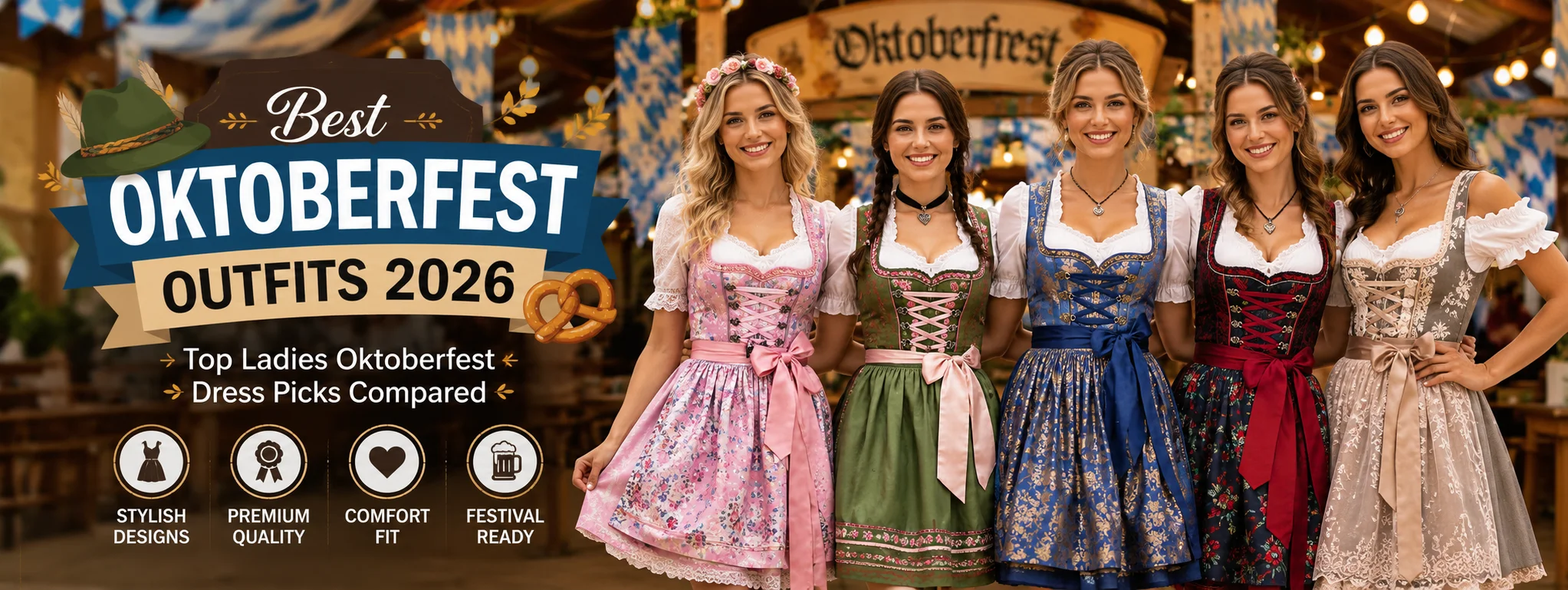
Sixteen days, six million visitors, and one unwritten rule: at the world’s biggest folk festival, what you wear is half the experience. The best festival looks share a short list of traits, real fabric, deliberate structure, and details that survive from the first weißwurst breakfast to the last band set, yet within those traits the range for women has never been wider than it will be in 2026. This comparison walks through the leading dress directions for the September 19 to October 4 season, weighs the strongest Oktoberfest outfits against each other on fit, comfort, weather, and photographs, and finishes with the accessories that quietly decide whether an outfit works at hour ten.
What Every Winning Outfit Has in Common Before Style Enters the Picture
Strip away color and cut and the outfits that succeed at the festival share the same foundation. The fabric is woven, cotton, cotton blends, or real suede, never thin satin or vinyl, because tent benches, weather swings, and twelve-hour days destroy anything flimsy. The structure is real: a bodice that holds its line, a skirt with enough fabric to move, an apron generous enough to tie properly. And the sizing is deliberate, measured against a chart rather than guessed, because traditional cuts run firmer than fashion sizing and are designed to.
Those three traits explain most of the difference between the outfits that appear in the good photos and the ones that get replaced by day two. Every direction compared below assumes them.
The Heritage Direction: Classic Midi Dirndls in Traditional Palettes
The reference standard remains a knee-length or just-below dirndl in forest green, burgundy, navy, or a traditional floral, worn with a white puffed-sleeve blouse and a bowed apron. It is what Munich itself wears, it flatters across sizes because the bodice does the shaping, and it transitions from a daytime tent session to an evening in the city with nothing but a shawl. Against every other direction in this comparison it wins on photographs and correctness, and its only real cost is that it styles in fewer directions than simpler bases: the dirndl is always unmistakably the dirndl.
The Modern Direction: Where the Ladies Dress Category Is Actually Moving
The strongest movement in the category is toward versions of the traditional silhouette engineered for modern wear, and it is where most 2026 buyers should start their search. A current ladies Oktoberfest dress keeps the fitted bodice and full skirt but arrives in updated palettes, dusty rose, sage, cream florals, with breathable linings, adjustable lacing, and blouses cut for comfort rather than ceremony. Mini lengths serve the party register, midi remains the all-rounder, and longer cuts cover formal trachten events. The direction wins the comparison on wearability per euro: one modern dress with two aprons and two blouses genuinely produces four distinct outfits, which no other option here matches.
The Leather Direction: Women’s Breeches as a Full Outfit Base
The third direction replaces the dress entirely. Women’s lederhosen, cut for female proportions in suede or deerskin, paired with a trachten blouse or off-shoulder top, have moved from novelty to staple, and they beat both dress directions on mobility, pockets, and multi-day restyling. They concede the classic silhouette that first-time photos usually want, which is why they rank as the strongest second outfit rather than the default first, but for repeat attendees and anyone who simply prefers shorts, they win the comparison outright. Weather-wise, leather is the best performer on this list, warm in the evening chill and indifferent to spills.
Comparing the Directions Day by Day: Weather, Benches, and the Midnight Test
Late September in Bavaria swings from warm afternoons to single-digit evenings, and the directions handle it differently. The heritage dirndl breathes best through tent heat but needs a wool shawl or fitted cardigan planned for the walk home. The modern dress performs the same with lighter linings buying extra afternoon comfort. Leather flips the profile, strongest after sunset, perfectly tolerable before it.
Then there is the midnight test, the honest measure of any festival outfit: after ten hours of benches, dancing, and weather, does it still hold its line? Structured cotton passes. Real suede passes without effort. Satin-heavy budget versions fail by mid-afternoon, which is why they appear nowhere in this comparison except as the cautionary baseline.
The Accessories That Decide the Outcome More Than the Dress Does
Every direction above is completed or undone by the same short list. Shoes first: blocked heels, ballet flats, ankle boots, or clean trainers for the fairground, all broken in before opening day, because nothing ends a festival day faster than untested footwear. Legs next: knee-high wool socks or tights extend any outfit into the evening and read intentional in every direction. Then the small kit, a crossbody bag that leaves hands free for a maß, a shawl or cardigan in the outfit’s accent color, and a braided or floral hairstyle that survives wind and tent humidity.
The apron bow deserves its own sentence in any comparison: right side signals taken, left signals single, center-front undecided, center-back reserved for servers. It is the one detail locals read on every dress direction, and it costs nothing to get right.
The Verdict for 2026, by Buyer
For a first Munich trip where photographs matter most, the heritage midi dirndl wins. For the best all-round value and the widest styling range, the modern dress direction takes it, and it is the correct default recommendation this season. For repeat attendees, multi-day trips, and comfort-first buyers, women’s leather wins and never looks back. Across all three, the ordering advice is identical: popular colorways and mid-range sizes sell through from mid-August, so the comparison only helps if the checkout happens early.
Frequently Asked Questions
Which single outfit works for both tent days and evening events?
A midi dress in a jewel tone. Swap the daytime flats for blocked heels and add a shawl, and the same dress covers both registers without a change.
Are short dresses acceptable inside the Munich tents?
Yes, though they read party-forward rather than traditional.
Pair a mini length with tights and boots and it sits comfortably in the modern register; nobody polices hemlines, but fabric quality is noticed everywhere.
What should I budget for an outfit that lasts?
Roughly the price of a good pair of leather boots buys an authentic dress or entry leather with the full accessory kit. Spending half that on satin costume sets is the only genuinely expensive option, because it buys one night.
How do I keep the outfit working across multiple festival days?
Rotate the variables, not the base. Two blouses and two aprons around one dress, or two tops around one leather pair, produce a different look every day from a carry-on-sized wardrobe.
The comparison ends where the festival begins: any of these directions, bought in real fabric and sized honestly, will carry you from the opening tap to the last October night. Choose the one that fits how you celebrate, and let 2026 do the rest.