
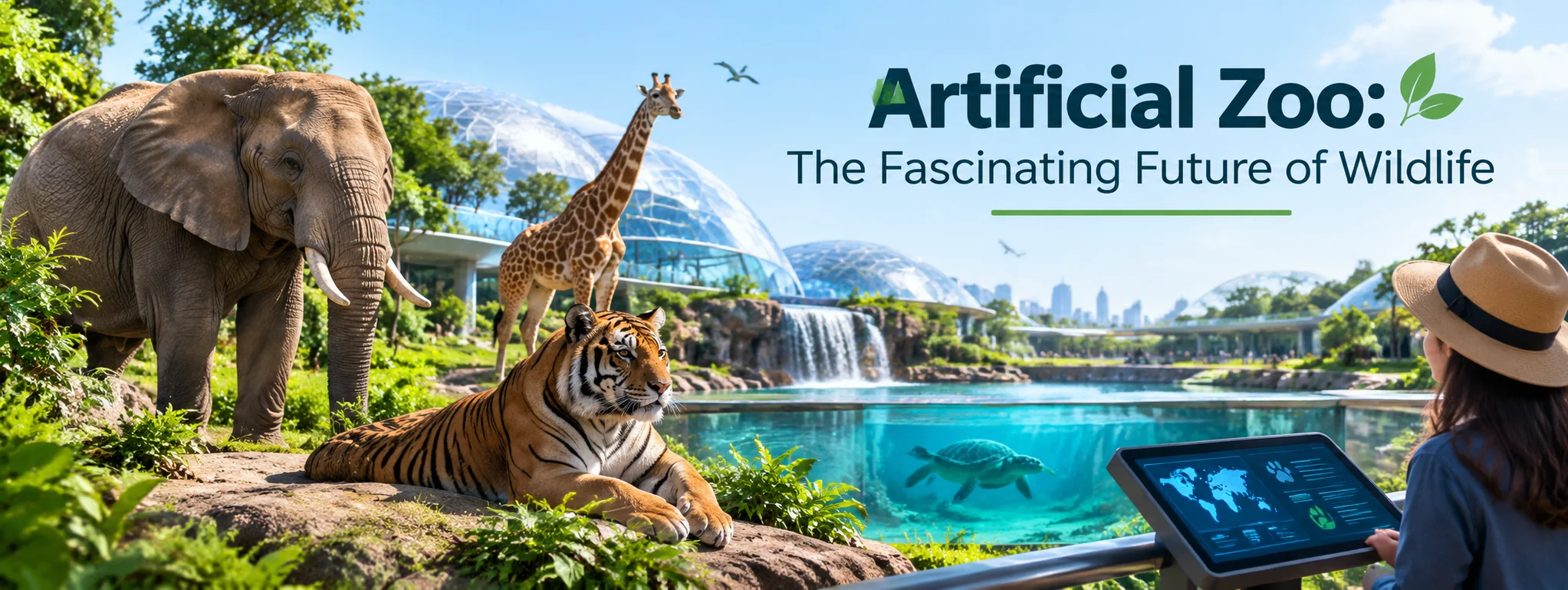
An artificial zoo is a modern concept that uses technology, realistic models, digital environments, and interactive experiences to recreate the feeling of visiting a zoo without depending entirely on living animals. Instead of keeping large numbers of animals in traditional enclosures, an artificial zoo can use robotic animals, augmented reality, virtual reality, projection systems, lifelike sculptures, and educational displays to help visitors learn about wildlife.
The idea is becoming increasingly interesting as people look for new ways to experience nature while also thinking about animal welfare, conservation, and environmental responsibility. An artificial zoo can offer a combination of education and entertainment while giving visitors a different perspective on the animal world.
What Makes an Artificial Zoo Different?
Traditional zoos generally rely on living animals as their main attraction. An artificial zoo takes a different approach. It may recreate animals using mechanical systems, advanced materials, digital screens, or computer-generated environments.
For example, visitors might walk into an area designed to look like an African savanna and encounter a lifelike robotic elephant. The elephant could move its ears, swing its trunk, make realistic sounds, and respond to nearby visitors. Another section might recreate an underwater ecosystem through large screens or projection technology.
The objective is not simply to create artificial animals. A well-designed artificial zoo can tell stories about habitats, endangered species, climate change, migration, and conservation.
Technology Behind the Experience
Technology is one of the most important parts of an artificial zoo. Modern systems can create surprisingly realistic wildlife experiences.
Robotic animals can be programmed to perform movements associated with real animals. Sensors can allow them to react when visitors approach. Some installations may combine mechanical movement with sound, lighting, and environmental effects to make the experience more immersive.
Virtual reality can take the experience even further. Visitors wearing VR headsets could explore a rainforest, observe polar bears in an Arctic environment, or travel beneath the ocean without physically entering those locations.
Augmented reality can also add digital animals and information to a physical environment. A visitor might point a smartphone or AR device toward an exhibit and see information about an animal’s diet, habitat, behavior, and conservation status.
Educational Value
One of the strongest advantages of an artificial zoo is education. Children and adults can learn about animals without needing every species to be physically present.
Interactive displays can explain how animals communicate, hunt, migrate, reproduce, and survive in different environments. Visitors can also learn about threats such as habitat destruction, illegal hunting, pollution, and climate change.
An artificial zoo can make complicated scientific information easier to understand. Instead of simply reading about an endangered animal, visitors can experience a simulated habitat and see how environmental changes affect the species.
Schools could also use these environments for educational visits. Teachers can connect the experience with lessons in biology, geography, environmental science, and conservation.
Animal Welfare Considerations
Animal welfare is an important reason why artificial zoos are attracting attention. Traditional zoos have long faced questions about whether keeping wild animals in captivity can provide them with appropriate living conditions.
An artificial zoo does not need to place living animals on display. This can eliminate concerns related to transportation, enclosure size, visitor noise, artificial environments, and stress caused by constant public observation.
However, artificial zoos should not be presented as a complete replacement for wildlife conservation. Protecting real habitats and supporting responsible conservation programs remain essential.
The best artificial zoo experiences can complement real conservation efforts by helping visitors understand why wild animals need protection in their natural environments.
Entertainment Without Losing the Educational Purpose
Entertainment can make learning more memorable. An artificial zoo can combine realistic environments with interactive activities, games, sound effects, lighting, and digital storytelling.
For example, visitors could participate in a simulated wildlife rescue. They might need to identify an injured animal, choose appropriate food, or decide how to restore a damaged habitat. Such activities turn passive viewing into active learning.
This approach can be particularly effective for younger visitors. When children interact with an exhibit rather than simply looking at it, they may remember information for much longer.
Potential Challenges
Despite its advantages, an artificial zoo also has limitations. Creating realistic robotic animals and immersive environments can be expensive. Maintenance is another major consideration because mechanical systems, sensors, screens, and software require regular servicing.
There is also a risk that artificial experiences may become more focused on entertainment than education. If an exhibit looks impressive but provides little meaningful information, visitors may leave without developing a deeper understanding of wildlife.
Another challenge is authenticity. Even the most sophisticated robot cannot completely reproduce the unpredictable behavior of a living animal. Real wildlife has individual personalities, natural instincts, and behaviors that cannot always be perfectly simulated.
For this reason, artificial zoos should clearly explain that their exhibits are representations rather than replacements for real wildlife.
Artificial Zoo vs. Traditional Zoo
| Feature | Artificial Zoo | Traditional Zoo |
|---|---|---|
| Main attraction | Robotic, digital, or simulated wildlife | Living animals |
| Animal welfare concerns | Generally lower for displayed animals | Requires careful animal-care standards |
| Technology | Often central to the experience | Usually supports exhibits |
| Maintenance | Software and mechanical maintenance | Animal care plus facility maintenance |
| Educational possibilities | Highly interactive and customizable | Direct observation of living animals |
| Natural behavior | Simulated | Real but influenced by captivity |
| Conservation message | Can focus strongly on habitats and threats | Can support conservation through live-animal programs |
| Visitor experience | Immersive and technology-driven | Direct wildlife observation |
The Future of Artificial Zoos
The future of artificial zoos could become increasingly sophisticated as robotics, artificial intelligence, virtual reality, and interactive technology improve. Future exhibits may be capable of creating highly detailed simulations of animal behavior and natural ecosystems.
Artificial intelligence could allow virtual animals to respond differently depending on visitor actions. Instead of following a fixed sequence, a digital or robotic animal could provide a more dynamic experience.
These developments could also make wildlife education more accessible. A virtual zoo could potentially be experienced from home, allowing people who cannot travel to major cities or wildlife centers to explore different ecosystems.
At the same time, designers will need to maintain a balance between technological excitement and scientific accuracy. The purpose should remain education, appreciation of nature, and encouragement of responsible environmental behavior.
Final Thoughts
An artificial zoo offers a fascinating way to experience wildlife through technology. By combining robotics, digital environments, virtual reality, interactive displays, and educational storytelling, it can introduce people to animals and ecosystems without relying entirely on live-animal exhibits.
Its greatest value may be its ability to make conservation education more engaging. Visitors can learn about endangered species, environmental threats, and natural habitats while experiencing an environment designed specifically for learning.