
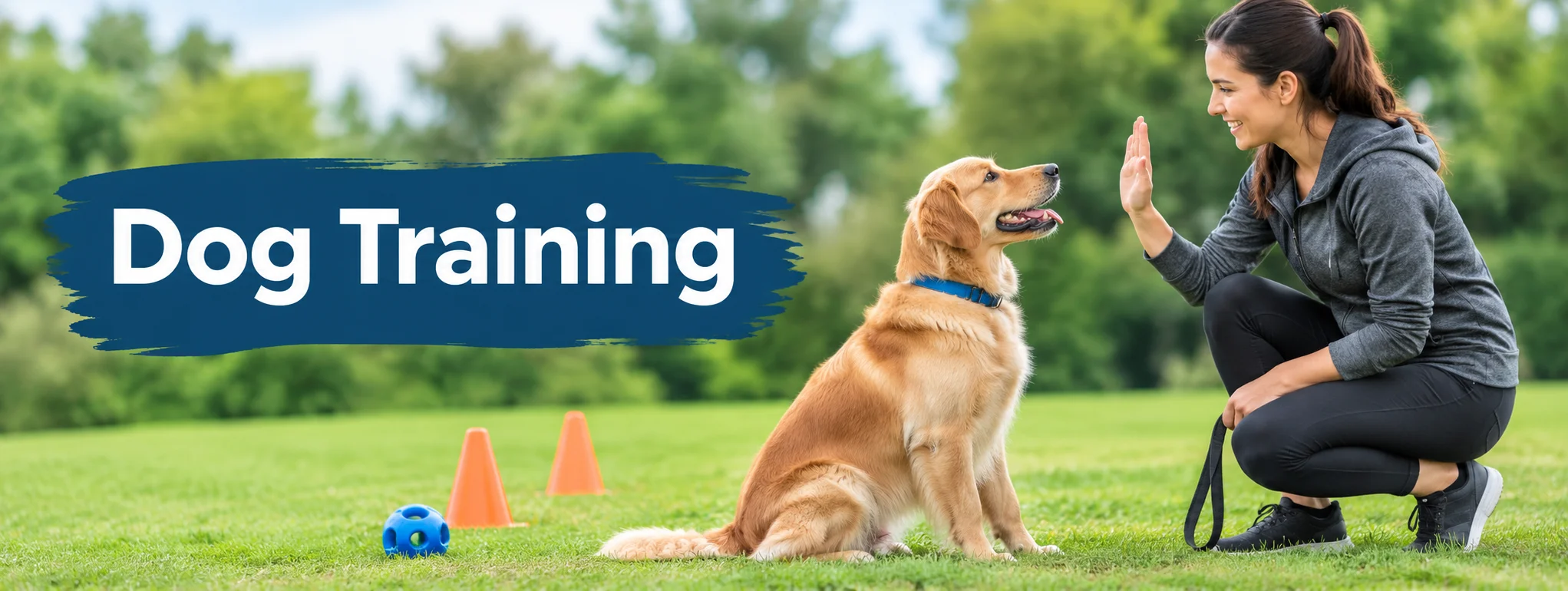
Dog training is an important part of building a happy, safe, and healthy relationship between you and your dog. Whether you have a young puppy or an older dog, consistent training can improve everyday behavior, communication, confidence, and safety. Training does not have to involve complicated techniques. With patience, clear signals, regular practice, and appropriate rewards, most dogs can learn useful behaviors at home.
Modern veterinary behavior guidance strongly supports reward-based training. This approach focuses on rewarding behaviors you want your dog to repeat instead of relying on fear, pain, or physical punishment.
Why Dog Training Matters
A trained dog is generally easier to manage at home and in public. Basic skills can help prevent problems such as jumping on visitors, pulling during walks, running toward dangerous areas, or ignoring recall.
Training also gives dogs mental stimulation. Learning a new command requires attention and problem-solving, which can be valuable for energetic dogs that become bored easily. More importantly, training creates a communication system between the dog and its owner.
Training should not be viewed simply as making a dog obey. The goal is to help the dog understand what behavior is expected in different situations while creating positive experiences during learning.
Start With Basic Commands
New training should begin with simple behaviors before moving to more complicated exercises. Useful commands include:
- Sit: Helps your dog settle before meals, greetings, or crossing roads.
- Stay: Teaches your dog to remain in one position until released.
- Come: An important recall behavior that can improve safety.
- Down: Encourages calm behavior and gives your dog another way to settle.
- Leave it: Helps prevent dogs from picking up unsafe objects.
- Drop it: Useful when your dog already has something in its mouth.
Keep instructions short and consistent. If everyone in the household uses the same word for a behavior, the dog is less likely to become confused.
Use Rewards to Encourage Good Behavior
Reward-based training can use small food treats, toys, praise, play, or another activity the dog enjoys. The important point is that the reward should actually matter to the individual dog. Different dogs may find different rewards motivating.
Timing is also important. When your dog performs the desired behavior, provide the reward promptly so the dog can connect the action with the positive outcome.
For example, when teaching “sit,” say the cue, wait for the dog to sit, and immediately reward the behavior. Repeat the process several times in short sessions.
Avoid overwhelming your dog with long training periods. A few focused minutes can be more productive than one extended session in which the dog becomes tired or distracted.
Build a Consistent Daily Routine
Dogs learn through repetition. Instead of training only once a week, incorporate small exercises into normal daily activities.
Ask your dog to sit before putting down its food bowl. Practice recall in a safe area. Reward calm behavior when guests arrive. Ask for a simple command before opening a door.
These small moments can turn everyday activities into useful learning opportunities.
Consistency also means rewarding desirable behavior whenever possible. If jumping on people is discouraged sometimes but rewarded with attention at other times, the dog may continue jumping because the behavior occasionally works.
Socialization Is an Important Part of Training
Training is not limited to commands. Dogs also need to learn how to respond calmly to people, animals, sounds, places, surfaces, and everyday situations.
Good socialization does not mean forcing a dog to interact with everything. A nervous puppy may need gradual exposure from a comfortable distance. The goal is to help the dog remain relaxed and develop positive associations with unfamiliar experiences.
Owners should watch body language carefully. If a dog appears frightened or overwhelmed, increasing the distance and slowing the process can be more helpful than forcing interaction.
Simple Training Schedule
| Training Area | Suggested Practice | Main Goal |
|---|---|---|
| Basic commands | 5–10 minutes daily | Better communication |
| Recall | Several short sessions | Improved safety |
| Leash walking | Regular walks | Calm movement |
| Socialization | Gradual exposure | Confidence |
| Calm behavior | Throughout the day | Better household manners |
| Mental stimulation | Games and simple tasks | Reduce boredom |
Address Unwanted Behaviors Carefully
Dogs may develop behaviors such as barking, chewing, digging, jumping, pulling, or stealing objects. Instead of simply punishing the unwanted action, consider why the behavior is happening and what alternative behavior you want the dog to perform.
For example, if your dog jumps on visitors, teach the dog to sit or keep all four paws on the floor before receiving attention. If your dog chews household objects, provide appropriate chew items and limit access to tempting objects.
Environmental management can make training easier. Baby gates, secure storage, appropriate toys, and controlled access can prevent a dog from repeatedly practicing unwanted behaviors.
Veterinary behavior experts advise against aversive training methods such as physical punishment, leash corrections, shock collars, and other techniques based on fear or pain.
Training an Older Dog
It is not too late to train an adult or senior dog. Older dogs can learn new behaviors, although the process may need to move at a comfortable pace.
Start with simple exercises and reward small improvements. If an older dog suddenly develops a serious behavior change, difficulty learning, unusual aggression, or anxiety, speak with a veterinarian because medical problems can sometimes contribute to behavior changes.
When Professional Help May Be Useful
Some behavior problems require more than basic home training. Serious fear, aggression, separation-related problems, or intense anxiety can be complicated and may require professional assessment.
Choose a trainer who uses humane, evidence-based, reward-based methods. For significant behavior concerns, veterinary guidance can also help identify possible medical or behavioral causes.
Final Thoughts
Dog training is most effective when it is consistent, patient, and rewarding. Start with simple commands, practice regularly, use rewards that motivate your dog, and gradually introduce new situations. Remember that every dog learns at a different pace.
The strongest results usually come from making good behavior easy to understand and worthwhile to repeat. With time, training can become more than a way to control behavior—it can become a daily activity that strengthens communication and trust between you and your dog.
FAQs
1. What age should dog training begin?
Basic training can begin when a puppy comes home, using age-appropriate and gentle exercises.
2. How long should training sessions be?
Short sessions of several minutes are often easier for dogs to handle, especially when they are learning something new.
3. Are treats necessary for dog training?
No. Food is common, but toys, play, praise, and other enjoyable activities can also work as rewards.
4. Can an older dog still learn commands?
Yes. Adult and senior dogs can learn new behaviors with patience and consistent practice.
5. What should I do if my dog is aggressive?
Avoid punishment and seek help from a veterinarian or qualified behavior professional, especially when aggression is severe or unpredictable.
1 thought on “Dog Training: A Practical Guide to Raising a Well-Behaved Dog”