
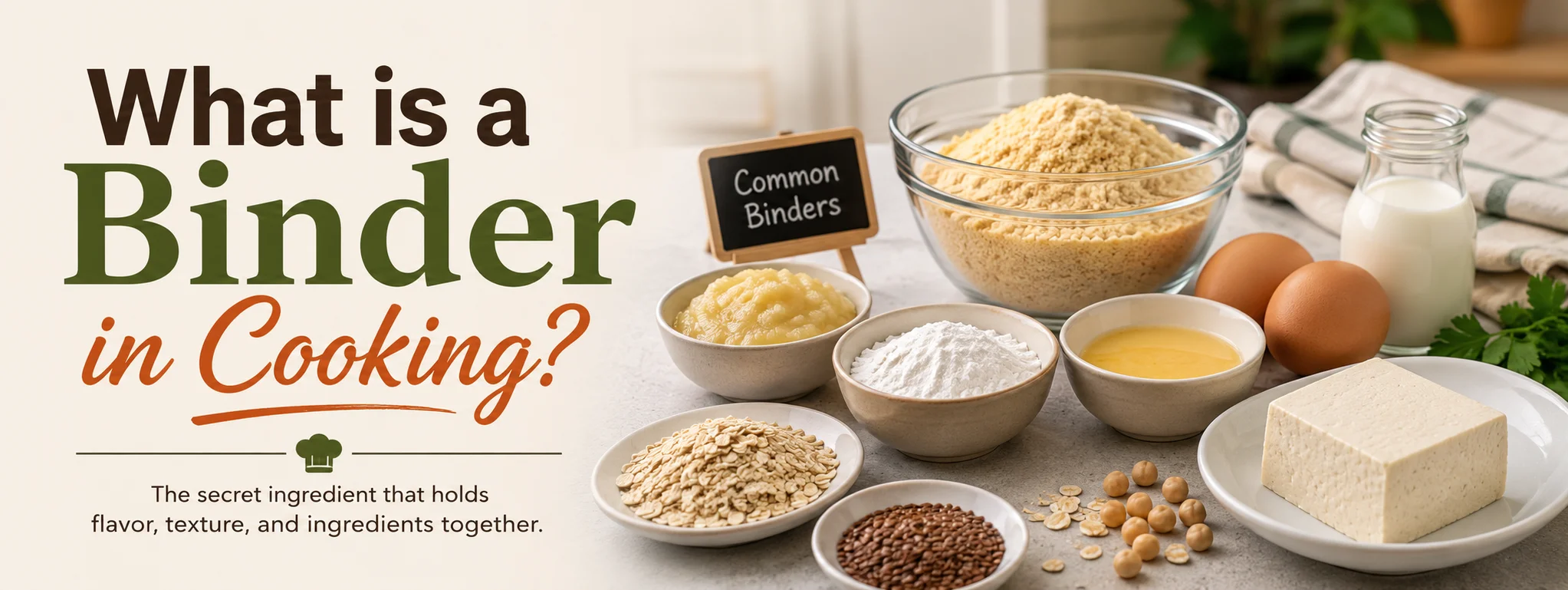
A binder in cooking is an ingredient used to hold other components together, giving structure, volume, and stability to both savory dishes and sweet baked goods.
Whether you are forming a juicy burger patty, rolling savory meatballs, assembling a delicate crab cake, or baking a soft loaf of quick bread, binders perform the culinary heavy lifting behind the scenes. Without them, meatballs would disintegrate into loose ground meat inside a simmering sauce, casseroles would slump across the plate, and cakes would crumble into a pile of dry crumbs the moment you sliced into them.
What Is a Binder in Cooking?
In culinary terms, a binder is an ingredient or combination of ingredients that holds discrete particles of food together as a cohesive unit. Binders work through moisture, starch, gel formation, or protein denaturation. When raw, a binder mixes thoroughly with other ingredients; when cooked, exposed to heat, or allowed to hydrate, the binder sets and locks the structure in place.
Understanding binders requires recognizing that they are not merely “culinary glue.” A great binder enhances flavor, improves texture, retains moisture, and creates a pleasing mouthfeel.
How Binders Work: The Science of Structural Integrity
Binders function primarily through three physical and chemical pathways:
1. Protein Coagulation
Proteins—found abundantly in whole eggs, egg whites, meats, and cheese—exist as long, folded molecular chains when raw. When heat is applied during cooking, these proteins denature, uncoiling and linking together in a tight, three-dimensional network. As this network contracts, it traps liquid, fats, and solid food particles within its grid.
2. Starch Gelatinization
Starches from flour, breadcrumbs, potatoes, oats, and rice absorb water and swell when heated. Around 140°F to 160°F (60°C to 71°C), the granules burst and release starch molecules into the surrounding liquid. This process, known as gelatinization, creates a sticky matrix that binds ingredients together and thickens liquids.
3. Emulsification and Viscosity
Fat and water do not naturally mix, but ingredients with emulsifying properties (like lecithin in egg yolks) bridge the gap between water and fat molecules. In addition, highly viscous liquids like condensed soup, tomato paste, heavy cream, or yogurt coat solids, filling empty spaces and causing particles to cling together.
Common Types of Binders in Culinary Applications
Culinary binders span several distinct categories depending on whether you are preparing savory ground meats, breaded fried foods, baked goods, or raw preparations.
Protein-Based Binders
-
Whole Eggs and Egg Whites: Eggs are the undisputed gold standard of culinary binders. The proteins in the white coagulate upon heating to form a solid matrix, while the yolk adds fat, flavor, and emulsifying power.
-
Cheese: Melted cheeses—such as mozzarella, cheddar, or parmesan—release proteins and fats that bind casserole ingredients, stuffed meats, and meatball mixtures.
-
Gelatin: Derived from animal collagen, gelatin forms a flexible gel structure when cooled. It is indispensable for terrines, pâtés, and cold desserts.
Starch and Grain-Based Binders
-
Breadcrumbs (Fresh or Panko): Breadcrumbs absorb moisture released by cooking meat and form a moist starch paste that holds everything together.
-
Flour and Cornstarch: All-purpose flour, wheat flour, and cornstarch act as dry binders, absorbing surface moisture and bonding liquids with fats.
-
Oats and Grains: Rolled oats or cooked rice offer a rustic texture and excellent moisture-holding capacity, making them ideal for meatloaves and plant-based veggie burgers.
Liquid and Fat-Based Binders
-
Mayonnaise: A stable emulsion of oil, egg yolk, and acid, mayonnaise adds rich moisture and structural stability to seafood cakes (like crab or salmon cakes) without drying out the dish.
-
Yogurt, Sour Cream, and Heavy Cream: High-fat dairy adds viscosity and fat-soluble flavor carrying power to casseroles and filling mixtures.
-
Mashed Vegetables: Mashed potatoes, pumpkin puree, or mashed sweet potatoes yield dense, starchy structures that bind ingredients without animal products.
A Comprehensive Guide to Cooking Binders
| Binder Type | Key Mechanism | Best For | Typical Usage Ratio |
| Whole Egg | Protein coagulation | Meatballs, burgers, quick breads, cookies | 1 large egg per 1 lb ground meat |
| Panko / Breadcrumbs | Starch absorption | Meatloaf, meatballs, breading coatings | 1/2 cup per 1 lb ground meat |
| Egg White | Firm protein mesh | Fish cakes, clear mousselines, soufflés | 1-2 whites per 1 lb seafood mixture |
| Flour / Cornstarch | Starch gelatinization | Batter coatings, stews, veggie burgers | 2-3 tbsp per batch of filling |
| Mayonnaise | Emulsification & fat | Crab cakes, salmon patties, potato salad | 2-4 tbsp per 1 lb seafood |
| Flax / Chia Egg | Soluble fiber gel | Vegan baking, plant-based patties | 1 tbsp ground seed + 3 tbsp water |
| Mashed Potato | Starch matrix | Shepherd’s pie fillings, fish cakes | 1/2 cup per 1 lb filling |
The Role of Binders Across Different Culinary Disciplines
1. Ground Meats and Seafood
When making meatballs, meatloaf, or sausage patties, binders perform a dual role: they keep the meat from falling apart during cooking and prevent moisture loss. Raw meat fibers contract as they cook, squeezing out juices. Including a binder—especially a panade (a mixture of breadcrumbs and milk)—creates a soft cushion that holds onto juices, ensuring a tender bite.
2. Baking and Pastry
In baking, binders provide the structural scaffolding that supports sugar, fats, and liquids. Eggs are the most common baking binder, helping cakes rise, cookies keep their form, and quick breads hold together when sliced. In gluten-free baking, binder substitutes like xanthan gum or guar gum are essential to replace the missing gluten protein structure.
3. Breading and Frying
The classic three-step breading process relies heavily on binding mechanics:
-
Dredging in Flour: Absorbs surface moisture from chicken or fish, creating a tacky surface.
-
Egg Wash Coating: Acts as the primary liquid binder, clinging tightly to the floured surface.
-
Outer Crust (Breadcrumbs/Panko): Adheres directly to the wet egg wash, forming a crisp outer shell when submerged in hot oil.
Plant-Based and Vegan Binders
Modern cooking frequently calls for animal-free alternatives that deliver equal structural performance.
-
Flaxseed or Chia “Eggs”: Mixing 1 tablespoon of finely ground flaxseed or chia seeds with 3 tablespoons of warm water yields a viscous, gel-like substance after sitting for 5 to 10 minutes. This gel mimics egg white viscosity perfectly in baked goods.
-
Aquafaba: The viscous liquid drained from a can of chickpeas contains a mix of starches and dissolved proteins. It can be whipped into a foam or used directly as an egg-white replacement in baking and breading.
-
Mashed Beans and Lentils: Black beans, chickpeas, and brown lentils act as both structural filler and binder in plant-based burger patties due to their heavy starch and fiber composition.
Common mistakes When Using Binders
-
Overusing the Binder: Adding too much breadcrumbs or flour makes meatballs dense, rubbery, and dry. Always balance dry starches with liquid ingredients like milk, stock, or beaten egg.
-
Under-Mixing or Over-Mixing: Binders must be evenly distributed throughout a mixture to function properly. However, over-mixing meat mixtures works the proteins into a tight, tough paste, producing rubbery results.
-
Skipping Chilling Time: Many binders—especially fats, gelatins, and seed gels—need cold temperatures to set properly before cooking. Chilling formed patties or meatballs for 30 minutes in the refrigerator before frying or baking prevents them from disintegrating in the pan.
Final Thoughts
Mastering the use of binders is one of the foundational skills that separates home cooks from confident culinary artisans. A binder is far more than a simple structural adhesive; it is the key ingredient that controls moisture retention, tenderness, and mouthfeel across hundreds of recipes.
By understanding how proteins, starches, and fats interact under heat and moisture, you can troubleshoot crumbly baked goods, create luscious crab cakes, and engineer perfectly tender meatballs every single time. The next time a recipe calls for an egg, a handful of breadcrumbs, or a spoonful of cornstarch, you will know exactly how that binder is working to turn individual ingredients into a unified, delicious dish.