
Introduction
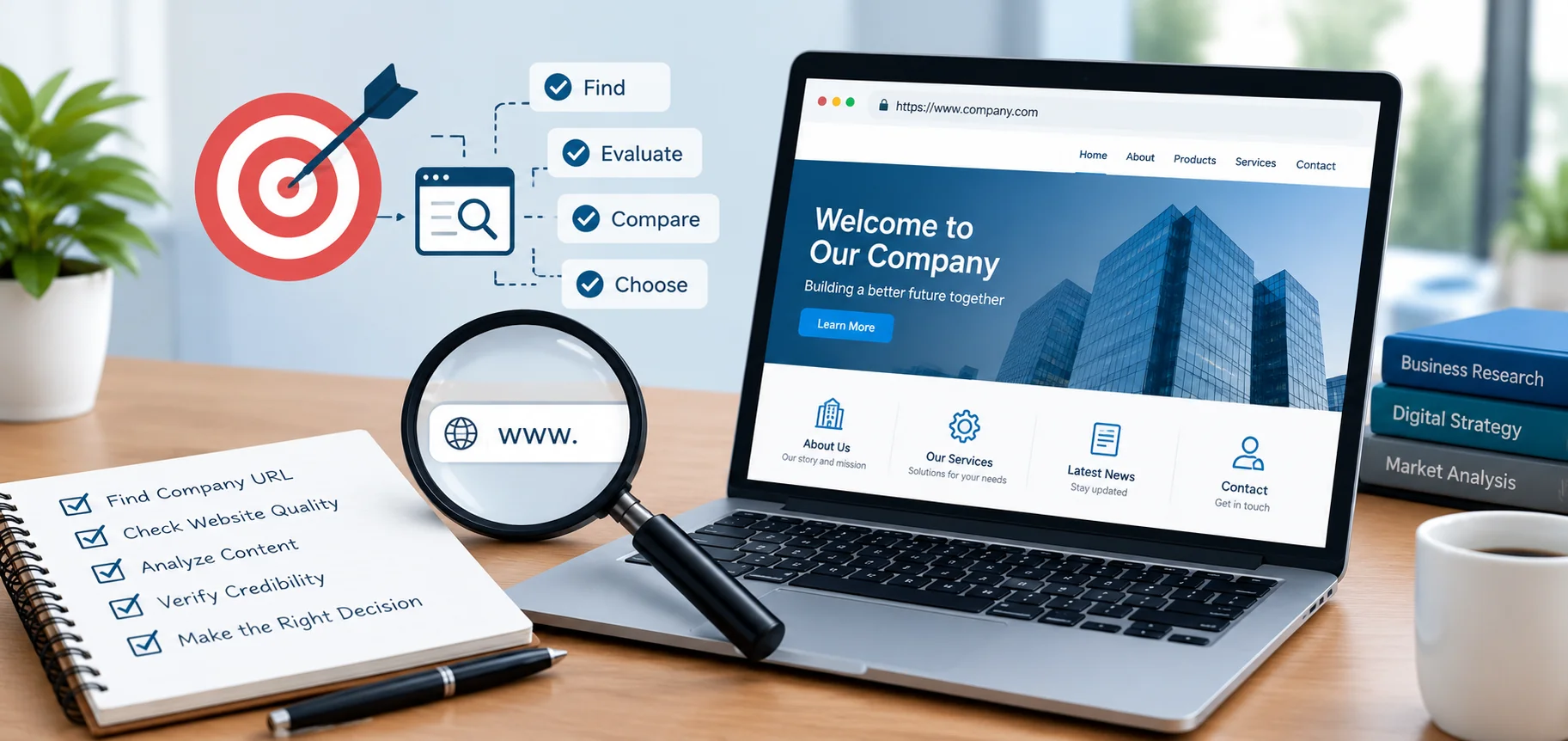
Target company URL research is an important part of modern business research, digital marketing, sales prospecting, and search engine optimization. Before contacting a potential client, analyzing a competitor, or building a list of business leads, you need to identify the correct company website and understand what information it provides. A reliable website can reveal valuable details about a company’s services, products, industry, location, audience, and business goals.
In today’s digital world, businesses often maintain multiple websites, regional domains, landing pages, and social media profiles. Finding the right URL is therefore more than a simple search task. It requires a clear process, careful verification, and a practical understanding of online information.
Effective target company URL research helps professionals save time, reduce research errors, and discover valuable opportunities. Whether you are an SEO specialist, business owner, marketer, researcher, or sales professional, learning how to find and evaluate company URLs can strengthen your decisions and improve your overall workflow.
Understanding the Purpose of Target Company URL Research
Target company URL research involves identifying, verifying, and examining the official website of a specific business or organization. The goal is to ensure that the website belongs to the intended company and contains information relevant to your research objectives.
For example, a marketing professional preparing an outreach campaign may need the official websites of 100 businesses. A sales team may want to identify potential customers in a particular industry, while an SEO specialist may research competing websites to understand their content strategies.
In each situation, accurate website identification provides a reliable starting point.
Why Accurate Company URLs Matter
A company URL connects you to its digital presence. If you select an incorrect domain, your research may produce misleading information or cause you to contact an unrelated organization.
Accurate URLs can help you:
- Identify legitimate companies and their official websites.
- Discover relevant business services, products, and market segments.
- Research competitors and understand their online positioning.
- Prepare targeted outreach campaigns using verified business information.
- Improve the quality of lead lists and business databases.
These benefits make URL research a practical skill for anyone who relies on online business information.
Target Company URL Research for Business Growth
A structured research process can support several business activities. Instead of collecting random links, professionals can focus on websites that match their objectives and offer useful information.
1. Lead Generation and Sales Prospecting
Sales teams frequently search for businesses that could benefit from their products or services. Finding each prospect’s official website helps researchers understand its operations, customer base, and potential needs.
For example, a company selling inventory management software might research retail stores, wholesalers, and distribution businesses. Their websites may reveal the types of products they sell, their locations, and whether they operate online or through physical branches.
This information helps sales professionals prioritize relevant prospects rather than sending generic messages to unrelated businesses.
2. Search Engine Optimization and Competitor Analysis
SEO specialists use target company URL research to identify competing websites and evaluate their online strategies. Once the correct domains are identified, researchers can examine content structure, service pages, keyword targeting, internal links, and other publicly accessible website elements.
A useful competitor analysis should focus on understanding why certain pages satisfy search intent and how their content serves readers. The purpose is not to copy another website but to discover opportunities for creating more helpful, accurate, and distinctive content.
3. Market Research and Industry Analysis
Businesses entering a new market need dependable information about existing competitors, potential partners, and customer preferences. Official company websites can provide an initial overview of an industry’s structure.
Researchers may compare product offerings, service categories, geographic coverage, pricing information, and published company announcements. When combined with reputable external sources, these findings can support better planning and market positioning.
How to Conduct Target Company URL Research Step by Step
A repeatable workflow makes research faster and reduces the chance of collecting incorrect information.
Step 1: Define Your Research Objective
Start by identifying exactly why you need company URLs. Your objective determines which businesses qualify and what information you should collect.
For example, you might be researching local service providers, software companies, online retailers, or businesses that publish content in a particular niche.
Set clear criteria, such as industry, location, company size, service type, or intended use. A focused search is generally more productive than collecting every business that appears in the results.
Step 2: Search for the Company Name
Use a search engine to look up the exact company name. Include relevant details when necessary, such as the business location, industry, or a known product.
If the name is common, try variations that distinguish the company from similarly named organizations. Search results may include directories, social profiles, news articles, advertisements, and third-party listings, so the first result should not automatically be treated as the official website.
Step 3: Verify the Official Website
Check whether the website identifies the business you are researching. Review its About page, contact information, branding, services, and company details.
Compare these details with reputable business directories, official social profiles, regulatory records where applicable, and other trustworthy sources.
A professional-looking website alone does not prove legitimacy. Similarly, a company may use a different domain name from its registered business name, so verification should consider multiple signals.
Step 4: Examine the Website Structure
After identifying a likely official domain, explore the pages most relevant to your research.
Useful pages may include:
- About Us: company background, mission, and history.
- Services or Products: the main offerings and target customers.
- Contact Us: business contact channels and location information.
- Blog or Resources: educational content and industry expertise.
- Careers: information about hiring, teams, and business expansion.
Not every company publishes all these pages. Record only the details that are available and relevant.
Step 5: Record and Organize Your Findings
Store verified URLs in a spreadsheet or business database. Include the company name, official domain, industry, location, verification status, source, and research notes.
Consistent formatting makes it easier to compare businesses, remove duplicate entries, and update outdated information later.
Essential Tools for Target Company URL Research
Several types of tools can make company website research more efficient. The best choice depends on the size of your project and the information you need.
| Tool or resource | Primary purpose | Best use |
|---|---|---|
| Google or Bing | Discover company websites | Initial URL discovery |
| Official company profiles | Confirm business identity | Website verification |
| Business directories | Find company listings | Cross-checking business details |
| Google Sheets or Excel | Organize research records | Tracking and deduplication |
| SEO analysis tools | Examine website visibility and content | Competitor research |
| Domain lookup services | Review publicly available domain information | Additional verification |
These resources serve different purposes. Search engines help discover websites, while spreadsheets organize findings and SEO tools support deeper analysis. No single tool guarantees that every URL is accurate, current, or officially associated with a business.
Best Practices for Reliable Company Website Research
High-quality research depends on accuracy, consistency, and responsible information handling. The following practices can improve the usefulness of your results.
Use Multiple Verification Signals
Do not rely entirely on one search result or directory entry. Compare the website’s branding, business details, and official links with independent sources whenever possible.
If two companies share a similar name, confirm the location and services before assigning a domain to the wrong business.
Check URLs and Redirects
A company may change its domain, merge with another organization, or redirect an older website to a new address. Check whether the URL loads successfully and whether any redirect leads to a relevant official domain.
Record the final destination when it differs from the original link. Treat broken links and unexplained redirects as items requiring further investigation.
Maintain Consistent Data
Use one standard format for domains, company names, and research notes. Avoid creating separate records for variations such as HTTP and HTTPS versions of the same website unless the distinction is relevant to your task.
Remove duplicate records and periodically review important URLs. This is especially useful for large prospecting lists and ongoing market research projects.
Respect Privacy and Website Policies
Company URL research should focus on publicly available business information and legitimate research purposes. Follow applicable privacy laws, website terms, and restrictions on automated data collection.
Avoid collecting unnecessary personal information or assuming that publicly visible details can be used for every purpose. Responsible research builds trust and reduces avoidable compliance risks.
Common Mistakes to Avoid During URL Research
Even a straightforward research task can produce unreliable results when basic checks are overlooked.
The most common mistakes include:
- Selecting a directory listing instead of the official company website.
- Confusing businesses with similar names or operating in different locations.
- Recording broken links without checking for updated domains.
- Assuming that a website is trustworthy because it looks professional.
- Collecting large amounts of information without a clear research objective.
A simple verification checklist can prevent many of these problems. Before marking a URL as verified, confirm that the business identity matches, the domain is relevant, and the source provides reasonable evidence of ownership or association.
How to Build an Efficient Company URL Research Workflow
For larger projects, create a standard process that every researcher can follow. Begin with a list of target company names, search for potential official domains, verify each result, and enter the findings into a structured database.
Use clear status labels such as Pending, Verified, Needs Review, and Unavailable. These labels help teams understand which records are ready for use and which require additional work.
You can also prioritize research according to business value. For example, a sales team may verify high-potential prospects first, while an SEO team may focus on direct competitors with similar audiences and services.
Automation can help with repetitive tasks such as formatting domains, identifying duplicate URLs, or checking whether pages respond. However, automated checks should support human verification rather than replace it. A website can load successfully without belonging to the intended company.
The strongest workflow combines efficient tools with careful judgment. This approach makes it easier to scale research without sacrificing data quality.
Final Thoughts
Target company URL research is a valuable foundation for business intelligence, SEO analysis, lead generation, and digital marketing. Finding a website is only the first step; verifying its connection to the correct business and collecting relevant information are what make the research useful.
By defining clear objectives, searching strategically, checking multiple sources, and maintaining organized records, professionals can create more accurate company databases and uncover meaningful business opportunities.
The most effective approach is simple: prioritize quality over quantity, verify important details before using them, and review your records regularly. With a consistent process and the right tools, target company URL research can become a powerful part of your everyday business strategy.
Frequently Asked Questions
1. What does target company URL research involve?
It involves finding, verifying, and examining the official websites of businesses for sales, marketing, SEO, or market research.
2. How can I find a company’s official website?
Search for the exact company name, review its business details, and compare the website with trusted directories and official profiles.
3. Which tools are useful for company URL research?
Search engines, business directories, spreadsheets, domain lookup services, and SEO analysis platforms can all support the process.
4. Why should I verify company URLs?
Verification reduces duplicate records, prevents business identity errors, and improves the reliability of research and outreach campaigns.
5. How often should I update company URL records?
Review important records periodically and whenever you discover a broken link, domain change, merger, or other significant business update.