
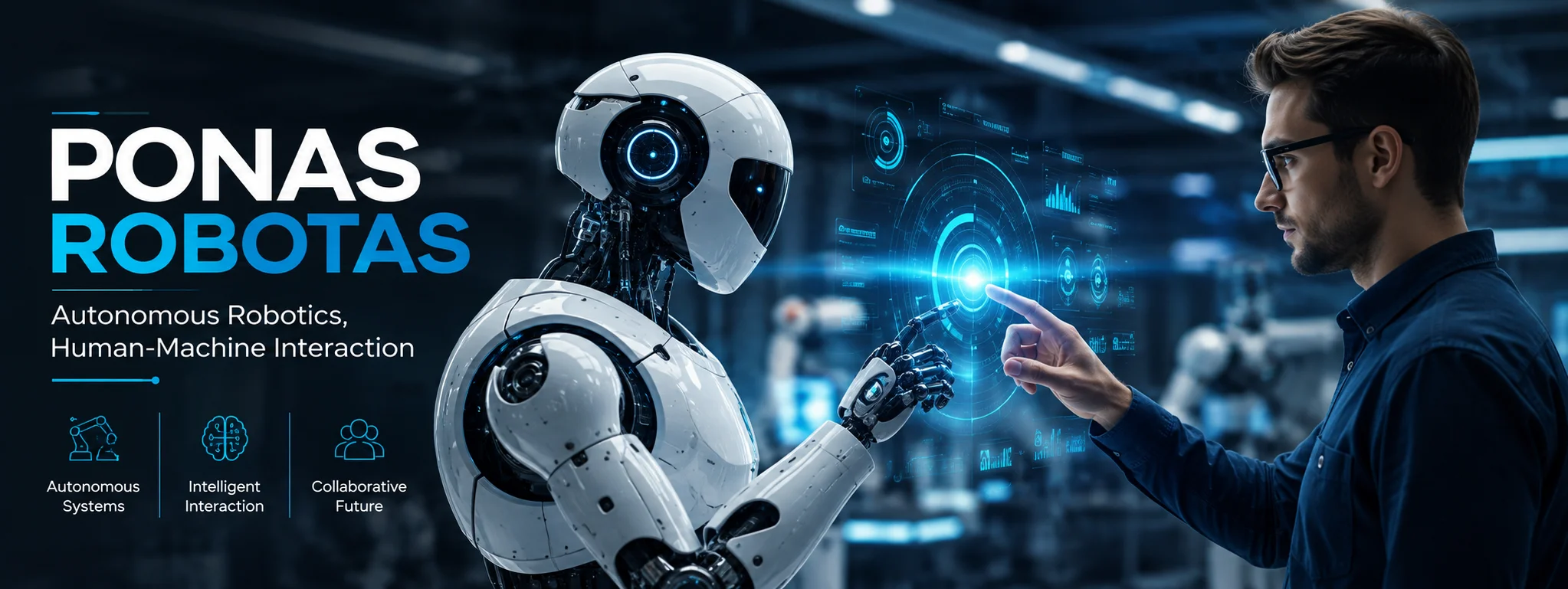
Ponas Robotas (translating from Lithuanian as “Mr. Robot”) represents a distinct conceptual and technological departure from these traditional paradigms. It is not merely a brand name, a singular hardware design, or a fictional moniker; it embodies the emergence of personified, adaptable, and autonomous robotic systems designed to operate with human beings rather than merely for them.
As we step deeper into an era defined by artificial intelligence, advanced motor controllers, and sensor fusion, understanding the mechanics, applications, and systemic impacts of Ponas Robotas offers a direct blueprint for how intelligent machines will restructure our daily workflows, domestic environments, and global supply chains.
1. Defining the Ponas Robotas Paradigm
To understand Ponas Robotas, one must examine why the traditional industrial and domestic robot model reached its ceiling. Historical robotics prioritized hardware rigidity and dedicated code. A machine designed to weld car frames could never pack a box; a machine built to mop floors could never fold a shirt.
Ponas Robotas shifts the primary value of robotics from rigid hardware specs to context-aware adaptability. By merging modern artificial intelligence—specifically spatial computing, reinforcement learning, and natural language understanding—Ponas Robotas marks the transition from pre-programmed automation to cognitive agency.
       [ Spatial & Physical Sensors ]          [ Large Action Models (LAMs) ]
      (LiDAR, Depth Cameras, Tactile)          (Context & Task Intent Analysis)
                     \                                /
                      \                              /
                       v                            v
             +-----------------------------------------------+
             |         Ponas Robotas Core Engine             |
             |   - Real-Time Trajectory Planning             |
             |   - Spatial Mapping & Object Recognition      |
             |   - Dynamic Torque & Force Control            |
             +-----------------------------------------------+
                                     |
                                     v
                       [ Human Environment Mastery ]
                       - Bipedal / Mobile Navigation
                       - Safe Dexterous Manipulation
                       - Cooperative Interaction
Core Technological Pillars
-
Embodied AI and Spatial Intelligence
Ponas Robotas relies on Large Action Models (LAMs) and vision-language-action (VLA) neural networks. Instead of reading hardcoded coordinates, the robot perceives its environment through multi-camera vision networks, depth sensors, and LiDAR. It builds a real-time 3D semantic map of its surroundings, identifying not just objects, but their physical properties and functional contexts (e.g., distinguishing between a fragile glass cup and a durable plastic mug).
-
Compliance and Tactile Feedback
Traditional industrial robots operate with extreme force, making them dangerous around human workers. Ponas Robotas utilizes series elastic actuators and force-torque sensors at every joint. This allows for “compliant motion”—meaning if the robot encounters unexpected physical contact, it yields instantly, preventing injury or property damage while enabling delicate handshakes or fragile object handling.
-
Natural Human-Robot Interaction (HRI)
Interaction with Ponas Robotas does not require a terminal, a complex script, or a proprietary controller. Communication happens through natural language, gesture recognition, and visual cues. Operators give high-level intent commands—such as “Clear the workspace and sort the metal components into bin A”—and the robot breaks down the prompt into sub-tasks autonomously.
2. Structural Foundations: Design and Kinematics
The physical design of Ponas Robotas balances anthropomorphic familiarity with utilitarian efficiency. While science fiction often insists on fully bipedal, human-identical chassis, real-world execution prioritizes structural utility based on environmental demands.
+------------------+-------------------------------------------------------+
| Subsystem        | Functional Engineering Specifications                 |
+------------------+-------------------------------------------------------+
| Locomotion       | Hybrid bipedal-wheeled base for stairs & smooth floors|
| Perception       | Dual depth-sensing cameras + micro-LiDAR dome array   |
| Actuation        | Brushless DC motors with high-ratio strain wave gears |
| Manipulators     | 5-finger underactuated hands with micro-tactile pads  |
| Power Subsystem  | Solid-state lithium battery pack with auto-docking    |
+------------------+-------------------------------------------------------+
Motion and Locomotion Strategy
The physical platform uses a hybrid mobility system. On flat, high-efficiency terrain like warehouse floors or office corridors, wheel-based balancing mechanisms provide rapid movement with low energy drain. When encountering stairs, uneven slopes, or physical obstacles, the system seamlessly transitions to articulated leg movements.
Dexterity and Manipulation
The hands of Ponas Robotas are engineered to match human kinematic adaptability without mimicking every unnecessary biological complexity. Micro-tactile arrays installed on finger pads measure surface pressure, slip detection, and material friction in real time. This micro-feedback loop enables the system to grasp an egg with minimal force, instantly adjust grip strength if the item begins to slip, and transition smoothly to lifting heavy equipment.
3. Industrial and Commercial Applications
The versatility of Ponas Robotas allows it to integrate directly into existing human-centric infrastructure without requiring millions of dollars in facility retrofitting.
       Industrial & Commercial Deployments of Ponas Robotas

       [ Manufacturing ] ----> Mixed-model assembly, tool handling, inspection
       [ Logistics ]     ----> Unloading freight, dynamic sorting, shelf packing
       [ Healthcare ]    ----> Patient transfer assist, linen delivery, sterilization
       [ Field Work ]    ----> Hazardous inspection, repair in remote environments
High-Mix, Low-Volume Manufacturing
Traditional assembly line automation only makes financial sense for massive production runs. If a factory changes its product design every two weeks, reprogramming traditional robots becomes a major bottleneck. Ponas Robotas solves this through imitation learning. An operator can physically guide the robot’s hands through a process once, or demonstrate it visually on camera. The robot synthesizes the kinematic path, adapts to variation, and executes the new assembly routine immediately.
Dynamic Logistics and Supply Chain Fulfillment
Modern fulfillment hubs rely heavily on speed. While automated guided vehicles (AGVs) can move pallets across fixed pathways, they cannot navigate unstructured spaces or handle irregularly shaped packages. Ponas Robotas steps into these gaps by unloading shipping containers, picking delicate e-commerce items, and stacking mixed-inventory pallets based on weight distribution algorithms.
Healthcare Support and Clinical Logistics
In clinical settings, non-medical operational tasks burn thousands of staff hours daily. Ponas Robotas takes on heavy logistical burdens—transporting medical waste, distributing sterile instruments, moving bed linens, and delivering prescription supplies between hospital wards. This relieves medical staff from routine physical labor, letting them spend more time on direct patient care.
4. The Economic and Workforce Integration Model
The introduction of adaptable physical automation naturally alters labor dynamics, operational economics, and skill requirements across multiple sectors.
+-----------------------------------+-----------------------------------+
| Historical Industrial Automation  | Ponas Robotas Adaptive Model      |
+-----------------------------------+-----------------------------------+
| Fixed infrastructure installation | Zero infrastructure modifications |
| Dedicated programming languages   | Natural speech and gesture inputs |
| Isolated behind safety cages      | Works alongside human teams       |
| High capital expense per task     | Broad task adaptability           |
+-----------------------------------+-----------------------------------+
Shift from Automation to “Cobotics”
Rather than completely replacing human workers, Ponas Robotas functions as a cognitive force multiplier. In construction, manufacturing, and maintenance environments, the robot performs heavy lifting, holds heavy panels in place, works in extreme temperatures, or operates inside tight spaces while human technicians supervise quality, handle complex wiring, and perform precise joinery.
Reskilling the Industrial Workforce
As manual routine labor moves toward autonomous systems, the role of human workers shifts from physical execution to system oversight, task curation, and exception handling. Workers become supervisors of robotic fleets, managing parameters, optimizing workflows, and handling physical edge cases that fall outside the robot’s existing confidence thresholds.
5. Technical Challenges and Engineering Horizons
Despite major advances, deploying full-spectrum autonomous robots like Ponas Robotas into unpredictable environments comes with persistent technical challenges.
-
Energy Density and Thermal Management
High-torque electric actuators and onboard AI computation consume significant power. Balancing operational battery life with weight limitations requires continuous innovation in solid-state chemistry and low-power hardware acceleration.
-
Corner-Case Generalization
While neural networks handle standard physical environments reliably, “edge cases”—such as reflection from mirrored surfaces, extreme dust, semi-transparent liquids, or unexpected human movements—can trigger perceptual confusion.
-
Tactile Sensing Scale
Equipping large surface areas with high-density tactile sensors while maintaining structural durability against impact and moisture remains a central focus for hardware engineers.
Final Thoughts
Ponas Robotas represents a structural turning point in how society relates to physical technology. The historical barrier between software-driven intelligence and physical machinery has faded. We are leaving behind an era dominated by rigid tools that demanded human adaptation, entering an age of flexible physical agents designed to navigate our existing world on our terms.
By combining embodied artificial intelligence, flexible actuation, and intuitive human-machine interfaces, systems modeled after Ponas Robotas solve real-world operational bottlenecks in logistics, manufacturing, and daily service operations. Their true value lies not in imitating human biology for novelty’s sake, but in absorbing the dangerous, physically taxing, and monotonous tasks that limit human potential.