
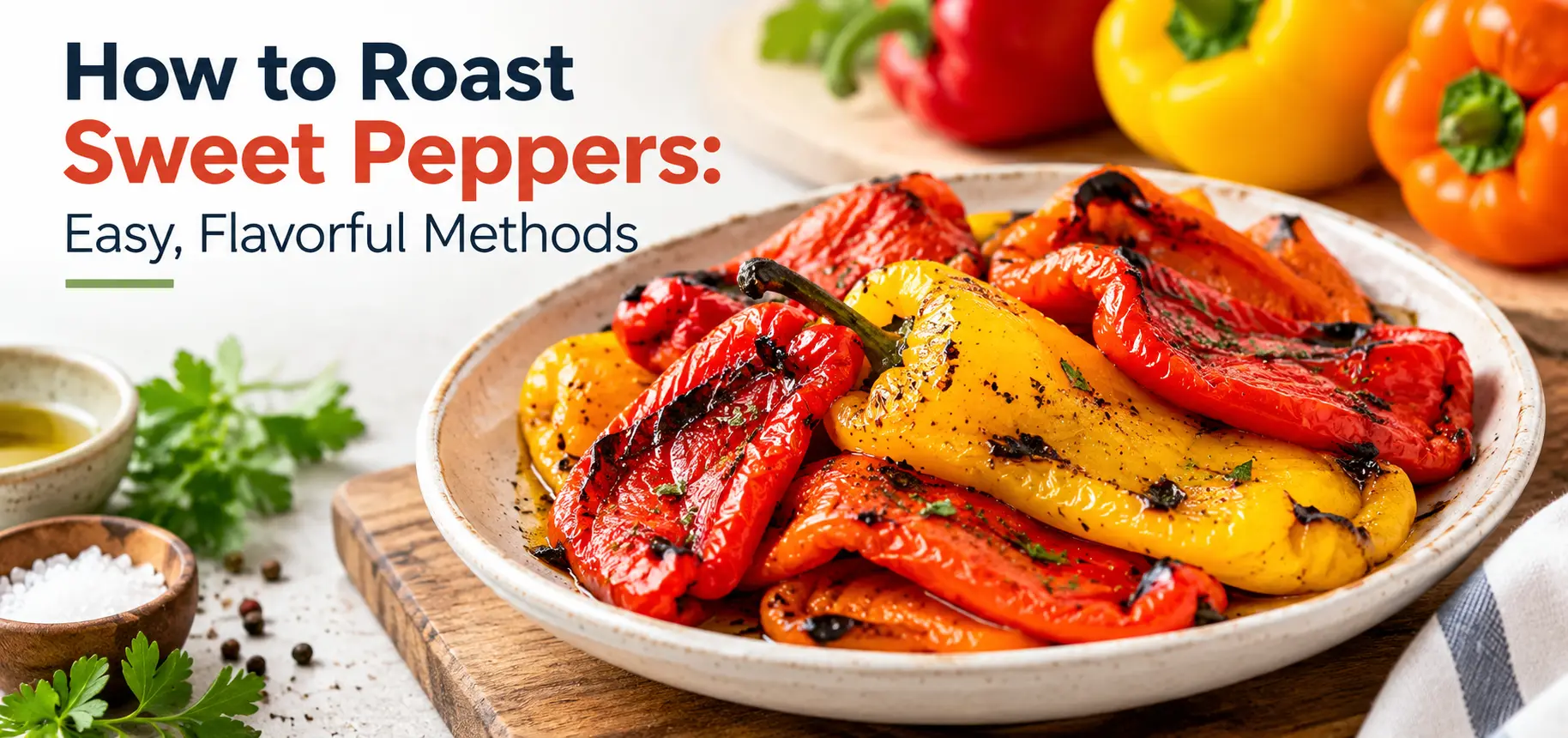
Roasted sweet peppers are one of the easiest ways to turn a simple vegetable into something rich, tender, smoky, and flavorful. If you want to learn how to roast sweet peppers, you can use an oven, stovetop, grill, or air fryer depending on the texture and flavor you prefer. Roasting brings out the peppers’ natural sweetness while adding lightly charred edges and a deeper aroma.
Sweet peppers are versatile enough for everyday meals, appetizers, sandwiches, salads, pasta, pizzas, wraps, and side dishes. Once roasted, they become soft and juicy with a concentrated flavor that can make even a basic meal feel more special. The process is simple, but a few preparation and cooking techniques can make a noticeable difference.
How to Roast Sweet Peppers in the Oven
The oven is one of the most reliable methods because it provides consistent heat and allows the peppers to develop beautiful caramelized edges. This method works especially well when preparing several peppers at once.
Start by choosing fresh, firm sweet peppers. Red, yellow, orange, and green peppers can all be roasted, although red peppers are particularly sweet when cooked.
Wash the peppers thoroughly and dry them with a clean towel. Excess moisture can slow down browning, so drying them well is useful.
For whole roasted peppers, place them directly on a baking sheet lined with parchment paper or foil. You can lightly coat them with olive oil if you want a slightly richer exterior.
Preheat your oven to approximately 425°F (220°C). Roast the peppers for about 25–35 minutes, turning them occasionally so different sides become blistered and lightly charred.
The exact cooking time depends on the size of the peppers and your preferred texture. Large peppers may need additional time, while smaller peppers can cook faster.
Preparing Peppers Before Roasting
There are two common approaches: roasting peppers whole or cutting them before cooking.
For whole peppers, simply wash and dry them before placing them on the baking sheet. This approach allows the skin to blister dramatically and makes the peppers easy to peel after steaming.
For sliced or halved peppers, remove the stem, seeds, and white inner membranes. Cut them into halves, quarters, or strips depending on how you plan to serve them.
If you are preparing peppers for pasta, sandwiches, or salads, sliced peppers are convenient because they can go directly from the oven into the finished dish.
A light coating of olive oil can help with browning and seasoning. Add a small amount of salt before roasting, then adjust the seasoning afterward.
How to Roast Sweet Peppers for Maximum Flavor
Good roasting is about more than simply cooking the vegetables. High heat encourages the natural sugars in sweet peppers to develop a deeper, more complex flavor.
Spread the peppers in a single layer. Avoid piling them on top of one another because crowded vegetables tend to steam instead of roast.
If you are roasting sliced peppers, leave a little space between the pieces. This allows hot air to circulate around them and encourages caramelization.
For an especially flavorful result, season the peppers with ingredients that complement their natural sweetness. Garlic, black pepper, smoked paprika, oregano, thyme, and olive oil all work beautifully.
You can also add a few drops of lemon juice or balsamic vinegar after roasting. The slight acidity balances the sweetness and creates a more vibrant finished flavor.
Signs That Sweet Peppers Are Properly Roasted
The peppers should become noticeably softer, with browned or blistered areas on the surface. Whole peppers may look slightly collapsed when they are ready.
For sliced peppers, look for tender flesh and darkened edges. You do not need to char every section; a mixture of golden-brown and lightly blackened areas usually provides an excellent balance.
If the peppers remain firm after the recommended cooking time, continue roasting for a few more minutes and check them again.
The goal is tender, juicy peppers with concentrated flavor rather than completely dried vegetables.
How to Roast Sweet Peppers Under the Broiler
A broiler can create intense surface heat and is particularly useful when you want heavily blistered skins.
Place whole peppers on a suitable baking sheet and position them beneath the broiler. Keep them close enough to the heat to blister the skin but watch them carefully.
Turn the peppers every few minutes so that multiple sides become charred. This process can happen quickly, so avoid walking away from the oven.
Once the skins are blackened and blistered in several areas, remove the peppers and place them in a heatproof bowl. Cover the bowl with a lid or plate.
Allow the peppers to rest for approximately 10–15 minutes. The trapped steam helps loosen the skins, making peeling much easier.
Peeling Roasted Sweet Peppers
Peeling is optional, but many people prefer the smooth texture of peeled roasted peppers.
After the peppers have rested, gently pull away the loose skin with your fingers. Remove the stem and seeds if you have not already done so.
Avoid rinsing the peppers under water unless necessary because washing can remove some of the flavorful juices created during roasting.
Instead, wipe away stubborn pieces of skin with a paper towel or clean your fingers between sections.
The peeled peppers can then be sliced into strips and seasoned with olive oil, salt, garlic, or herbs.
How to Roast Sweet Peppers on a Grill
Grilling gives sweet peppers a distinctive smoky character that is difficult to replicate with other cooking methods.
Heat the grill to medium-high. Whole peppers can be placed directly on the grates, while halved peppers should generally be positioned with the cut side facing the heat according to the texture you want.
Turn the peppers regularly so they blister without becoming excessively burned.
Once they are tender and charred, transfer them to a bowl and cover them. Letting them steam for several minutes makes the skin easier to remove.
Grilled peppers are excellent with grilled meats, sandwiches, burgers, grain bowls, and Mediterranean-inspired dishes.
They can also be chopped and mixed with fresh herbs, feta cheese, olives, or a simple vinaigrette.
How to Roast Sweet Peppers in an Air Fryer
An air fryer is a convenient option when you want roasted peppers without heating the entire oven.
Cut the peppers into halves or strips and remove the seeds and membranes. Toss them lightly with olive oil and your preferred seasoning.
Arrange the peppers in the air fryer basket without overcrowding it.
Cook at approximately 375°F (190°C) for around 10–15 minutes, shaking the basket or turning the peppers halfway through.
Cooking times vary between air fryer models, so check the peppers toward the end of the cooking cycle.
Air-fried peppers can develop browned edges quickly while retaining a juicy center.
Simple Seasoning Ideas
You can keep the seasoning basic or create a more distinctive flavor profile. These five combinations are particularly useful:
- Garlic and olive oil: Simple, savory, and suitable for pasta or bread.
- Smoked paprika and black pepper: Adds warmth and a subtle smoky character.
- Italian herbs: Oregano, basil, and thyme work well with roasted peppers.
- Lemon and parsley: A fresh combination for salads and seafood.
- Balsamic and olive oil: Sweet-tart flavor that complements the peppers’ natural sweetness.
Roasting Times and Temperatures
The ideal cooking conditions depend on the method you choose. Use the following table as a practical starting point rather than a strict rule.
| Roasting Method | Temperature | Approx. Time | Best For |
|---|---|---|---|
| Oven | 425°F / 220°C | 25–35 minutes | Whole or sliced peppers |
| Broiler | High heat | 10–20 minutes | Blistered skins |
| Grill | Medium-high | 10–20 minutes | Smoky flavor |
| Air fryer | 375°F / 190°C | 10–15 minutes | Quick portions |
Keep an eye on the peppers because size, moisture, equipment, and desired tenderness can change the cooking time.
How to Store Roasted Sweet Peppers
Roasted sweet peppers are convenient because you can prepare them ahead of time and use them throughout the week.
Allow cooked peppers to cool before transferring them to an airtight container. Refrigerate them and use them within several days for the best quality.
For longer storage, roasted peppers can also be frozen. Spread them in a suitable freezer container or bag, removing as much excess air as possible.
When you are ready to use frozen peppers, allow them to thaw in the refrigerator. They may become slightly softer after freezing, but they remain useful in sauces, soups, pasta, omelets, and other cooked dishes.
Avoid leaving cooked peppers at room temperature for extended periods.
Delicious Ways to Use Roasted Sweet Peppers
Once you know how to roast sweet peppers, there are countless ways to incorporate them into meals.
Add strips to a toasted sandwich with cheese and fresh greens. Mix them into pasta with olive oil, garlic, and herbs. Chop them into a grain bowl with rice, beans, avocado, and a flavorful dressing.
Roasted peppers also make an excellent topping for pizza. Their sweetness pairs particularly well with mozzarella, goat cheese, feta, olives, mushrooms, and caramelized onions.
For breakfast, add them to scrambled eggs, omelets, breakfast wraps, or savory toast.
You can also blend roasted peppers into a smooth sauce. Combine them with garlic, olive oil, herbs, and a small amount of vinegar for a vibrant sauce that works with vegetables, chicken, fish, or pasta.
Common Mistakes to Avoid
Even though roasting peppers is straightforward, several small mistakes can affect the final result.
One common problem is overcrowding the pan. When peppers are packed tightly together, moisture becomes trapped and the vegetables steam instead of developing roasted edges.
Another mistake is using too much oil. A light coating is generally enough. Excess oil can make the peppers greasy and interfere with browning.
It is also important not to judge doneness only by color. Some peppers develop dark patches quickly while the interior is still firm. Check their texture before removing them.
Finally, do not immediately peel whole roasted peppers. Giving them time to steam after cooking makes the skin considerably easier to remove.
Final Thoughts
Learning how to roast sweet peppers gives you a simple technique that can transform an everyday vegetable into something deeply flavorful and versatile. The oven is an excellent all-purpose method, while grilling adds smoky character, the broiler creates dramatic blistered skins, and the air fryer provides a fast option for smaller portions.
For the best results, start with fresh peppers, avoid overcrowding, use moderate seasoning, and give whole peppers time to steam before peeling. Once roasted, they can become part of sandwiches, salads, pasta, pizzas, sauces, breakfasts, and countless other meals.
The real advantage of roasted sweet peppers is their flexibility. You can keep them simple with olive oil and salt or build a more sophisticated flavor with garlic, herbs, smoked paprika, lemon, or balsamic vinegar. With a little practice, this easy technique can become a reliable way to add sweetness, color, tenderness, and irresistible roasted flavor to everyday cooking.
FAQs About Roasting Sweet Peppers
1. How long does it take to roast sweet peppers?
Most whole peppers take about 25–35 minutes in a 425°F oven. Smaller pieces may cook faster.
2. Should I peel roasted sweet peppers?
Peeling is optional. Removing the skin creates a smoother texture, especially when making sauces or spreads.
3. Can I roast sweet peppers without oil?
Yes. Peppers can be roasted without oil, although a small amount of oil can improve browning and add richness.
4. Why are my roasted peppers watery?
Overcrowding the pan can cause peppers to steam and release excess moisture. Give them enough space for hot air to circulate.
5. Can roasted sweet peppers be frozen?
Yes. Allow them to cool, place them in an airtight freezer-safe container, and freeze them for later use.
1 thought on “How to Roast Sweet Peppers: Easy, Flavorful Methods”