
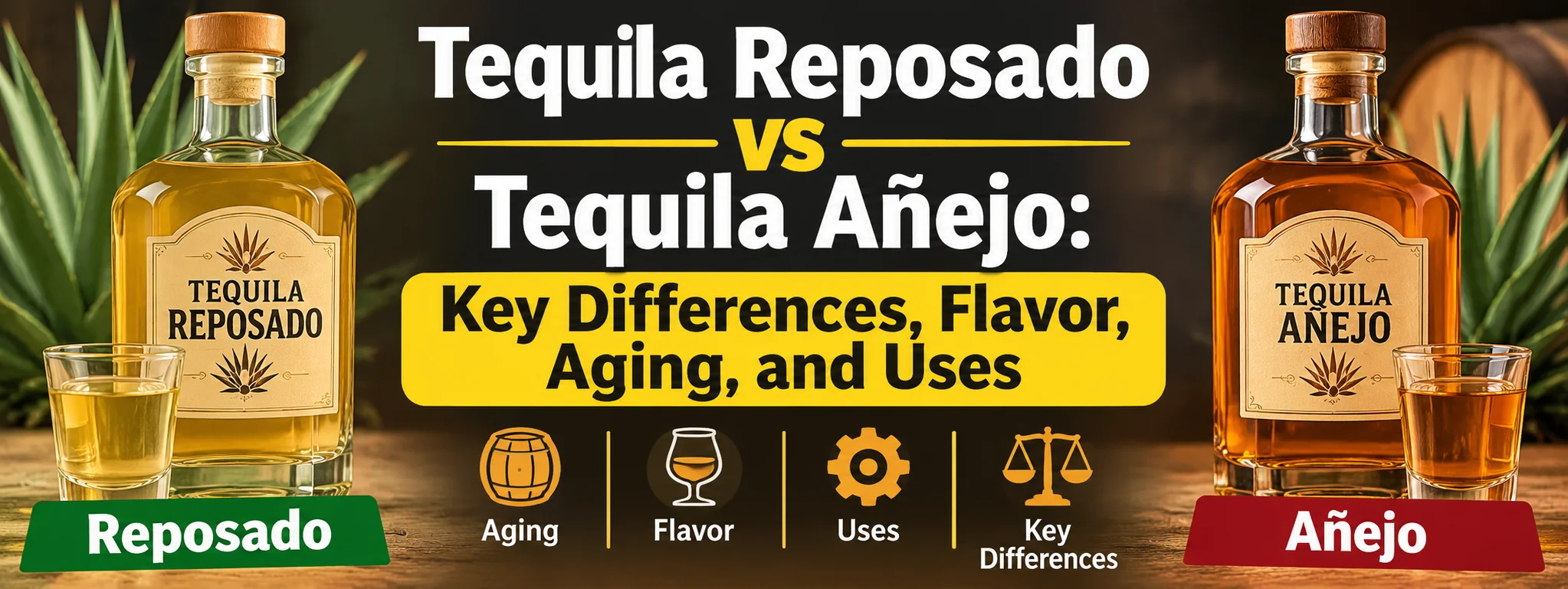
Choosing between tequila styles can be confusing, especially when comparing bottles labeled Reposado and Añejo. Both are made from blue agave and share the traditional tequila-making process, but their aging periods create noticeable differences in color, aroma, flavor, texture, and overall character. Understanding tequila reposado vs tequila anejo can help you identify which style better suits your preferences and the way you plan to enjoy it.
Reposado tequila spends a shorter period aging in oak barrels, giving it a balanced character that combines fresh agave notes with gentle wood influences. Añejo tequila ages considerably longer, developing deeper flavors, a richer color, and a smoother, more complex profile.
Understanding Tequila Reposado vs Tequila Anejo
The main difference between Reposado and Añejo tequila is the amount of time each spends aging in oak containers. This aging process influences the spirit’s taste, appearance, aroma, and texture.
Both styles begin with tequila produced from the blue Weber agave plant. After harvesting, producers process the agave hearts, extract their sugars, ferment the resulting liquid, and distill it. The spirit can then be aged according to the requirements of its particular category.
What Makes Reposado Tequila Different?
Reposado means “rested” in Spanish. This category refers to tequila that has been aged in oak containers for at least two months but less than one year.
During this relatively short period, the spirit develops a light golden or pale amber appearance. The oak contributes additional aromas and flavors without completely overpowering the natural agave character.
Common tasting notes include:
- Cooked agave and mild sweetness.
- Vanilla and light caramel.
- Gentle oak and toasted wood.
- Subtle spice and pepper.
- Soft citrus and herbal characteristics.
Reposado offers an appealing balance between the fresh character of younger tequila and the additional depth created by barrel aging.
What Makes Anejo Tequila Special?
Añejo means “aged” or “vintage” in Spanish. According to tequila classification standards, this category must mature in oak containers with a maximum capacity of 600 liters for at least one year but less than three years.
The extended aging period allows the spirit to develop a deeper flavor profile. Contact with the wood gradually introduces additional aromas, while evaporation and other maturation processes influence its overall character.
Typical tasting notes include:
- Rich vanilla and caramel.
- Toasted oak and baking spices.
- Dried fruit and chocolate-like notes.
- Roasted nuts and warm spice.
- Deeper cooked agave characteristics.
Añejo generally has a darker amber color and a fuller, more developed flavor than Reposado. However, individual bottles can vary depending on barrel selection, production methods, and aging conditions.
Tequila Reposado vs Tequila Anejo: Key Differences
Although both categories share the same basic production foundation, their aging requirements create several important distinctions.
| Feature | Reposado Tequila | Añejo Tequila |
|---|---|---|
| Aging period | At least 2 months, less than 1 year | At least 1 year, less than 3 years |
| Oak container | Maximum 600 liters | Maximum 600 liters |
| Appearance | Light gold to pale amber | Golden amber to deeper amber |
| Flavor | Fresh agave, vanilla, mild oak | Vanilla, caramel, toasted oak, spices |
| Agave character | Generally more noticeable | Often more influenced by oak |
| Texture | Light to medium-bodied | Often fuller and richer |
| Common serving style | Sipping or cocktails | Sipping or spirit-forward cocktails |
| Overall character | Balanced and lively | Deep and complex |
One important detail is that aging does not automatically determine quality. A well-produced Reposado can be more enjoyable than an expensive Añejo if its flavor profile better matches your preferences.
How Aging Changes the Flavor and Appearance
Oak aging is one of the most influential factors separating these two tequila categories. The barrel does more than change the spirit’s color. It also contributes compounds that affect aroma, taste, and mouthfeel.
Reposado: A Balanced Agave Experience
Reposado spends enough time in oak to develop additional complexity while retaining much of its original agave character.
The shorter maturation period usually produces a lighter flavor profile. Depending on the producer, you may notice cooked agave, fresh herbs, vanilla, gentle sweetness, and mild pepper.
Its balanced character makes it appealing to people who want something more developed than unaged Blanco tequila without moving into the heavier oak influence associated with longer maturation.
Añejo: Deeper and More Developed Flavors
Añejo develops additional characteristics through extended contact with oak barrels. Depending on the wood and previous barrel use, the tequila may acquire notes of toasted oak, caramel, vanilla, dried fruit, and baking spices.
Its aroma can also become more layered, creating a different experience with each sip.
However, longer aging does not always mean a stronger or better flavor. Some producers intentionally preserve agave characteristics, while others create a more pronounced barrel-influenced profile.
Production Process: Why These Tequilas Taste Different
The differences between Reposado and Añejo begin after the initial tequila production process.
Both categories follow the same basic production stages, but the aging environment and maturation period influence the final result.
1. Blue Weber Agave Selection
Authentic tequila is produced using blue Weber agave grown in designated tequila-producing regions of Mexico.
The agave plants require several years to mature before harvesting. Their hearts, known as piñas, contain the sugars needed for fermentation.
2. Cooking and Sugar Extraction
After harvesting, producers cook the agave to convert complex carbohydrates into fermentable sugars.
Traditional ovens and modern autoclaves are among the methods used for this stage. Once cooked, the agave is crushed or processed to extract its sweet juice.
3. Fermentation and Distillation
The extracted sugars are fermented using yeast, producing an alcoholic liquid. Producers then distill the fermented mixture to create tequila.
The number of distillations, equipment, and production decisions can influence the final spirit’s character.
4. Barrel Aging
This is where Reposado and Añejo take different paths.
Reposado must age for at least two months but less than one year. Añejo must age for at least one year but less than three years.
Oak barrels contribute color, aroma, and additional flavor compounds during maturation. The climate, barrel history, and storage conditions can also influence the outcome.
Which Tequila Is Better for Different Occasions?
The best choice depends on your preferred flavor profile and how you intend to enjoy the tequila.
Choose Reposado for Versatility
Reposado is a practical option when you want a spirit that offers both agave character and barrel-aged complexity.
It works well in several traditional tequila cocktails because its flavor can complement other ingredients without becoming completely dominant.
Popular cocktail applications include:
- Margarita: Reposado adds gentle oak and vanilla notes to the citrus-based drink.
- Paloma: Its balanced flavor works with grapefruit and lime.
- Tequila Old Fashioned: It provides a useful foundation for a spirit-forward variation.
- Ranch Water: It can introduce additional depth to this refreshing tequila cocktail.
- Sipping: Its combination of agave and oak makes it suitable for enjoying neat.
Choose Añejo for a Richer Sipping Experience
Añejo is often selected when someone wants to explore the deeper characteristics of barrel-aged tequila.
Its additional maturation can create a richer aroma and more developed taste, making it particularly suitable for slow sipping.
It can also be used in cocktails, although its distinctive barrel characteristics may be less noticeable when mixed with strongly flavored ingredients.
Añejo is particularly interesting for people who enjoy exploring how different barrels influence the final character of a spirit.
Important Buying Considerations Before Choosing
Comparing Reposado and Añejo involves more than checking the aging label. Several other details can help you understand what you are purchasing.
Check the 100% Agave Label
Tequila labels can identify products as either 100% agave or simply tequila.
A 100% agave tequila uses sugars exclusively from blue Weber agave during fermentation. Other tequila products can contain additional permitted sugars under applicable regulations.
Checking this information helps you understand the product’s composition.
Consider the Producer and NOM Number
Authentic tequila production is regulated in Mexico. The NOM number identifies the authorized producer associated with the tequila.
Checking the producer can provide useful information about where and how the spirit is manufactured.
Understand Barrel Influence
Not every barrel produces the same result. Previously used bourbon barrels, for example, can contribute different characteristics from other types of oak containers.
Añejo and Reposado products can therefore taste noticeably different even when they belong to the same category.
Compare Price With Quality
Añejo is sometimes more expensive because of its longer maturation period, barrel storage, and production costs.
However, price alone does not guarantee superior quality. Comparing ingredients, production details, aroma, and flavor descriptions provides a more useful purchasing approach.
Reposado vs Anejo vs Extra Anejo: Understanding All Three
Although this article focuses on Reposado and Añejo, Extra Añejo is another important tequila category worth understanding.
It represents an even longer aging period and has a distinct classification under Mexican tequila regulations.
| Tequila Category | Minimum Aging | Maximum Aging for Category |
|---|---|---|
| Reposado | 2 months | Less than 1 year |
| Añejo | 1 year | Less than 3 years |
| Extra Añejo | 3 years | No specified maximum |
Extra Añejo is often associated with particularly developed oak, vanilla, caramel, and spice characteristics. However, the final flavor still depends on the producer and maturation conditions.
Understanding these three categories makes it easier to compare tequila bottles and recognize what their labels actually indicate.
Common Misconceptions About Reposado and Anejo
Several assumptions can make tequila comparisons confusing. Understanding the facts helps you make a more informed decision.
1. Añejo is always better than Reposado.
Not necessarily. Aging influences flavor, but personal preference and production quality matter just as much.
2. Darker tequila always means better quality.
Color can come from barrel aging, but it may also be influenced by permitted coloring and other additives. A darker appearance is not proof of superior quality.
3. Reposado is only suitable for cocktails.
Reposado can be enjoyed neat, on the rocks, or in cocktails. Its balanced character makes it versatile.
4. Añejo always tastes sweeter.
Longer barrel aging can introduce vanilla and caramel-like aromas, but this does not mean the tequila necessarily contains more sugar.
5. All tequila is made in the same way.
Producers use different cooking, fermentation, distillation, and aging methods. These decisions create meaningful differences between individual bottles.
Final Thoughts
Understanding tequila reposado vs tequila anejo becomes easier when you focus on aging time, flavor development, and intended use. Reposado offers a balanced combination of cooked agave, gentle sweetness, and light oak influence. Añejo provides a deeper, more developed profile with additional vanilla, caramel, toasted wood, and spice characteristics.
If you prefer a versatile tequila that maintains noticeable agave flavors, Reposado is an excellent category to explore. If you appreciate richer aromas and the influence of extended oak maturation, Añejo may be a more appealing choice.
Frequently Asked Questions
1. What is the main difference between Reposado and Añejo tequila?
The main difference is aging time. Reposado ages for at least two months but less than one year, while Añejo ages for at least one year but less than three years.
2. Is Reposado tequila smoother than Añejo?
Not always. Reposado generally has a lighter agave-forward profile, while Añejo often has a fuller, more developed flavor. Smoothness depends on the individual product and personal preference.
3. Can you drink Añejo tequila neat?
Yes. Añejo is commonly enjoyed neat because its extended barrel aging can produce complex aromas and flavors worth exploring without additional ingredients.
4. Is Reposado or Añejo better for margaritas?
Both can be used in margaritas. Reposado offers a balanced agave and oak character, while Añejo creates a richer, more barrel-influenced variation.
5. Is Añejo tequila more expensive than Reposado?
Añejo is often more expensive because it requires longer aging and additional barrel storage. However, actual prices depend on the producer, brand, production methods, and market.
1 thought on “Tequila Reposado vs Tequila Anejo: Key Differences, Flavor, Aging, and Uses”