
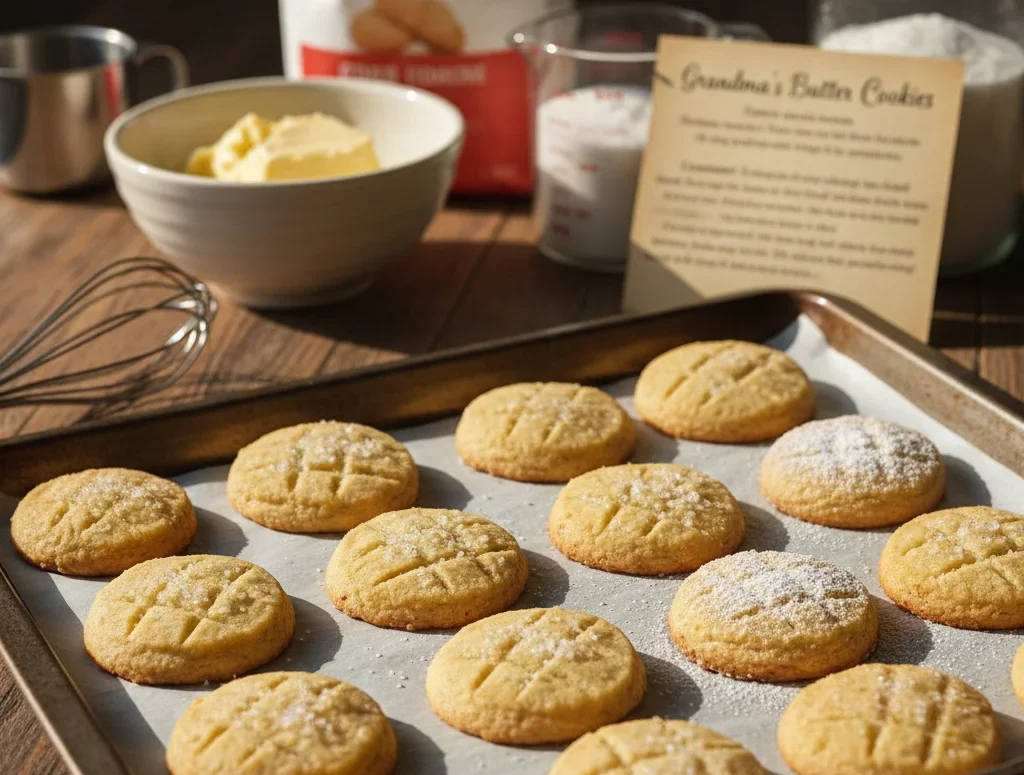
Ultimate Guide to Butter Cookies: Gluten-Free, Vegan, and Perfect for Cookie Press
Butter cookie recipe are a timeless treat loved for their rich, buttery flavor and versatile texture. From crispy edges to soft, melt-in-your-mouth centers, these cookies can be adapted to suit any dietary preference whether gluten-free, vegan, or traditional. This guide covers foolproof recipes, texture tips, the science behind perfect cookies, and even the best recipe for using a cookie press, ensuring every batch comes out beautifully every time.
Gluten-Free Butter Cookies
Prep Time
15 Minutes
Cook Time
12 Minutes
Total Time
57 Minutes
Ingredients
- 1 cup (226g) unsalted butter, softened
- ¾ cup (150g) granulated sugar
- 1 large egg
- 1 teaspoon pure vanilla extract
- 2 cups (240g) gluten-free all-purpose flour (with xanthan gum)
- ¼ teaspoon salt
Optional
- ½ teaspoon almond extract
- Sprinkles or coarse sugar for topping
Instructions
- Preheat oven to 350°F (175°C). Line a baking sheet with parchment paper.
- Cream butter and sugar until light and fluffy (2–3 minutes).
- Add egg and vanilla; mix until combined.
- Whisk gluten-free flour and salt separately.
- Gradually mix dry ingredients into butter mixture until dough forms.
- Chill dough for 30 minutes.
- Roll into 1-inch balls, flatten slightly on baking sheet.
- Bake 10–12 minutes until edges are lightly golden.
- Cool 5 minutes on pan, then transfer to wire rack.
Tips for Best Texture
- Use high-quality gluten-free flour blend.
- Add ½ teaspoon xanthan gum if not included.
- Bake less for soft cookies, longer for crisp texture.
Storage
Store in an airtight container at room temperature for up to 5 days.
Freeze baked cookies for up to 2 months.
Vegan Butter Cookies
Ingredients
- 1 cup (225g) vegan butter, softened (stick-style works best)
- ¾ cup (150g) granulated sugar
- 2 tablespoons unsweetened plant milk
- 1 teaspoon vanilla extract
- 2 cups (250g) all-purpose flour
- ¼ teaspoon salt
Optional
- ½ teaspoon almond extract
- Sprinkles or coarse sugar for topping
Instructions
- Preheat oven to 350°F (175°C). Line a baking sheet with parchment paper.
- Cream vegan butter and sugar for 2–3 minutes until fluffy.
- Add plant milk and vanilla; mix until smooth.
- Whisk flour and salt separately.
- Gradually combine dry ingredients into wet mixture until dough forms.
- Chill dough for 30 minutes.
- Roll into 1-inch balls and flatten slightly.
- Bake 10–12 minutes until edges are lightly golden.
- Cool 5 minutes before transferring to a wire rack.
Tips for Best Results
- Use block-style vegan butter, not tub margarine.
- Chill dough if your kitchen is warm.
- Bake 1–2 minutes longer for crispier cookies.
- Remove at 10 minutes for softer cookies.
Storage
Store in an airtight container at room temperature for 4–5 days.
Freeze baked cookies for up to 2 months.
Butter Cookies Texture Tips (Crispy, Soft, or Melt-in-Your-Mouth)
Texture depends on fat ratio, sugar type, mixing method, flour amount, and baking time. Adjust these variables to get your ideal result.
For Crispy & Crunchy Butter Cookies
- Use more granulated sugar (less moisture than brown sugar)
- Slightly flatten dough before baking
- Bake 1–2 minutes longer
- Roll dough thinner (for cut-out cookies)
- Use all butter (no shortening)
- Skip chilling for more spread
- Pro Tip: Bake at 350–360°F for better caramelization
For Soft & Tender Butter Cookies
- Slightly reduce baking time
- Add 1 extra tablespoon of butter
- Replace 2–3 tablespoons of white sugar with powdered sugar
- Don’t overmix once flour is added
- Chill dough before baking
- Remove cookies when centers are slightly underbaked — they firm up as they cool
For Melt-in-Your-Mouth Texture (Shortbread Style)
- Use powdered sugar instead of granulated sugar
- Increase butter slightly (higher fat ratio)
- Use cornstarch (1–2 tablespoons) for tenderness
- Avoid overworking the dough
- Bake until just set, not browned
For Chewy Butter Cookies
- Replace 2–4 tablespoons sugar with light brown sugar
- Add 1 egg yolk (more fat, less structure)
- Bake slightly under
- Use a bit less flour
Common Texture Mistakes
| Problem | Cause | Fix |
|---|---|---|
| Cookies too hard | Overbaked | Reduce bake time |
| Too dry/crumbly | Too much flour | Measure by weight |
| Too flat | Butter too warm | Chill dough |
| Too puffy | Too much flour or overmixing | Mix less, adjust flour |
| Greasy texture | Low-quality butter | Use high-fat butter |
Ingredient Impact on Texture
- Butter temperature: Softened = more spread; Cold = less spread
- Sugar type: Granulated = crisp; Powdered = tender
- Eggs: More eggs = softer cookies
- Flour amount: More flour = firmer cookies
- Chilling: Less spread, thicker cookies
The Science of Butter Cookies: How Ingredients & Techniques Shape Texture
Butter cookies are deceptively simple, yet their texture, flavor, and structure depend on precise chemical and physical reactions. Understanding the science behind each step can help you bake perfect cookies every time.
1. Role of Butter
- Fat content: Butter is about 80% fat and 15–18% water.
- Texture control: Fat coats flour proteins, limiting gluten development → tender cookies.
- Spread: Butter melts during baking, causing cookies to spread.
- Flavor: Milk solids and fat-soluble compounds caramelize and brown for rich taste.
Tip: Room temperature butter produces more spread; chilled butter keeps cookies thicker.
2. Sugar and Sweet Chemistry
- Structure: Sugar absorbs water, partially dissolves during creaming.
- Aeration: Creaming sugar with butter traps air → lighter cookies.
- Caramelization: Sugar browns at high temperatures → golden color & flavor.
- Moisture balance: Brown sugar → softer; granulated → crispier.
3. Flour and Gluten Development
- All-purpose flour (~10–12% protein) forms gluten for structure.
- Butter coats proteins → less gluten → softer cookies.
- Too much flour → dry cookies; too little → excessive spreading.
Tip: Mix flour lightly to avoid over-developing gluten.
4. Eggs and Moisture
- Binders: Egg proteins coagulate → hold cookie together.
- Leavening: Beaten eggs trap air → subtle lift.
- Moisture: Adds water → softens texture, extends shelf life.
Omitting eggs creates denser cookies. Vegan substitutes like plant milk, flax, or aquafaba mimic moisture and binding.
5. Leavening Agents (Optional)
- Butter cookies often rely on physical leavening (creaming) rather than chemical leaveners.
- Baking powder/soda: Slight lift → softer, puffier cookies.
- Creaming effect: Air pockets expand → gentle rise.
6. Temperature & Baking Dynamics
- Oven heat melts butter and caramelizes sugar.
- Proteins set the structure around melted butter.
- Maillard reaction: Amino acids + sugar → browning, complex flavor.
- Cooling: Cookies firm as fat solidifies and water redistributes.
Tip: Pull cookies slightly underbaked for softer center; bake longer for crisp edges.
7. Texture Science
| Texture Type | Key Factors |
|---|---|
| Crispy | More granulated sugar, less moisture, thinner dough, higher bake temp |
| Soft/Tender | More butter, brown sugar, slightly underbaked, less flour |
| Melt-in-mouth / Shortbread | Powdered sugar, extra butter, minimal handling, optional cornstarch |
| Chewy | Brown sugar, slightly more egg, slight underbake |
8. Flavor Compounds
- Butter: Diacetyl → rich, creamy flavor
- Maillard reaction: Glucose + amino acids → nutty, caramel notes
- Vanilla/Almond extract: Volatile compounds enhance aroma
Best Butter Cookie Recipe for Cookie Press
Ingredients
- 1 cup (225g) unsalted butter, softened (not melted)
- ¾ cup (150g) granulated sugar
- 1 large egg
- 1 teaspoon vanilla extract (or almond extract)
- 2 ½ cups (310g) all-purpose flour
- ¼ teaspoon salt
Optional: Sprinkles, colored sugar, or small chocolate chips for decorating
Instructions
- Prepare the dough: Cream butter and sugar until light and fluffy (2–3 minutes). Add egg and vanilla; mix until smooth.
- Add dry ingredients: Mix flour and salt separately. Gradually add to wet mixture until fully combined.
- Chill the dough: Cover and refrigerate for 30–60 minutes. Chilled dough holds shapes better.
- Load the cookie press: Follow press instructions and press dough onto ungreased sheet.
- Bake: Preheat oven to 350°F (175°C). Bake 10–12 minutes until edges are lightly golden. Cool 5 minutes before transferring to wire rack.
Tips for Cookie Press Success
- Consistency: Dough soft enough to press but firm enough to hold shape.
- Room temperature butter: Soft but not melted is ideal.
- Don’t overfill the press.
- Use ungreased sheets; parchment works if needed.
- Decorate before baking for best results.
Frequently Asked Questions
1. Can I make these cookies vegan?
Yes! Replace butter with vegan block butter and use plant milk, flax, or aquafaba in place of eggs. The texture may be slightly different but still delicious.
2. How do I get crispy edges but soft centers?
Use more granulated sugar than brown sugar, slightly underbake, and remove cookies from the oven when the edges are golden but the centers are still soft.
3. Can I use a cookie press with any dough?
The dough must hold its shape and not be too sticky. Chill it first if needed. The cookie press works best with butter cookie recipes designed for pressing.
4. How should I store butter cookies?
Store cooled cookies in an airtight container at room temperature for up to 5 days. You can also freeze baked cookies for up to 2 months.
5. Can I add flavors or decorations?
Yes! Vanilla or almond extract works well. You can also press sprinkles, colored sugar, or chocolate chips onto cookies before baking for extra flair.