
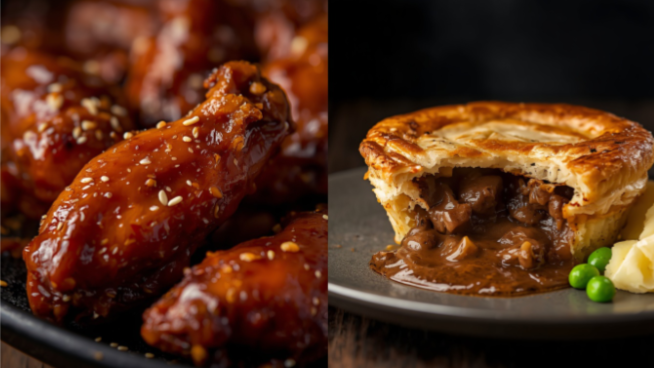
Walk into a popular American chain restaurant and you will immediately notice the emphasis on bold, assertive flavours. Menus are built around spice levels, signature sauces, and the freedom to customise nearly every aspect of your meal. Cross the Atlantic to a British pub, and the approach shifts entirely. Here, the focus is on familiar, comforting flavours executed consistently — rich gravies, golden batters, and slow-cooked fillings that have changed little in decades.
Neither approach is superior. They simply reflect different culinary philosophies shaped by history, geography, and cultural values. This article explores how these two approaches manifest on the menus of popular chain restaurants and what they reveal about the dining cultures of each country.
The American Obsession With Flavour Variety
American casual dining has always been defined by choice. From build-your-own burger stations to wing restaurants offering a dozen or more sauce options, the ability to personalise your meal is central to the American dining experience. This reflects broader cultural values of individualism and self-expression — even at the dinner table.
Wing restaurants exemplify this philosophy. The wingstop menu is a masterclass in flavour variety, featuring options that span the entire taste spectrum. Diners can choose tangy citrus-based flavours, smoky barbecue profiles, fiery chilli blends, and rich umami-forward options all within a single order. Each sauce is designed to be distinctive and memorable, encouraging repeat visits and experimentation.
This flavour-forward approach extends beyond wings. American chains across all cuisines — from pizza to Tex-Mex to Asian fusion — consistently offer extensive customisation options, seasonal limited-time flavours, and collaborative celebrity-branded items that generate social media buzz and drive traffic.
The British Commitment to Culinary Tradition
British pub cuisine takes a fundamentally different approach. Rather than offering dozens of variations on a theme, British menus tend to feature a curated selection of classic dishes executed with care and consistency. The emphasis is on doing a few things well rather than doing many things adequately.
The wetherspoons menu reflects this philosophy clearly. Core offerings like fish and chips, steak and ale pie, bangers and mash, and a classic full English breakfast have remained menu staples for years. The flavour profiles are familiar and comforting — rich gravies, herb-infused sausages, tangy pickles, and crispy golden batters. These are not dishes designed to surprise; they are designed to satisfy.
This commitment to tradition does not mean stagnation. British pub chains regularly introduce seasonal specials and regional variations that keep the menu fresh without abandoning its core identity. A summer menu might feature lighter salads and grilled fish, while a winter menu leans into hearty pies and stews. The evolution is gradual and respectful of the traditions that define the cuisine.
Spice, Heat, and Seasoning Philosophies
One of the starkest differences between American and British chain menus is their relationship with heat and spice. American dining culture has embraced spicy food with enthusiasm, driven partly by the influence of Mexican, Asian, and Caribbean cuisines on the national palate. Wing restaurants in particular have turned heat levels into a competitive sport, with challenges and ultra-hot sauce options that attract attention and social media content.
British cuisine has historically been more restrained in its use of chilli heat, though this has changed significantly in recent decades thanks to the influence of Indian, Thai, and Caribbean immigrant communities. Pub menus now commonly include curries, spiced burgers, and chilli con carne alongside traditional fare. However, the default seasoning profile in British pub food remains rooted in herbs, mustard, Worcestershire sauce, and vinegar rather than chilli peppers.
This difference is not about one culture being more adventurous than the other. It reflects distinct seasoning traditions that have evolved over centuries. American cuisine was shaped by its proximity to Latin America and its history of cultural exchange, while British cuisine was shaped by its maritime trade routes and colonial history.
How Menu Design Reflects Cultural Values
Menu design itself tells a story about cultural priorities. American chain menus tend to be large, visually stimulating, and organised around customisation — pick your protein, choose your flavour, select your sides, upgrade your drink. Every element of the meal is presented as a decision point, reflecting the American emphasis on individual choice.
British pub menus are typically more concise and organised around meal categories — starters, mains, desserts, and drinks. The focus is on the dish as a complete, chef-curated experience rather than a collection of customisable components. This approach reflects a more communal dining philosophy where the kitchen takes the lead in flavour combinations and the diner’s role is to choose the dish that appeals most.
Both approaches create satisfying dining experiences, but they ask different things of the diner. The American model rewards adventurousness and engagement. The British model rewards trust and openness to tradition.
Finding Your Flavour Preference
Whether you lean toward the bold, experimental flavours of American casual dining or the comforting, tradition-rooted dishes of British pubs, the beauty of modern chain restaurants is that quality and accessibility are improving across the board. Competition between chains drives innovation, and diners are the ultimate beneficiaries.
For those curious about either approach, exploring restaurant menus online is the easiest way to discover what appeals to your palate. Both American wing chains and British pub restaurants publish detailed menus that showcase their full range of offerings, making it simple to plan your next meal before you even leave home.
In the end, the best flavour is the one that brings you comfort and joy. Whether that is a fiery wing coated in habanero sauce or a warm slice of steak and ale pie swimming in gravy, the goal is the same — a meal that makes you feel good.