
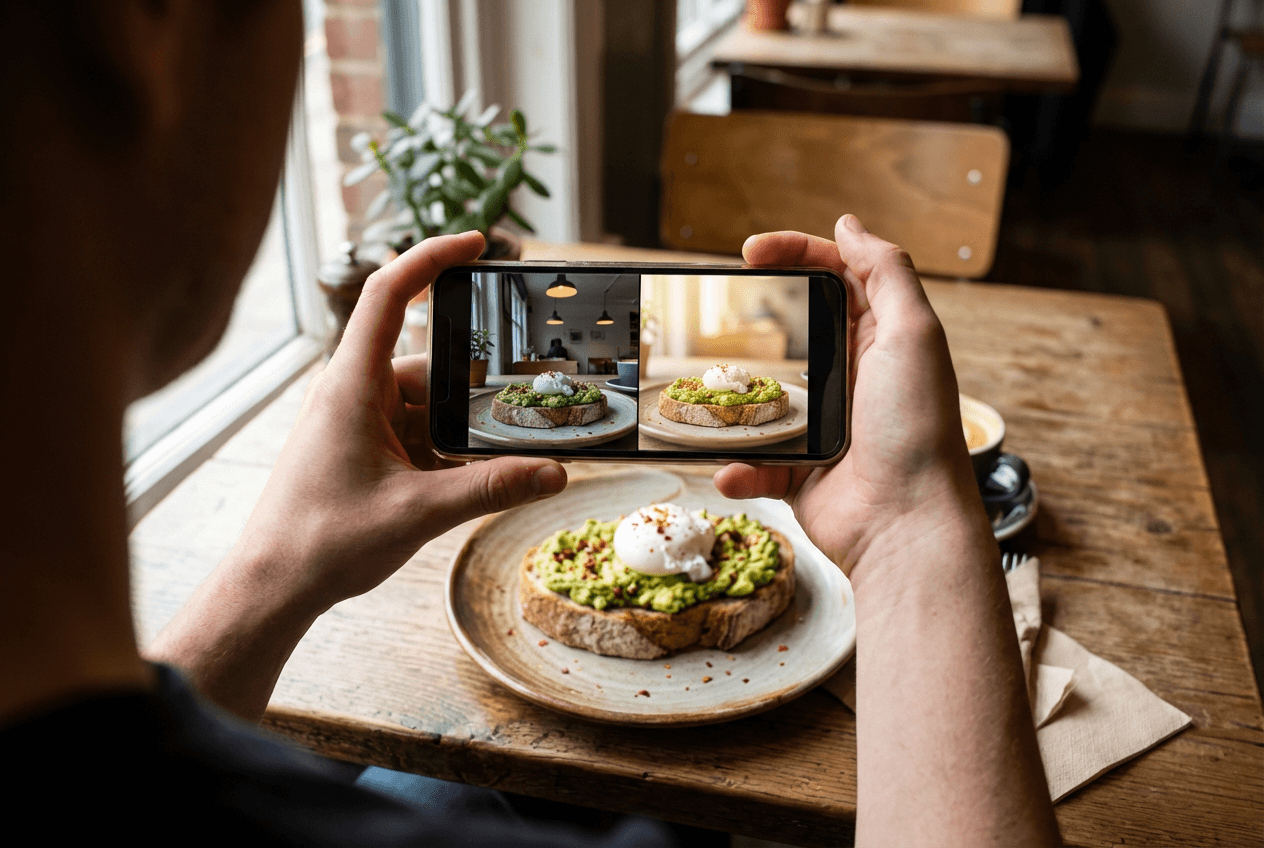
A menu photo shoot used to mean a food stylist, a photographer, hours of plating and re-plating the same dish under hot lights, and a bill that made a lot of restaurants skip photos entirely. That’s part of why so many menus online still show either no picture at all or one that’s years old and doesn’t match what actually comes out of the kitchen. AI food image generators are changing that math, letting a restaurant produce menu-ready photos without booking a shoot, and understanding how that actually works matters before relying on it for something customers will judge a dish by.
Why Are Restaurants Turning to AI for Menu Photos?
Restaurants are turning to AI for menu photos because it removes the cost and scheduling barrier of a professional shoot, letting even a small operation get consistent, appetizing images for every item on the menu.
A traditional menu photo shoot means paying for a food stylist, a photographer, and studio or on-site time, then living with whatever that single session produced. Adding a new seasonal item or updating a recipe used to mean scheduling another shoot just for one dish, which most restaurants simply skipped, leaving that item without a photo at all. AI-generated images remove that bottleneck. A new dish can get a menu-ready photo the same day it’s added, which matters most for restaurants running frequent specials or seasonal menus where the old production cost was the real reason half the menu never had a picture.
How Does an AI Food Image Generator Actually Work?
An AI food image generator works from either an existing reference photo or a written prompt, producing a styled food image by refining lighting, plating, and background into something that reads as a professional menu shot.
Higgsfield’s AI image generator gives access to multiple underlying models, including Nano Banana Pro, GPT Image, Seedream, FLUX, and Kling O1, so the same dish can be generated and compared across engines rather than locked into one model’s particular strengths and weaknesses. That comparison step matters more for food than for most other categories, since steam, glossiness on a sauce, and how melted cheese or char actually looks are exactly where a weaker model tends to look artificial first. Running the same dish through several models and picking the most convincing result is how a restaurant lands on a photo that looks like it came out of their own kitchen rather than a generic stock image.
What Does This Mean for the Cost and Timeline of Updating a Menu?
AI-generated menu photography typically costs a small fraction of a traditional food photo shoot and compresses a production timeline of days down to same-day turnaround.
A professional menu shoot involves paying for a stylist, a photographer, and studio time, a cost that adds up fast once every dish on a full menu needs its own shot. Generating the same set of images through an AI model swaps that budget for a subscription and some review time, and swaps the days-long shoot schedule for same-day results. That matters most for a restaurant updating a menu seasonally or running frequent limited-time offers, where the old economics meant most new dishes launched with no photo at all, and a missing photo on a delivery app listing is one of the simplest ways to lose an order to a competitor with a picture.
Can AI-Generated Food Photos Look as Appetizing as a Real Shoot?
AI-generated food photos can look convincingly real when they start from a genuine reference photo of the actual dish and get compared across multiple models, though close inspection can still reveal small inconsistencies in texture or garnish detail.
The gap between generated and photographed food imagery has narrowed substantially, but it hasn’t fully closed. Dishes with complex texture, melted cheese, glazed sauces, layered ingredients, remain a common place where a generated image can look slightly off under close inspection. Starting from an actual photo of the specific dish rather than a text prompt alone tends to produce a far more accurate result, since the model has real plating and ingredients to work from instead of inventing them. For hero images on a menu or delivery app listing, comparing outputs across several models before selecting a final image remains the most reliable way to catch these issues before publishing.
Does This Change What Happens to a Restaurant’s Older Promo Video?
Yes, restaurants generating sharp new AI menu photos increasingly need their older promotional or social video brought up to the same visual standard, since a crisp generated photo next to a soft, low-resolution video creates an obvious mismatch.
A restaurant with a few years of promo clips, an old commercial, behind-the-scenes kitchen video, or early social content often finds that footage looks noticeably dated once new AI-generated menu photos raise the visual bar for everything published alongside them. Higgsfield AI video upscaler applies super-resolution, denoising, and stabilization to rebuild detail in that older footage rather than simply enlarging it, bringing archive promo video and social clips closer to a resolution standard that holds next to freshly generated food photography. For a restaurant building out its website and social presence, that consistency matters as much as the new photos themselves, since a page mixing sharp new images with grainy old video reads as inconsistent regardless of how good either asset is on its own.
What Should a Restaurant Look for Before Using AI for Menu Imagery?
A restaurant evaluating AI for menu imagery should prioritize access to multiple underlying models, the ability to generate from a real photo of the actual dish, batch generation for a full menu, and a clear commercial licensing policy.
Access to more than one model matters because no single model handles every food type, lighting style, and plating equally well, and comparing outputs is how a restaurant avoids a photo that looks noticeably weaker than the rest of its menu. The ability to start from an actual photo of the dish, rather than describing it from scratch in a prompt, produces far more accurate texture and presentation. Batch generation matters for any restaurant updating a full menu rather than a single item, since running the entire lineup through one workflow is the difference between a project that actually ships and one that stalls after the first few dishes. Licensing terms are worth confirming before committing budget, since commercial use policies vary by platform and a menu photo needs clear rights before it goes onto a public-facing website or delivery app.
Frequently Asked Questions
Do AI-generated food photos look obviously fake to customers? Not consistently anymore. Early AI food images were easier to spot, but the gap has narrowed significantly, particularly when generation starts from a real reference photo of the dish and gets compared across multiple models.
Is AI replacing food photographers entirely? For certain use cases, quick menu updates, delivery app thumbnails, seasonal specials, yes, some of that work is shifting to AI. High-end editorial food photography for print or major campaigns still benefits from a photographer’s direction in ways generation tools don’t fully replace yet.
How much does it cost to generate menu photos with AI compared to a traditional shoot? A traditional food photo shoot typically runs into the hundreds or thousands of dollars depending on the number of dishes. AI generation costs a fraction of that, usually a subscription fee rather than a per-shoot budget.
Can AI generate an accurate photo of a specific dish? Accuracy improves substantially when generation starts from an actual reference photo of the dish rather than a text description alone, since the model has real plating and ingredients to work from.
Should a restaurant also upgrade its older promo video if it starts using AI-generated menu photos? It’s worth considering. A sharp new AI-generated photo next to older, lower-resolution promo or social video creates a visible quality gap, so bringing both up to a consistent standard makes for a more cohesive online presence.