
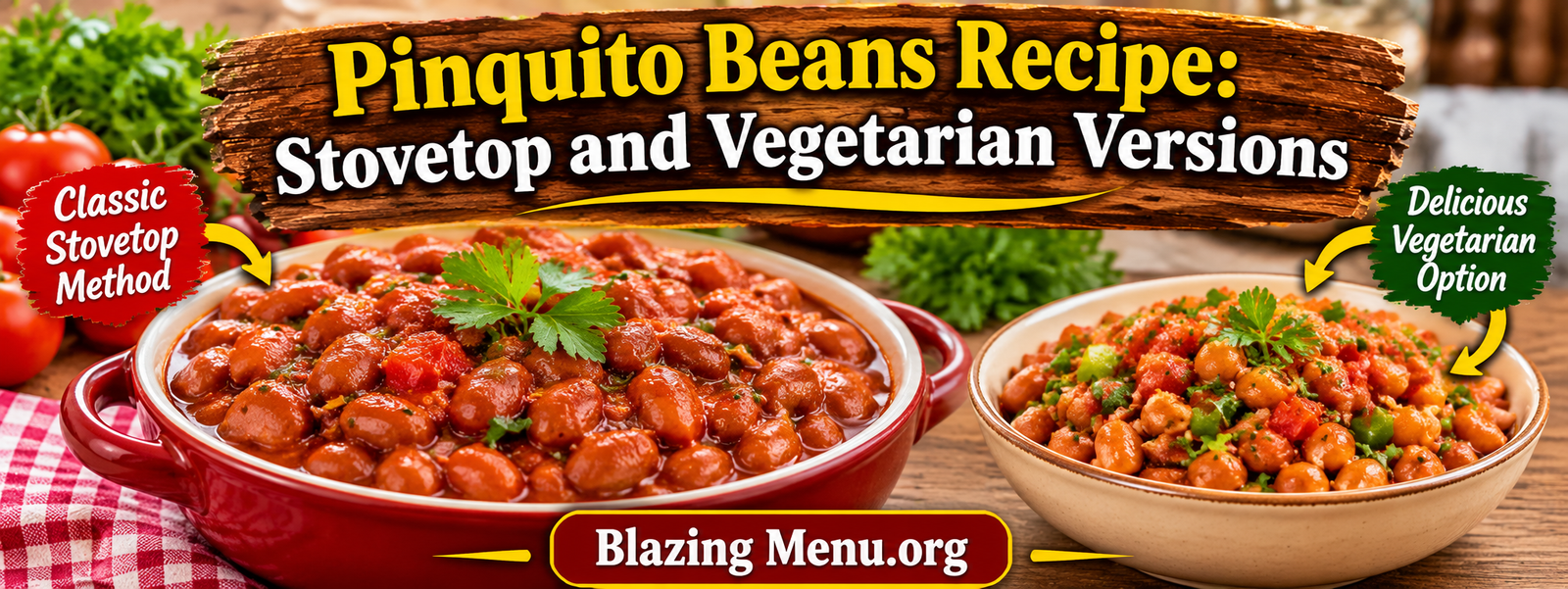
Pinquito beans are a beloved part of California’s Santa Maria-style barbecue tradition. These small, pinkish beans have a tender texture, rich flavor, and ability to absorb seasonings beautifully. Traditionally prepared with bacon, tomato, spices, and aromatics, they make a satisfying side dish for grilled meats, roasted vegetables, and everyday meals.
This Pinquito Beans Recipe explains how to prepare flavorful beans on the stovetop, including a vegetarian version that delivers plenty of savory taste without meat. Whether you are planning a barbecue or simply want a comforting homemade side, this recipe offers an easy way to bring a taste of Santa Maria cooking to your kitchen.
What Are Pinquito Beans?
Pinquito beans are small, oval-shaped beans with a pale pink color. They are especially associated with Santa Maria barbecue in California, where they are traditionally served alongside grilled beef, garlic bread, and fresh salsa.
Their name comes from the Spanish word pinto, meaning painted or spotted, although pinquito beans are generally smaller and more uniformly pink than common pinto beans.
When cooked properly, pinquito beans become tender while maintaining their shape. Their mild, earthy flavor makes them an excellent base for tomato, garlic, onion, paprika, and smoky seasonings.
Ingredients for This Pinquito Beans Recipe
The following ingredients make a flavorful stovetop batch. You can use dried or canned pinquito beans, depending on how much preparation time you have.
Main Ingredients
- 1 pound dried pinquito beans
- 1 medium onion, finely chopped
- 3 garlic cloves, minced
- 1 cup crushed or diced tomatoes
- 4 cups water or low-sodium broth, plus more as needed
- 1 tablespoon olive oil
- 1 teaspoon smoked paprika
- 1 teaspoon chili powder
- ½ teaspoon ground cumin
- Salt and black pepper to taste
- 1 bay leaf
Optional Ingredients for Traditional Flavor
For a more traditional barbecue-style version, add 3–4 ounces of diced bacon or salt pork. Cook it first until some fat renders, then use the flavorful fat to sauté the onion and garlic.
You can also add a small amount of Worcestershire sauce for extra savory depth. Check the label if you need a vegetarian or vegan meal, because some versions contain anchovies.
How to Cook Pinquito Beans on the Stovetop
Cooking dried pinquito beans on the stovetop is straightforward, although they need time to soften. Soaking them beforehand can reduce cooking time and help them cook more evenly.
Step 1: Sort and Rinse the Beans
Spread the dried beans on a clean surface and remove any small stones, damaged beans, or debris. Rinse them thoroughly under cool running water.
If you have time, soak the beans in a large bowl of water for 6–8 hours or overnight. Use enough water to cover them by several inches because they expand as they absorb moisture.
Drain and rinse before cooking.
Step 2: Prepare the Flavor Base
Heat olive oil in a large, heavy-bottomed pot over medium heat. Add the chopped onion and cook for approximately 4–5 minutes until softened.
Stir in the garlic, smoked paprika, chili powder, and cumin. Cook for another 30 seconds, taking care not to burn the garlic.
For the traditional version, cook the diced bacon first, then sauté the onion and garlic in the rendered fat.
Step 3: Add Beans and Liquid
Add the rinsed beans, tomatoes, bay leaf, and water or broth. Stir everything together.
Bring the mixture to a gentle boil, then reduce the heat to low. Cover partially and allow the beans to simmer.
Avoid a rapid boil because vigorous cooking can break the beans and create an uneven texture.
Step 4: Simmer Until Tender
Cook soaked pinquito beans for approximately 60–90 minutes, checking their texture as they cook. Unsoaked beans may need around 90–120 minutes or longer.
Cooking time varies depending on the age of the beans, soaking time, and stovetop temperature.
Add hot water or broth if the liquid level becomes too low. The beans should remain covered with liquid while they soften.
Step 5: Season and Finish
When the beans are tender, remove the bay leaf. Add salt and black pepper to taste.
Let the beans simmer uncovered for another 5–10 minutes if you prefer a thicker sauce. For a creamier consistency, gently mash a small portion of the beans against the side of the pot and stir them back in.
Allow the finished beans to rest for a few minutes before serving.
Vegetarian Pinquito Beans Recipe
A vegetarian version can be just as satisfying as the traditional preparation. Instead of bacon or salt pork, use olive oil, vegetables, spices, and vegetable broth to create a rich, flavorful base.
Vegetarian Ingredients
- 1 pound dried pinquito beans
- 1 tablespoon olive oil
- 1 medium onion, chopped
- 3 garlic cloves, minced
- 1 cup diced tomatoes
- 4 cups vegetable broth, plus more as needed
- 1 teaspoon smoked paprika
- ½ teaspoon cumin
- ½ teaspoon chili powder
- 1 bay leaf
- Salt and black pepper
- 1 tablespoon tomato paste (optional)
Vegetarian Cooking Method
- Rinse and soak the beans if desired.
- Heat olive oil in a pot and sauté the onion until soft.
- Add garlic, tomato paste, paprika, cumin, and chili powder.
- Stir in the beans, tomatoes, vegetable broth, and bay leaf.
- Simmer gently until the beans are completely tender, adding liquid as necessary.
- Season with salt and pepper, then simmer uncovered briefly to thicken.
For extra savory flavor, add chopped mushrooms or a small amount of soy sauce or tamari. These ingredients can deepen the taste without adding meat.
To keep the dish vegan, use vegetable broth and check that all sauces and seasonings are plant-based.
Dried Beans vs. Canned Pinquito Beans
Both dried and canned pinquito beans can work well. The best option depends on your schedule and the texture you want.
| Feature | Dried Pinquito Beans | Canned Pinquito Beans |
| Preparation | Sorting, rinsing, optional soaking | Drain and rinse |
| Cooking time | Usually 1–2 hours or more | About 20–30 minutes |
| Texture | Excellent control over tenderness | Convenient and usually softer |
| Flavor | Absorbs cooking seasonings gradually | Benefits from a flavorful sauce |
| Best for | Traditional slow-simmered recipes | Quick weeknight meals |
If using canned beans, start by preparing the onion, garlic, tomatoes, and seasonings. Add the drained beans with a little broth and simmer gently for 20–30 minutes. Since canned beans are already cooked, avoid extended simmering that could make them fall apart.
Tips for Perfect Pinquito Beans
A few simple techniques can make a noticeable difference in the finished dish.
- Check the beans before cooking: Remove debris and rinse thoroughly.
- Use gentle heat: A steady simmer helps the beans cook evenly without breaking.
- Add liquid when needed: Keep enough broth or water in the pot to prevent scorching.
- Taste before serving: Adjust salt, pepper, and spices after the beans become tender.
- Allow resting time: A short rest helps the sauce settle and the flavors come together.
What to Serve With Pinquito Beans
Pinquito beans are especially popular as a barbecue side, but they work with many different meals.
Santa Maria-Style Barbecue
Serve the beans with grilled tri-tip, barbecue beef, or chicken. Add garlic bread, fresh salsa, and a green salad for a classic California-inspired meal.
Grilled Vegetables
For a vegetarian dinner, pair the beans with grilled zucchini, bell peppers, corn, and mushrooms. A squeeze of fresh lime can brighten the plate.
Rice and Grain Bowls
Spoon the beans over rice, quinoa, or another cooked grain. Add avocado, tomatoes, chopped cilantro, and a little salsa for a filling bowl.
Tacos and Burritos
Use pinquito beans as a side or filling for tacos and burritos. They pair well with roasted vegetables, cheese, lettuce, and your favorite sauce.
Storage and Reheating Instructions
Allow cooked beans to cool slightly before transferring them to shallow, airtight containers. Refrigerate within two hours of cooking.
Store refrigerated beans for approximately 3–4 days. For longer storage, freeze them in airtight, freezer-safe containers with some of their cooking liquid. They generally maintain good quality for about 2–3 months.
To reheat, place the beans in a saucepan over low to medium heat. Add a splash of water or broth if the sauce has thickened during storage. Stir occasionally until steaming hot throughout. You can also reheat individual portions in the microwave, stirring halfway through.
If frozen, thaw the beans in the refrigerator before reheating when possible.
Common Mistakes to Avoid
Even a simple bean recipe can become disappointing if a few details are overlooked.
Cooking at too high a temperature: A hard boil can split the beans and cause uneven cooking. Keep the pot at a gentle simmer.
Adding too little liquid: Beans absorb water as they cook. Check the pot regularly and add more hot liquid when necessary.
Assuming every batch cooks at the same speed: Older dried beans may take longer to soften. Test several beans before deciding they are ready.
Over-seasoning too early: Broth, bacon, and canned tomatoes can contain salt. Taste the finished beans before adding more.
Using the wrong substitute: Pinto beans can work if pinquito beans are unavailable, but the size and texture will be different.
Final Thoughts
This Pinquito Beans Recipe brings a classic Santa Maria-inspired side dish into your home kitchen. The stovetop method creates tender beans with a rich tomato and spice sauce, while the vegetarian version offers a satisfying alternative without bacon or salt pork.
Serve them with grilled meats, roasted vegetables, rice, or tacos. With a little preparation and gentle simmering, pinquito beans can become a dependable addition to family dinners and weekend barbecues.
Frequently Asked Questions
1. Do Pinquito Beans Need to Be Soaked?
No. Soaking is optional, but it can shorten cooking time and help the beans cook more evenly. Unsoaked beans generally need longer on the stovetop.
2. Can I Use Pinto Beans Instead of Pinquito Beans?
Yes. Pinto beans are a practical substitute, although they are larger and have a somewhat different texture. Adjust cooking time as needed.
3. Are Pinquito Beans Naturally Vegetarian?
Yes. The beans themselves are plant-based. However, traditional recipes may include bacon or salt pork, so check the ingredients when ordering or buying prepared beans.
4. How Do I Make Pinquito Beans Thicker?
Simmer the beans uncovered for several minutes to reduce excess liquid. You can also mash a small portion of the cooked beans and stir them into the sauce.
5. Can I Make Pinquito Beans Ahead of Time?
Yes. Cook them a day ahead, refrigerate promptly, and reheat gently with a little water or broth. Their flavor often becomes even more developed after resting overnight.