
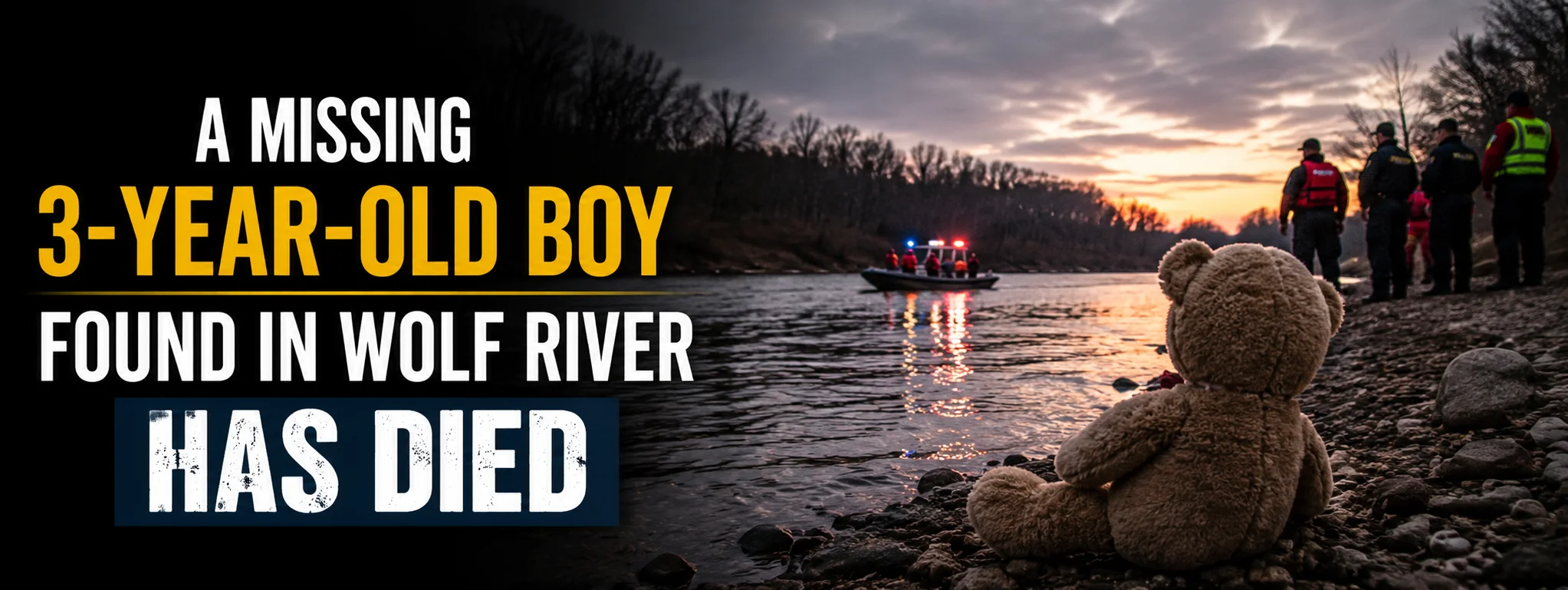
When a child goes missing, time slows down to a agonizing crawl. The air grows thick with desperation, every ticking second feels like a strike against hope, and an entire community holds its collective breath. That harrowing tension gripped residents when a missing 3-year-old boy became the subject of an urgent, wide-scale search around the natural and urban stretches of the Wolf River area. Emergency personnel, law enforcement agencies, and community volunteers joined forces in a race against the clock, hoping for a miracle. Tragically, those hopes were shattered when rescuers retrieved the toddler from the water. Despite immediate lifesaving efforts and transportation to a medical center, the little boy was pronounced dead.
The devastating outcome sent shockwaves through the community, turning a search effort into a heartbreaking tragedy. It serves as a stark, painful reminder of the incredible fragility of life, the hidden hazards present in natural environments, and the devastating impact of water-related incidents involving young children.
The Incident and Search Operation
The initial call for help came in like so many other missing person reports—a sudden, terrifying moment of realization that a young child was nowhere to be seen. Given the boy’s tender age of just three years old, local law enforcement immediately categorized the disappearance as high-risk, triggering a multi-agency response.
Because the initial area of search was near the waterways connected to the Wolf River, rescue personnel understood the heightened severity of the situation. Water hazards present an immediate and unique peril to toddlers, who possess curiosity far exceeding their physical capabilities or hazard awareness.
Within hours of the alert, search crews mobilized extensively:
-
First Responders and K-9 Units: Ground teams systematically swept surrounding neighborhoods, thick brush, and natural trails near the riverbank. K-9 teams tracked potential scents along paths leading to the water.
-
Drone and Aerial Operations: Thermal imaging drones and law enforcement helicopters flew low over the tree line and along the curves of the Wolf River, searching for any thermal signature or movement.
-
Dive and Water Rescue Teams: Boats equipped with side-scan sonar were deployed into the currents, while specialized swift-water and dive personnel waded through dangerous, murky stretches of the river.
As night turned to day, first responders worked tirelessly despite difficult environmental conditions, including dense foliage, muddy terrain, and unpredictable river currents. However, the outcome everyone prayed to avoid ultimately unfolded when search teams located the boy in the water. Medical personnel on scene performed immediate emergency resuscitation measures before transporting him to a nearby hospital, where physicians later pronounced the toddler dead.
Understanding the Dangers of Natural Waterways
The tragedy along the Wolf River highlights a reality that water safety experts emphasize constantly: natural bodies of water pose significantly higher risks than controlled environments like swimming pools. Rivers, in particular, present hidden dangers that can overpower even full-grown adults, let alone a curious three-year-old child.
| Risk Factor | Natural Waterways (Rivers/Creek) | Swimming Pools |
| Visibility | Low to zero; dark water, sediment, and mud block line of sight. | High; clear water allows quick visual location of individuals. |
| Currents | Unpredictable underwater undertows and moving water. | Static; water remains still without artificial jets. |
| Surfaces & Drop-offs | Slippery banks, steep sudden drop-offs, underwater drop-holes. | Uniform depth markings, flat concrete, textured steps. |
| Debris | Submerged logs, roots, aquatic plants, and rocks can trap individuals. | Controlled environment with minimal debris or obstruction. |
| Enclosure | Open, often vast boundaries with immediate access to nature. | Fenced, gated barriers restricting unassisted entry. |
For a young child, the bank of a river can be deceptively slippery. A single misstep on mud or wet rock can result in a sudden fall into deep, moving water. Unlike what is often depicted in popular media, drowning is almost always silent and swift. A toddler who falls into a river rarely splashes loudly or cries out for help; instead, cold water shock and quick submersion prevent them from calling out, making immediate physical proximity the only true defense.
The Impact on the Local Community
When a tragedy like this strikes, the grief extends far beyond the victim’s immediate family. It permeates the entire fabric of the neighborhood and city. First responders who worked around the clock carry a heavy emotional burden. Police officers, firefighters, paramedics, and volunteer searchers pour their energy into these missions with the hope of returning a missing child safely to their family’s arms; handling a fatal outcome takes a profound toll on their mental well-being.
Neighbours and local residents who monitored updates with bated breath share in the collective heartbreak. Vigils, memorial flowers, and stuffed animals often gather near search perimeter sites as a community attempts to process the loss and show solidarity with a family enduring every parent’s worst nightmare.
Tragedies of this nature inevitably lead to difficult conversations regarding safety measures near riverbanks, park boundaries, and residential areas bordering natural environments. Local leaders often face questions regarding whether additional fencing, warning signage, or barrier installations could help prevent future accidents in public access points along hazardous waterways.
Water Safety and Prevention for Young Children
While no single strategy can prevent every unforeseen circumstance, child safety organizations and pediatricians urge communities and families to adopt multi-layered protective strategies when living near or visiting open bodies of water:
-
Active and Uninterrupted Supervision: Supervision means continuous visual contact. When near natural waterways, adults should practice “water watching”—designating one specific adult whose sole responsibility is keeping eyes on young children without distractions from phones, chores, or conversation.
-
Physical Barriers: Homes located adjacent to rivers, canals, or ponds should have secure perimeter fencing with self-closing, self-latching gates. Door alarms and window locks can alert parents immediately if a toddler attempts to wander outside independently.
-
Early Survival Swimming Skills: While traditional swimming strokes take time to master, infant and toddler survival swim training focuses on teaching young children how to roll onto their backs, float, and rest while waiting for help if they accidentally fall into water.
-
Life Jackets near Open Water: Whenever families are walking, playing, or resting near riverbanks, young children should wear properly fitted, U.S. Coast Guard-approved life jackets—even if they do not intend to enter the water.
Final Thoughts
The death of a missing 3-year-old boy found in the Wolf River is an heartbreaking tragedy that leaves an indelible mark on all who followed the story. It serves as a somber reminder of how quickly an innocent moment of exploration can turn into an irreversible disaster when natural water hazards are nearby.