
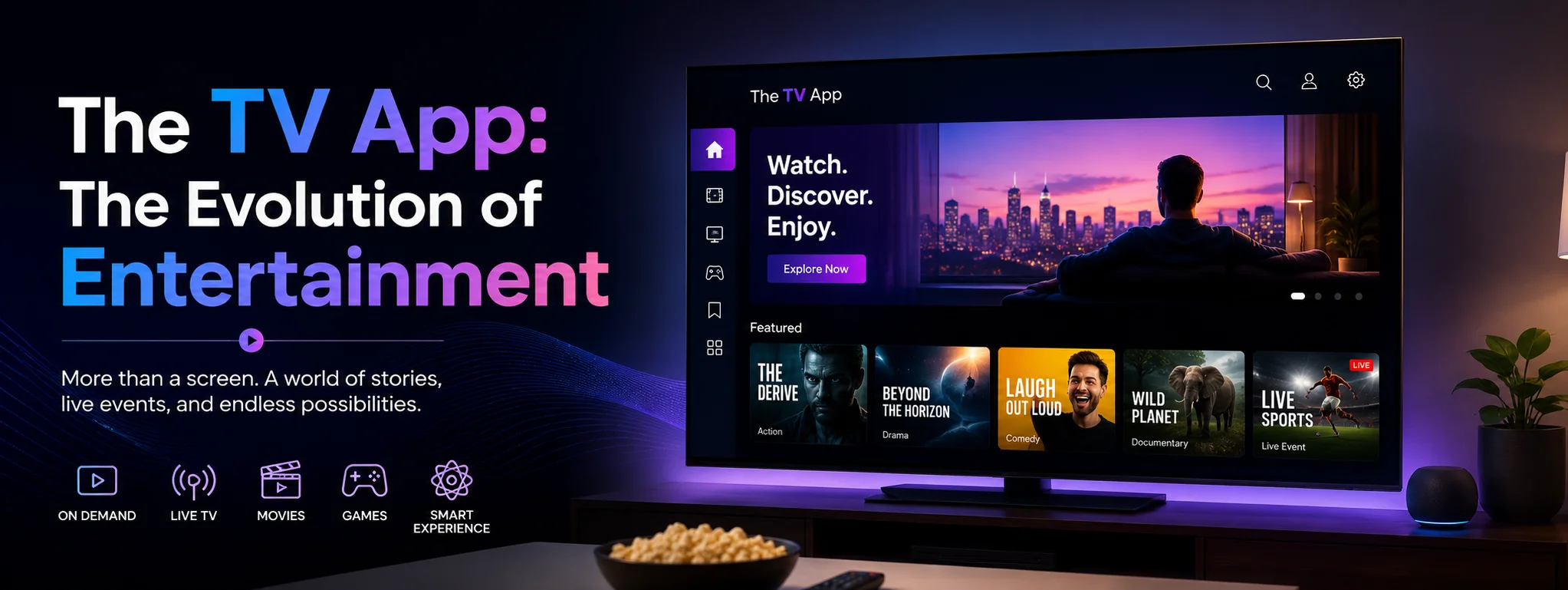
Entertainment consumption has undergone a massive transformation over the past two decades. The days of fixed channel lineups, physical media collections, and schedule-bound viewing have largely receded into memory. Replacing them is an ecosystem built around instant accessibility, personal choice, and high-definition streams delivered on demand. At the core of this modern viewing revolution stands a vital software gateway: the TV app.
Whether pre-installed on a smart home display, operating inside a dedicated streaming box, or loaded onto a mobile phone, the modern TV app represents far more than just a media player. It functions as a digital central hub, bridging the gap between vast libraries of global media and individual viewers seeking curated experiences. To understand the true impact of this software evolution, it is necessary to examine how the TV app shifted control back to the user, unified fragmented content networks, and laid the groundwork for the future of digital media.
From Cable Boxes to Digital Gateways
To appreciate the design and utility of a contemporary TV app, one must look back at the friction points of early television broadcasting. For decades, viewers were passive consumers bound by strict network programming schedules. Channel surfing was manual, recording required physical tapes or clunky DVR hard drives, and accessing regional or global content meant paying steep fees for sprawling cable packages.
The rise of high-speed internet changed that paradigm forever. However, initial streaming efforts created a different kind of friction: content fragmentation. As competing studios launched distinct platforms, users found themselves forced to juggle dozens of separate applications, passwords, and subscriptions just to track down specific movies or series.
The modern TV app emerged as the solution to this fragmentation. Designed to act as a unified dashboard, advanced TV apps synthesize multiple content streams into a single navigation interface. By organizing shows, movies, live broadcasts, and sporting events under one visual architecture, these applications transformed chaotic digital ecosystems into seamless, intuitive viewing environments.
Architecture of a Seamless User Experience
What makes a modern TV app truly powerful is not merely the volume of content it hosts, but how easily it allows users to navigate that content. Behind every polished home screen lies a complex framework of interface design, metadata organization, and real-time processing engineered to eliminate friction.
1. Centralized Search and Cross-Platform Integration
One of the most valuable features of a unified TV app interface is global search. Instead of opening individual platforms one by one to check availability, users can type or speak a title, actor, or director into a single search bar. The app queries integrated databases across multiple subscription tiers, free streaming services, and digital storefronts, instantly presenting viewing options alongside pricing or subscription details.
2. Algorithmic Personalization
Every user possesses distinct tastes, viewing habits, and schedules. Advanced TV apps leverage machine learning algorithms to map out individual viewer profiles based on watch history, completion rates, time-of-day viewing patterns, and genre preferences. Instead of endless manual browsing, viewers receive personalized recommendations that surface relevant content automatically, turning a massive library of titles into a customized feed.
3. Continuous Playback and Unified Watchlists
The modern viewing journey rarely happens in a single sitting or on a single device. A robust TV app keeps track of real-time progress across platforms. Pausing an episode on a living room TV lets the user resume it at the exact second on a tablet during a commute. Furthermore, cross-platform watchlists allow viewers to bookmark titles from different network providers into a single, cohesive queue.
Redefining Device Interplay and Portability
The utility of a TV app extends far beyond the physical television set. The app serves as the software bridge connecting smart home ecosystems, personal mobile devices, and cloud computing architectures.
+-------------------------------------------------------------+
|                        THE TV APP                           |
|                    (Centralized Engine)                     |
+------------------------------+------------------------------+
                               |
       +-----------------------+-----------------------+
       |                       |                       |
       v                       v                       v
+--------------+       +---------------+       +---------------+
| Smart TVs &  |       | Mobile Phones |       | Laptops &     |
| Streaming    |       | & Tablets     |       | Web Browsers  |
| Hardware     |       |               |       |               |
+--------------+       +---------------+       +---------------+
Mobile devices act as powerful companion tools within this framework. A user can use their phone to browse content, manage downloads for offline viewing, or input text search terms far faster than using a traditional infrared remote control. Screen-casting technologies allow media playing on a handheld device to hand off seamlessly to a large display with a single tap.
Additionally, cloud-based sync infrastructure ensures that settings, audio preferences, subtitles, and user profiles remain uniform regardless of hardware context. Whether launching the app on a travel laptop in a hotel room or on a primary home theater system, the experience remains consistent.
Technical Foundations: Optimization and Delivery
Delivering high-definition visual content demands sophisticated underlying technology. Modern TV apps operate on adaptive bitrate streaming protocols, constantly evaluating local network bandwidth to prevent buffering while maintaining peak visual quality.
When network conditions drop, the app dynamic scales resolution without interrupting playback. When connection speeds stabilize, high-dynamic-range (HDR) color standards, 4K resolutions, and immersive spatial audio formats like Dolby Atmos are restored instantly.
Security and content protection are equally vital. Built-in Digital Rights Management (DRM) frameworks verify licensing terms, shield studio intellectual property, and enable secure dynamic ad insertion for free, ad-supported streaming models (FAST). This blend of backend engineering ensures that complex data operations remain invisible, leaving the end user with a clean, high-performance visual display.
Bridging Live Broadcasting and On-Demand Libraries
Historically, live broadcasts—such as news events, awards shows, and real-time sports—were distinct from video-on-demand services. The expansion of the modern TV app has effectively dissolved this boundary.
Today’s TV apps regularly integrate live broadcast signals, linear channel guides, and on-demand streaming into a single interface. Viewers can switch from a live football match with interactive real-time statistics overlays to a pre-recorded documentary with no disruption in user flow. Interactive features such as multi-cam switching, real-time sports metrics, instant rewinds, and alternate commentary tracks have transformed live broadcasting into a personalized, active experience.
Final Thoughts
The modern TV app has fundamentally reshaped how society interacts with visual media. By organizing fragmented streaming services, personalizing discovery, and bridging hardware gaps, it has transformed content consumption from a passive pastime into an intentional, highly tailored experience.