
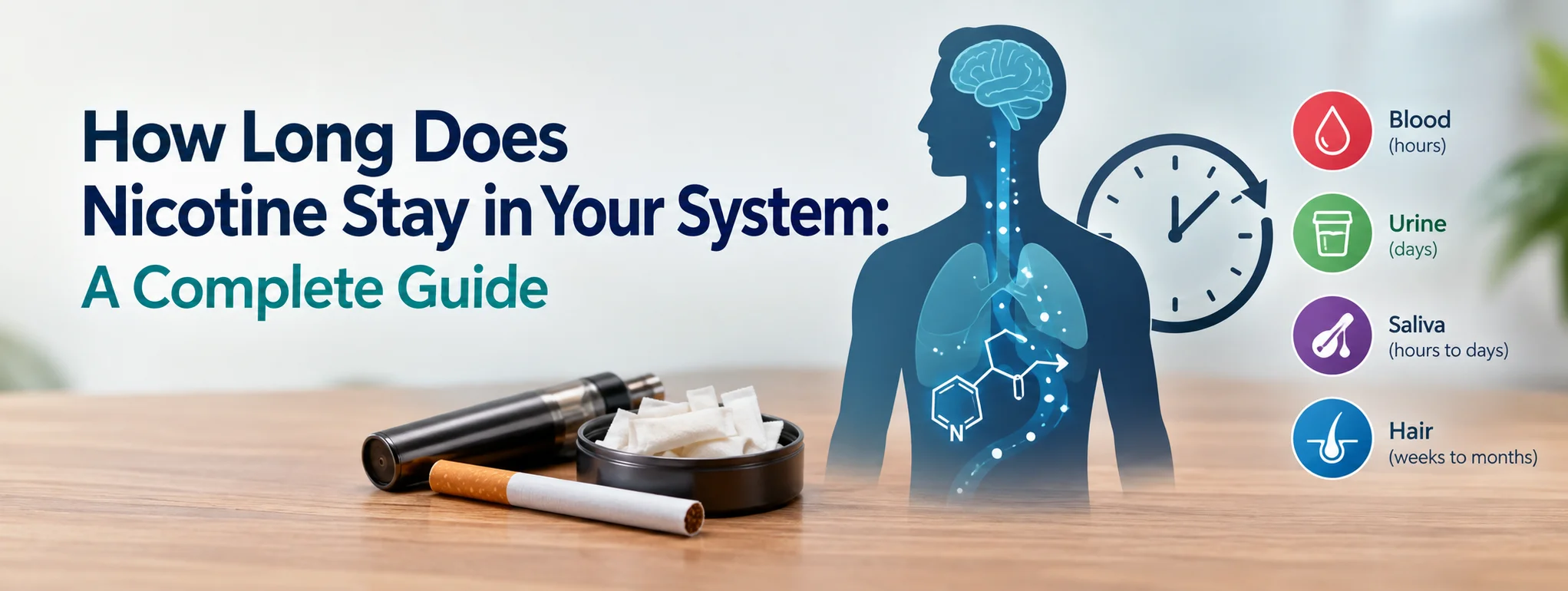
Nicotine is a powerful, addictive substance found in cigarettes, vaping products, chewing tobacco, and other tobacco products. If you have recently smoked a cigarette or used a vape, you may wonder how long does nicotine stay in your system and how long its effects can last. The answer depends on several factors, including how frequently you use nicotine, the amount consumed, your metabolism, and the type of test used to detect it.
Nicotine begins to leave the body relatively quickly, but its breakdown products can remain detectable for several days or longer. This difference is important because a person may no longer feel nicotine’s immediate effects while a laboratory test can still identify evidence of recent use.
Understanding nicotine’s elimination timeline can help you make informed decisions about your health, prepare for a medical discussion, and understand what nicotine testing can and cannot reveal.
How Long Does Nicotine Stay in Your System?
Nicotine typically has a half-life of approximately two hours in the bloodstream. This means the body eliminates about half of the nicotine present over that period, although the exact rate varies between individuals.
However, nicotine does not disappear completely after a few hours. The liver breaks it down into several substances, including cotinine, which remains in the body longer and is commonly measured during nicotine testing.
For many people, nicotine itself becomes difficult to detect in blood or saliva within hours to a few days. Cotinine may remain detectable for approximately three to seven days, depending on nicotine exposure, individual metabolism, and the testing method. In frequent or heavy users, detection can sometimes last longer.
There is no single timeline that applies to everyone. A blood test, urine test, saliva test, and hair test may produce different detection windows.
Nicotine Detection Times by Test Type
The type of test used makes a significant difference when determining how long nicotine remains detectable. Some tests look for nicotine itself, while others measure cotinine or related substances.
| Test type | Typical detection window | Important detail |
|---|---|---|
| Blood test | Nicotine: hours; cotinine: several days | Useful for identifying recent exposure |
| Urine test | Cotinine: around 3–7 days, sometimes longer | Detection depends on the test and usage pattern |
| Saliva test | Cotinine: around 1–4 days | Often reflects recent nicotine exposure |
| Hair test | Potentially several weeks to months | May provide evidence of longer-term exposure |
| Breast milk | Nicotine can remain for several hours | Exposure and feeding timing require individualized medical advice |
These timeframes are approximate, not guarantees. Test sensitivity, laboratory procedures, frequency of use, and the amount consumed can change the results. Hair testing also differs from blood, urine, and saliva testing because it may indicate exposure over a longer period rather than the exact timing of the last use.
Why Does Nicotine Leave the Body So Quickly?
Nicotine enters the bloodstream rapidly after smoking or vaping. It travels to the brain, where it activates nicotine receptors and produces effects such as increased alertness and temporary pleasure. These effects can encourage repeated use because nicotine also reinforces dependence.
The body begins processing nicotine soon after it enters the bloodstream. Most of this work occurs in the liver, where enzymes convert nicotine into cotinine and other metabolites. The kidneys then help eliminate these substances through urine.
The Role of Cotinine in Nicotine Testing
Cotinine is the primary metabolite commonly used to assess nicotine exposure. It generally has a half-life of approximately 16–20 hours, although individual results vary.
Because cotinine remains detectable longer than nicotine itself, healthcare providers and laboratories often use it to determine whether someone has recently used tobacco or another nicotine-containing product.
Cotinine testing cannot always identify the exact product a person used. Cigarettes, vapes, nicotine gum, patches, and other nicotine products can all produce detectable cotinine.
Five Factors That Affect How Long Nicotine Stays in Your System
Several personal and environmental factors influence how quickly nicotine and cotinine are eliminated.
- Frequency of use: People who smoke or vape regularly may accumulate more cotinine than occasional users.
- Amount consumed: Higher nicotine exposure can increase the amount of nicotine and its metabolites that the body must eliminate.
- Metabolism: Differences in liver enzyme activity can affect how quickly nicotine is processed.
- Age and overall health: Age, liver function, kidney function, and certain health conditions may influence elimination.
- Medications and other substances: Some medications and chemical exposures can affect nicotine metabolism, making individual timelines less predictable.
These factors explain why two people who use the same nicotine product may have different test results. Your personal history and the test’s detection threshold are often more informative than a general estimate.
Does Smoking or Vaping Change the Detection Time?
Both smoking and vaping can introduce nicotine into the bloodstream. The exact amount absorbed depends on the product, nicotine concentration, inhalation pattern, and frequency of use.
Cigarettes
Cigarettes deliver nicotine rapidly through the lungs. People who smoke frequently throughout the day may maintain a more continuous level of nicotine exposure, leading to repeated production of cotinine.
Combustible cigarettes also expose users to harmful substances beyond nicotine, including carbon monoxide and numerous toxic chemicals.
Vaping Products
Vaping products vary widely in nicotine concentration and delivery. Some high-nicotine devices can provide substantial nicotine exposure, particularly when used frequently throughout the day.
Although vaping does not involve burning tobacco in the same way as cigarettes, nicotine-containing e-cigarettes can still cause dependence and expose users to potentially harmful substances.
Nicotine Replacement Products
Nicotine patches, gum, lozenges, and other replacement therapies also introduce nicotine into the body. Consequently, these products can produce positive nicotine or cotinine test results even when a person is not smoking.
Anyone undergoing nicotine testing should tell their healthcare provider about prescribed treatments and nicotine replacement products. This context helps prevent misunderstandings when interpreting results.
How Long After Quitting Does Nicotine Leave Your Body?
After your last nicotine exposure, the amount of nicotine in your bloodstream generally declines over several hours. Cotinine takes longer to decrease, so evidence of recent use can remain detectable for days.
For someone who has used nicotine heavily or consistently, the elimination process may take longer than it does for an occasional user. Even after nicotine and cotinine levels fall, withdrawal symptoms may continue.
Common nicotine withdrawal symptoms include:
- Strong cravings for cigarettes or vaping products.
- Irritability, frustration, or anxiety.
- Difficulty concentrating.
- Changes in sleep or appetite.
- Restlessness or low mood.
These symptoms are a normal part of nicotine dependence and do not mean that nicotine is still present at the same level in your bloodstream. Withdrawal reflects the body’s adjustment to reduced nicotine exposure.
For many people, symptoms are strongest during the first few days after quitting and gradually improve over the following weeks. Individual experiences vary, and support can make the process easier.
Can You Flush Nicotine Out of Your System Faster?
Many online claims promise to eliminate nicotine quickly through detox drinks, special supplements, excessive water consumption, or intense exercise. However, there is no reliable method that guarantees rapid removal of nicotine or cotinine.
Your liver and kidneys naturally process and eliminate these substances. You can support your general health while your body does this, but you cannot safely force the process to finish within a specific timeframe.
Healthy Steps That May Help During Nicotine Withdrawal
Stay normally hydrated. Drink water according to your needs. Excessive water consumption can be dangerous and does not guarantee a negative nicotine test.
Eat balanced meals. Fruits, vegetables, whole grains, protein, and other nutritious foods support general health during the adjustment period.
Engage in appropriate physical activity. Walking or other suitable exercise may help manage stress, restlessness, and cravings. It does not reliably accelerate cotinine elimination enough to guarantee a test result.
Prioritize sleep. A consistent sleep schedule can help with fatigue, concentration problems, and irritability during withdrawal.
Seek evidence-based quitting support. Counseling, behavioral support, and appropriate nicotine cessation treatments can improve your chances of quitting successfully. Ask a healthcare professional which options suit your circumstances, especially if you are pregnant, breastfeeding, or taking medication.
The most dependable way to reduce nicotine exposure is to stop using nicotine products. Avoid unproven detox products that promise instant results or encourage unsafe practices.
Does Nicotine Stay Longer in Heavy Smokers?
Nicotine detection may last longer in people who use tobacco or nicotine products frequently because repeated exposure can maintain higher cotinine levels. However, being a heavy smoker does not mean nicotine itself remains in the bloodstream for weeks.
The distinction between nicotine and cotinine is essential. Nicotine is cleared relatively quickly, while cotinine persists longer. Some people who have used nicotine heavily may still have detectable cotinine after a week or more, depending on their exposure and the sensitivity of the test.
Hair testing can identify evidence of nicotine exposure over a substantially longer period. However, a hair result should not be interpreted as proof of the precise date or amount of nicotine used.
If you have an upcoming medical test, employment screening, or insurance assessment, ask the testing organization which test it uses and how it interprets results. Do not assume that a particular number of nicotine-free hours guarantees a negative result.
Frequently Asked Questions
1. How long does nicotine stay in your blood?
Nicotine may be detectable in blood for hours to a few days, while cotinine can remain detectable for several days. The exact window depends on exposure and test sensitivity.
2. Can nicotine leave your system in 24 hours?
Much of the nicotine may be eliminated within 24 hours, but cotinine can remain detectable for several more days.
3. Does drinking water remove nicotine faster?
Normal hydration supports health, but drinking extra water does not reliably speed nicotine elimination or guarantee a negative test.
4. Can vaping cause a positive nicotine test?
Yes. Nicotine-containing vapes can produce cotinine, which is commonly measured in nicotine tests.
5. How long should I stop smoking before a nicotine test?
There is no guaranteed waiting period. Detection depends on your exposure history, the test type, and its sensitivity. Ask the testing provider for guidance.
Final Thoughts
Understanding how long does nicotine stay in your system starts with recognizing the difference between nicotine and cotinine. Nicotine itself is eliminated relatively quickly, while cotinine can remain detectable for several days and sometimes longer, especially after frequent use.
Blood, urine, saliva, and hair tests each have different detection windows, so no single estimate applies to every person. Factors such as metabolism, frequency of use, nicotine intake, medications, and test sensitivity can influence the result.
If your goal is to quit smoking or vaping, focus on protecting your long-term health rather than trying to force a rapid detox. Healthy routines, practical coping strategies, and professional support can help you manage withdrawal and move toward a nicotine-free life with greater confidence.