
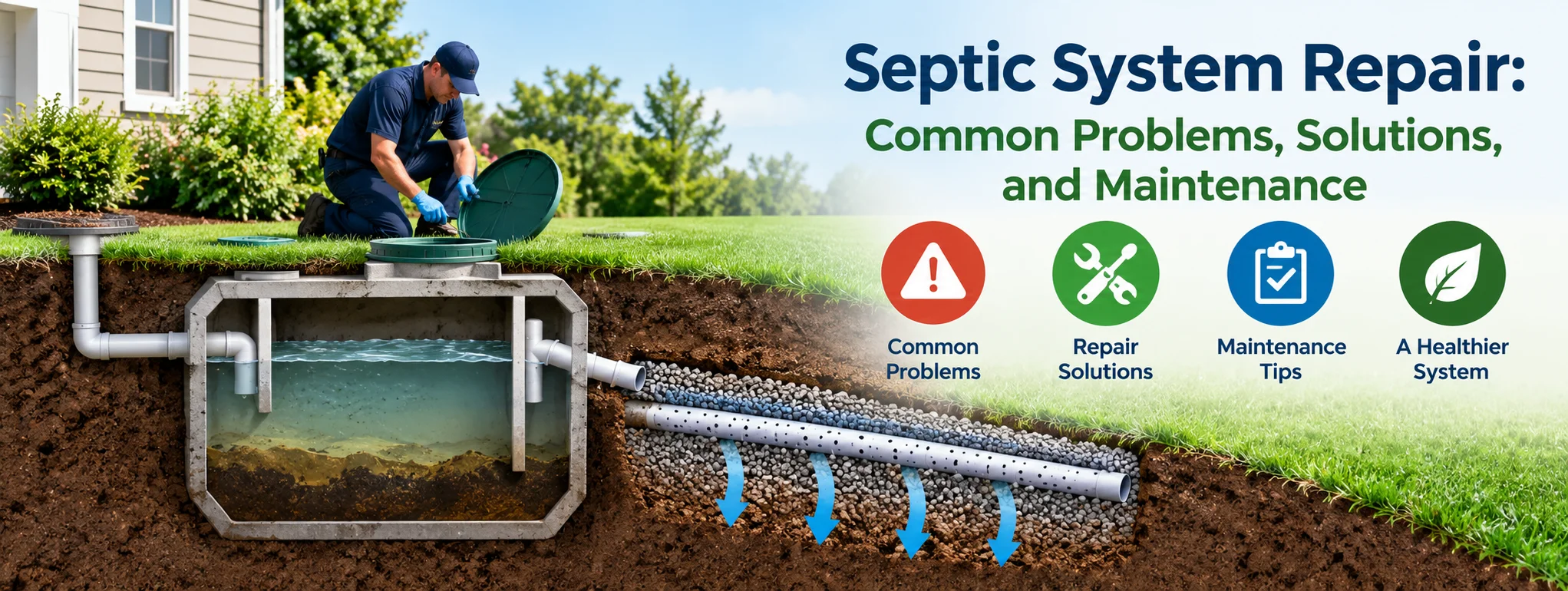
A properly working septic system is essential for a clean, comfortable, and healthy home. When wastewater stops flowing correctly, unpleasant odors, slow drains, wet spots in the yard, and plumbing backups can quickly become stressful problems. Septic System Repair helps homeowners identify these warning signs, fix damaged components, and protect their property from expensive damage. With the right approach, many septic issues can be addressed before they turn into major emergencies.
A septic system treats household wastewater when a property is not connected to a municipal sewer line. It typically includes a septic tank, inlet and outlet pipes, a distribution system, and a drain field. Each component plays an important role in moving wastewater, separating solids, and allowing treated effluent to disperse into the soil.
Understanding common septic problems makes it easier to recognize when professional assistance is necessary. From blocked pipes and damaged baffles to drain field failures, knowing the causes and available solutions can help homeowners make informed decisions. Regular inspections, responsible water use, and timely maintenance also support reliable performance and long-term savings.
Understanding How a Septic System Works
Before exploring septic system repair, it helps to understand the basic operation of a residential septic system. Wastewater from toilets, sinks, showers, washing machines, and other household fixtures flows into the septic tank.
Inside the tank, heavier solids settle to the bottom and form sludge, while oils and grease float to the surface and create a scum layer. Naturally occurring microorganisms break down some of the organic material. The partially treated liquid then flows toward the drain field, where soil provides additional treatment.
When every component functions correctly, wastewater moves through the system without causing noticeable odors, backups, or standing water.
Main Components of a Septic System
-
Septic tank: Holds wastewater and separates solids from liquids.
-
Inlet and outlet pipes: Carry wastewater into and out of the tank.
-
Baffles and filters: Help prevent solids from entering the drain field.
-
Distribution system: Directs wastewater toward the appropriate drain field area.
-
Drain field: Allows treated wastewater to disperse into suitable soil.
Damage to even one component can affect the entire system. Identifying the source of a problem is therefore an essential first step toward a reliable repair.
Common Signs That Your Septic System Needs Repair
Septic problems often develop gradually. Recognizing early warning signs can prevent wastewater damage, unpleasant smells, and costly repairs.
1. Slow Drains and Frequent Plumbing Backups
Slow drains throughout the home may indicate a blockage in the plumbing line, a full septic tank, or a problem with wastewater leaving the tank. If several fixtures drain slowly at the same time, the issue may extend beyond an individual sink or shower.
A single slow drain can result from a local clog, while multiple affected fixtures may suggest a larger plumbing or septic problem.
Solution: A qualified plumber or septic technician can inspect the drainage lines, check the tank level, and identify obstructions. Avoid repeatedly using chemical drain cleaners, as some products can damage plumbing or interfere with septic system function.
2. Unpleasant Odors Around the Property
Strong sewage odors near the tank, drain field, or inside the home can indicate a ventilation issue, leaking pipe, overflowing tank, or drain field problem.
Occasional odors may have several causes, but persistent sewage smells should never be ignored. Wastewater exposure can create sanitation risks.
Solution: Arrange a professional inspection to locate the source. A technician may check tank covers, seals, plumbing vents, pipe connections, and the drain field. Avoid attempting to open or enter the tank yourself.
3. Standing Water in the Yard
Wet patches, unusually green grass, or standing water above the drain field may indicate that wastewater is not dispersing properly. Possible causes include saturated soil, damaged distribution pipes, excessive water use, or a failing drain field.
Rainfall and poor surface drainage can also create wet areas, so the location and timing of the moisture matter.
Solution: Reduce water use and keep people and pets away from potentially contaminated areas. A septic professional can assess soil conditions, inspect the distribution system, and determine whether a localized repair or a more extensive solution is necessary.
4. Sewage Backing Up Into the House
Sewage coming through toilets, showers, or floor drains is one of the most serious signs of septic system trouble. It may result from a blocked sewer line, an overfilled tank, a pump failure, or a drain field that cannot accept additional wastewater.
Solution: Stop using water wherever possible and contact a qualified septic professional promptly. Keep children and pets away from contaminated surfaces. If wastewater enters living spaces, follow appropriate cleanup guidance and seek professional sanitation assistance.
5. Unusually Lush Grass Over the Drain Field
Grass that grows significantly greener or faster over one section of the drain field may indicate excess moisture or nutrient-rich wastewater reaching the surface.
Although healthy grass alone does not prove that a system has failed, this sign becomes more concerning when combined with sewage odors, soggy soil, or plumbing backups.
Solution: Have the area inspected for leaking distribution pipes, poor wastewater dispersal, or drain field damage. Avoid driving or parking vehicles over the drain field because heavy loads can compact soil and damage underground components.
Septic System Repair: Common Problems and Effective Solutions
The correct repair depends on the location, severity, and underlying cause of the problem. Replacing a damaged component without addressing the original issue may lead to repeated failures.
Blocked or Damaged Septic Pipes
Pipes can become obstructed by inappropriate waste, accumulated debris, root intrusion, or structural damage. Older pipes may also crack, separate at joints, or collapse.
A technician can use specialized inspection equipment to locate the blockage or damaged section. Depending on the findings, the solution may involve professional pipe cleaning, root removal, localized pipe replacement, or excavation.
Homeowners can reduce future problems by avoiding the disposal of wipes, sanitary products, cooking grease, and other unsuitable materials through household drains.
Broken Baffles or Septic Tank Filters
Baffles direct wastewater through the tank and help keep floating scum and settled solids from escaping into the outlet pipe. When a baffle breaks or an effluent filter becomes clogged, solids may enter the drain field and contribute to premature failure.
A professional can inspect accessible components, clean a serviceable filter, or replace damaged baffles. Routine tank servicing helps identify these issues before they cause more extensive damage.
Septic Tank Leaks or Structural Damage
Concrete tanks can deteriorate over time, while other tank materials may suffer damage from age, ground movement, corrosion, or external pressure. Cracks and failing connections can allow wastewater to escape or groundwater to enter the tank.
Repairs depend on the tank’s construction and condition. Some minor defects may be repairable using approved methods, while severe structural damage may require tank replacement.
Never enter a septic tank or attempt an improvised repair. Tanks can contain toxic gases and dangerously low oxygen levels, creating a potentially fatal confined-space hazard.
Pump or Electrical System Failure
Some septic systems use pumps to move wastewater to a higher elevation or distribute it through a pressure-based drain field. A failed pump, damaged float switch, blocked intake, or electrical fault can interrupt wastewater movement.
A technician can test the pump, inspect electrical components, examine alarms, and check the discharge line. Depending on the diagnosis, the repair may involve cleaning, component replacement, or installation of a new pump.
If an alarm sounds, reduce water use and arrange service rather than repeatedly resetting the system.
Septic System Repair Costs and Factors That Affect Pricing
The cost of septic system repair varies according to the type of system, the severity of the damage, local labor rates, site accessibility, and applicable regulations. A simple filter service may cost considerably less than replacing a failed drain field.
The following table provides general planning estimates in US dollars. These are illustrative ranges, not verified local quotes, and actual prices may fall outside them.
| Repair or service | Illustrative cost range |
|---|---|
| Septic system inspection | $150–$450 |
| Septic tank pumping | $300–$700 |
| Filter cleaning or replacement | $100–$400 |
| Minor pipe repair | $200–$1,000 |
| Pump replacement | $500–$2,000 |
| Baffle repair or replacement | $300–$1,000 |
| Drain field repair or replacement | $2,000–$15,000+ |
| Septic tank replacement | $3,000–$10,000+ |
Costs depend heavily on local conditions, permits, excavation requirements, tank capacity, and the extent of the damage. Major projects can exceed these estimates, particularly when soil replacement or a redesigned wastewater treatment system is required.
How to Get an Accurate Repair Estimate
Request a written estimate that explains the diagnosis, labor, materials, equipment, excavation, permits, and any required follow-up testing. Ask whether the proposed repair addresses the underlying cause or only the visible symptoms.
Comparing estimates from qualified contractors can help homeowners evaluate the options. However, the lowest price is not always the best value if it excludes essential work or does not meet local requirements.
Essential Septic System Maintenance Tips
Preventive maintenance is one of the most effective ways to reduce unexpected repairs. A well-maintained system can operate reliably for many years, although its lifespan depends on design, installation, soil conditions, usage, and care.
Schedule Regular Inspections and Pumping
Have the system inspected periodically by a qualified professional. Many residential systems benefit from inspections approximately every one to three years, while pumping frequency commonly falls around every three to five years. Actual intervals depend on household size, tank capacity, water use, and the amount of accumulated solids.
Follow the technician’s recommendations rather than relying on a fixed schedule for every property.
Protect the Drain Field
Keep vehicles, heavy equipment, and structures away from the drain field. Avoid planting trees with aggressive roots nearby, and direct roof runoff and surface drainage away from the area.
Excess water can saturate the soil and reduce its ability to absorb wastewater.
Use Water Responsibly
Spreading laundry loads throughout the week, repairing leaking faucets, and installing efficient fixtures can reduce the amount of wastewater entering the tank at one time.
Large, sudden water discharges may overload a system that is already struggling to drain properly.
Dispose of Household Waste Correctly
Septic systems are designed to handle wastewater and human waste, along with ordinary toilet paper suitable for the system. They are not intended to process cooking oil, grease, wipes, cat litter, medications, or household chemicals in large quantities.
Avoid flushing materials that do not break down easily.
Keep Accurate Maintenance Records
Maintain records of inspections, pumping, repairs, permits, and component replacements. These documents help technicians understand the system’s history and can be useful when selling the property.
Five Practical Ways to Prevent Expensive Septic Repairs
Small, consistent habits can protect your septic system and reduce the risk of a sudden plumbing emergency.
-
Repair leaking toilets and faucets quickly to prevent unnecessary wastewater flow.
-
Keep grease, wipes, paper towels, and other unsuitable materials out of household drains.
-
Arrange inspections and pumping according to the system’s actual condition and service recommendations.
-
Protect the tank and drain field from vehicles, construction, and excessive surface water.
-
Contact a qualified professional when odors, backups, alarms, or wet ground appear.
These preventive steps are simple, but they can make a meaningful difference in system performance and household sanitation.
When to Call a Septic System Professional
Some septic problems require immediate attention, especially when wastewater enters the home or sewage appears on the ground. Other warning signs, such as recurring slow drains or persistent odors, still deserve prompt investigation.
Professional service is particularly important when a problem involves structural damage, electrical components, underground pipes, contaminated soil, or a failing drain field.
Before hiring a contractor, confirm that they have the relevant licensing or qualifications required in your area, appropriate insurance, and experience with your type of system. Ask whether permits or inspections are necessary before work begins.
Homeowners should never climb into a tank, lean into an open tank, or use an open flame near septic equipment. Dangerous gases and oxygen-deficient conditions can cause sudden death. Leave tank access, testing, and repairs to trained professionals using appropriate safety procedures.
Frequently Asked Questions
1. How do I know if my septic system needs repair?
Common signs include slow drains throughout the home, sewage odors, wastewater backups, unusual wet patches, and septic alarms. A professional inspection can identify the underlying cause.
2. How long does septic system repair take?
Minor repairs may take a few hours, while pipe replacement, pump installation, or drain field work may require several days or longer, depending on weather, access, and permits.
3. Can I repair a septic system myself?
Homeowners can help prevent problems through responsible water use and routine monitoring. However, tank repairs, electrical work, sewage handling, and major pipe or drain field repairs should be performed by qualified professionals.
4. How often should a septic tank be pumped?
Many household septic tanks require pumping approximately every three to five years, but the correct interval depends on tank size, household usage, and accumulated solids. Follow the recommendations of a qualified technician.
5. Can a failing drain field be repaired?
Some drain field problems can be corrected by repairing damaged distribution pipes, addressing hydraulic overload, or resolving drainage issues. A severely failed drain field may require replacement or redesign after a professional assessment.
Final Thoughts
Septic System Repair is an important part of protecting a property’s plumbing, sanitation, and long-term value. Although septic problems can be frustrating, recognizing early warning signs and arranging the right professional service can help prevent more serious damage.
Regular inspections, timely pumping, responsible water use, and proper waste disposal can support dependable septic system performance for years. Most importantly, homeowners should prioritize safety and seek qualified assistance whenever a problem involves wastewater exposure, structural damage, or potentially dangerous tank conditions. With careful attention and informed decisions, you can protect your home, reduce unexpected expenses, and maintain a cleaner, healthier environment.