
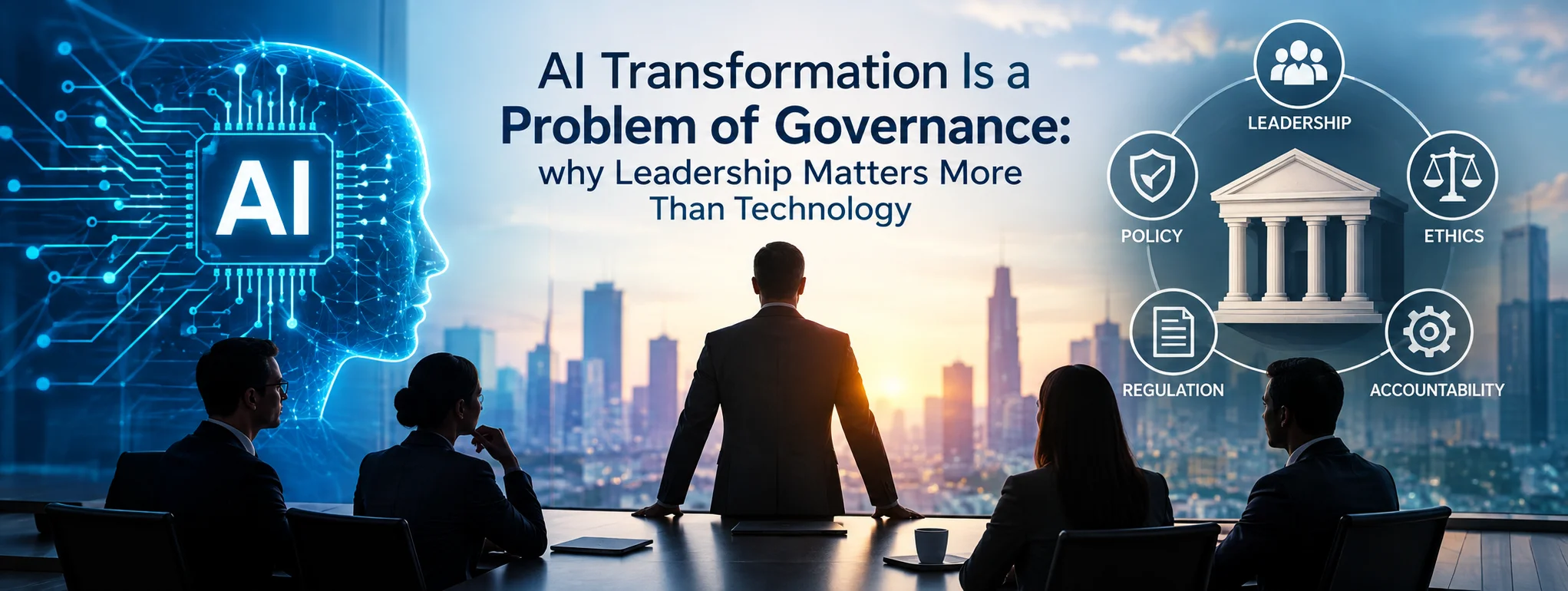
AI Transformation Is a Problem of Governance is an important idea for every organization looking to use artificial intelligence successfully. While many businesses invest heavily in advanced AI tools, automation platforms, and intelligent software, technology alone cannot guarantee meaningful results. Real transformation depends on how leaders make decisions, establish responsibilities, manage risks, and guide employees through change.
Artificial intelligence is rapidly changing how companies operate, communicate with customers, analyze information, and develop new products. However, organizations that adopt AI without clear policies and responsible leadership may face serious challenges, including data privacy concerns, inaccurate results, employee resistance, and costly implementation mistakes. These problems are rarely solved by purchasing better software alone.
Successful AI adoption requires a strong governance framework that connects technology with business objectives, ethical standards, and measurable outcomes. Leaders must understand not only what AI can accomplish but also where its limitations lie. When organizations prioritize governance, they can unlock AI’s potential while protecting their people, customers, and long-term reputation.
Why AI Transformation Is a Problem of Governance
AI transformation is often treated as a technical project. Companies hire specialists, purchase subscriptions, integrate automated systems, and expect productivity to improve immediately. Although these investments can be valuable, they do not automatically create a sustainable AI strategy.
Governance determines how AI is selected, developed, deployed, monitored, and improved. It establishes the rules that guide decisions and clarifies who is responsible when an AI system produces an unexpected or harmful result.
Without governance, different departments may introduce disconnected tools, duplicate spending, or use sensitive information without appropriate safeguards. Employees might also rely on AI-generated recommendations without checking whether they are accurate.
Technology Cannot Replace Clear Decision-Making
Modern AI systems can process large amounts of information, identify patterns, and generate useful recommendations. Nevertheless, they cannot independently determine every organization’s values, priorities, acceptable risks, or legal responsibilities.
These decisions require human judgment. Leadership teams must decide which activities should be automated, which require human approval, and which should remain under direct human control.
For example, an AI assistant may help a company screen job applications. However, managers must establish fair evaluation criteria, protect applicants’ personal information, and monitor potential discrimination. Without these controls, an apparently efficient system could create serious reputational and operational problems.
Governance Connects AI With Business Goals
An organization should not adopt AI simply because competitors are using it. Every initiative should address a genuine business need.
Leadership must identify whether a proposed system can reduce administrative work, improve customer support, strengthen decision-making, or create a better experience for employees and customers.
A clear connection between AI investment and business objectives prevents organizations from spending resources on impressive demonstrations that produce little practical value.
The Role of Leadership in Successful AI Transformation
Leadership is the foundation of effective AI governance. Executives and department managers influence organizational priorities, employee confidence, investment decisions, and the standards that guide everyday operations.
When leaders communicate a clear vision, employees are more likely to understand why AI is being introduced and how it will affect their responsibilities. When leadership is inconsistent, departments may develop conflicting expectations and avoid accountability.
Establishing a Clear AI Vision
Leaders should explain what the organization wants to achieve through AI and how success will be measured. This vision needs to be specific enough to guide practical decisions.
For instance, a customer service company might aim to reduce response times while maintaining customer satisfaction. Its AI strategy could include automated responses for routine questions and human support for complex or sensitive cases.
This approach creates a balance between efficiency and service quality. It also helps employees understand that AI is intended to improve business performance rather than simply replace existing processes without consideration.
Assigning Responsibility and Accountability
One of the biggest governance challenges is determining who owns an AI system’s decisions and outcomes. Responsibility can become unclear when developers, vendors, managers, and end users all contribute to a process.
Leadership should establish defined roles for approving AI applications, reviewing risks, monitoring performance, and responding to incidents.
A practical governance structure may include:
- Executive leadership: Sets the overall AI strategy, investment priorities, and acceptable risk levels.
- IT and technical teams: Evaluate system reliability, security, integration, and performance.
- Legal and compliance teams: Review applicable regulations, privacy obligations, and contractual requirements.
- Department managers: Ensure AI tools support real operational needs and established procedures.
- Employees and end users: Report errors, provide feedback, and follow responsible-use policies.
These responsibilities should be documented so that important decisions do not fall into gaps between departments.
Building an Effective AI Governance Framework
A strong governance framework gives organizations a consistent way to evaluate and manage AI throughout its lifecycle. It should be practical, adaptable, and proportionate to the risks associated with each application.
Create Clear Policies for AI Use
Organizations need understandable rules explaining which tools employees can use, what information they may enter, and when human review is required.
For example, employees should know whether they can use public AI platforms for internal documents, confidential customer records, or proprietary business information. The organization should also specify how AI-generated material must be checked before publication or distribution.
Policies should not exist only as lengthy documents that employees rarely read. Leaders must provide practical examples, accessible guidance, and regular training.
Evaluate Risks Before Deployment
AI systems can introduce different risks depending on their purpose, data sources, and level of autonomy. A tool that drafts meeting summaries generally presents different concerns from one that recommends medical treatment or determines access to financial services.
Before deployment, organizations should evaluate:
- Data privacy and information security.
- Accuracy, reliability, and the possibility of fabricated outputs.
- Bias, discrimination, and unfair outcomes.
- Legal, regulatory, and contractual obligations.
- Human oversight, escalation procedures, and recovery plans.
These assessments should continue after implementation because AI performance, business conditions, and user behavior can change over time.
Monitor Systems After Implementation
AI governance is not a one-time approval process. Organizations must regularly review how systems perform in real working environments.
Monitoring can reveal inaccurate recommendations, unexpected costs, security weaknesses, or declining output quality. Leaders should establish measurable thresholds that determine when a system needs investigation, adjustment, or suspension.
A reliable monitoring process also creates a feedback loop. Employees can report problems, technical teams can investigate their causes, and management can use the findings to improve policies and training.
AI Governance vs. Technology Investment
Technology and governance serve different purposes, but they must work together. Technology provides capabilities, while governance establishes the conditions under which those capabilities can be used responsibly.
| Business area | Technology-focused approach | Governance-focused approach |
|---|---|---|
| Strategy | Purchases advanced AI tools | Selects tools based on business objectives |
| Data | Collects information for model performance | Establishes privacy, access, and quality controls |
| Employees | Introduces automation | Provides training and clear responsibilities |
| Risk | Responds after problems occur | Identifies and reduces risks before deployment |
| Accountability | Relies on vendor assurances | Defines internal ownership and oversight |
| Performance | Measures system activity | Evaluates business value, quality, and risk |
The most effective organizations do not choose between technology and governance. They use governance to make technology investments more valuable, secure, and sustainable.
Why Employee Trust Matters in AI Transformation
AI transformation affects people as much as processes. Employees may worry about job security, increased monitoring, changing responsibilities, or being judged by systems they do not understand.
Ignoring these concerns can lead to resistance, poor adoption, and reduced confidence in management. Even a technically excellent system may fail if employees do not trust how it is being used.
Communicate Honestly About Change
Leaders should explain why AI is being introduced, which tasks may change, and how employees will receive support. Honest communication is more effective than promising that automation will have no impact on jobs or responsibilities.
Where possible, organizations should involve employees in selecting and testing AI tools. Their practical experience can reveal workflow problems that executives and developers may overlook.
Invest in Skills and Human Judgment
AI literacy should become part of professional development. Employees need to understand how AI works at a basic level, how to identify unreliable outputs, and when to request human review.
Training should also strengthen skills that remain essential in AI-enabled workplaces, including critical thinking, communication, ethical reasoning, and problem-solving.
A supportive learning environment can transform uncertainty into confidence. Instead of treating AI as a threat, employees can learn to use it as a valuable tool for improving their work.
Measuring the Success of AI Governance
AI adoption should be evaluated through meaningful business outcomes rather than the number of tools purchased or automated tasks introduced.
Leaders should establish baseline measurements before implementation and compare them with results after deployment. This approach helps distinguish genuine improvements from assumptions or temporary enthusiasm.
Useful performance indicators include:
- Productivity: Time saved, tasks completed, and improvements in workflow efficiency.
- Quality: Error rates, output accuracy, and the amount of human correction required.
- Customer experience: Satisfaction scores, response times, and complaint levels.
- Risk management: Security incidents, policy violations, and unresolved compliance issues.
- Employee adoption: Training completion, appropriate usage, and user feedback.
Organizations should also consider the total cost of AI ownership, including subscriptions, integration, maintenance, employee training, and risk management.
A system that saves several hours each week may still be a poor investment if it produces expensive errors or requires extensive manual correction. Responsible measurement helps leaders make informed decisions about whether to expand, modify, or discontinue an AI initiative.
Common Mistakes Organizations Should Avoid
Even well-funded organizations can struggle when they approach AI transformation without a coherent governance strategy.
Several mistakes deserve particular attention.
First, businesses should avoid adopting AI simply to follow industry trends. Every implementation needs a defined purpose and realistic success criteria.
Second, organizations should not assume that vendor-provided safeguards eliminate their own responsibilities. Businesses remain responsible for evaluating whether a tool is suitable for their data, workflows, and obligations.
Third, leaders should resist deploying AI across an entire organization before testing it in a controlled environment. Small pilots provide opportunities to identify weaknesses and gather employee feedback before wider adoption.
Fourth, organizations must not overlook data quality. Incomplete, outdated, or biased information can undermine the usefulness of even sophisticated AI systems.
Finally, governance should not become an obstacle that prevents all experimentation. Excessively complicated approval procedures can discourage useful innovation. The goal is to create proportionate controls that protect the organization while allowing responsible experimentation.
A Practical Roadmap for Responsible AI Transformation
Businesses do not need to redesign every process immediately. A phased approach can make governance easier to implement and evaluate.
Step 1: Assess Current AI Usage
Identify which AI tools employees already use, including applications introduced without formal approval. Document their purposes, data access, costs, and potential risks.
Step 2: Prioritize High-Value Opportunities
Select a small number of use cases that offer measurable benefits and manageable risks. Start with clearly defined tasks before considering more complex or high-impact applications.
Step 3: Establish Governance Rules
Assign ownership, define acceptable use, create review procedures, and document escalation processes. Ensure that employees understand the rules before deployment.
Step 4: Test and Train
Run controlled pilots, evaluate performance, and provide practical training. Collect feedback from the people who will use the system every day.
Step 5: Review and Improve
Compare results against initial objectives, investigate problems, and update policies as necessary. Expand successful initiatives only when the evidence supports doing so.
This roadmap encourages disciplined progress without sacrificing innovation. It also helps leadership make decisions based on evidence rather than hype.
Frequently Asked Questions
1. Why is AI transformation a governance problem?
Because successful AI adoption requires clear policies, accountability, risk management, ethical standards, and leadership—not just technical tools.
2. What is the role of leadership in AI governance?
Leaders establish the strategy, assign responsibilities, approve appropriate investments, and ensure that AI supports organizational goals.
3. Can AI transformation succeed without governance?
Individual tools may deliver short-term benefits, but weak governance increases the risk of inconsistent adoption, security failures, and unreliable outcomes.
4. How can businesses improve AI governance?
They can establish clear policies, assess risks, train employees, monitor performance, and assign accountable owners to each AI initiative.
5. How can organizations measure AI transformation success?
They should measure productivity, accuracy, customer satisfaction, employee adoption, total costs, and risk reduction against defined objectives.
Final Thoughts
AI Transformation Is a Problem of Governance because the greatest challenges often involve leadership decisions, organizational responsibility, human trust, and responsible implementation rather than technology itself.
Artificial intelligence offers powerful opportunities to improve productivity, strengthen decision-making, and create better customer experiences. However, these benefits are not automatic. Without clear direction and meaningful oversight, organizations can waste resources, expose sensitive information, and damage the trust they depend on.
Effective leadership provides the foundation for sustainable progress. By defining clear objectives, establishing accountability, protecting data, supporting employees, and continuously evaluating results, businesses can make AI a valuable part of their long-term strategy.