
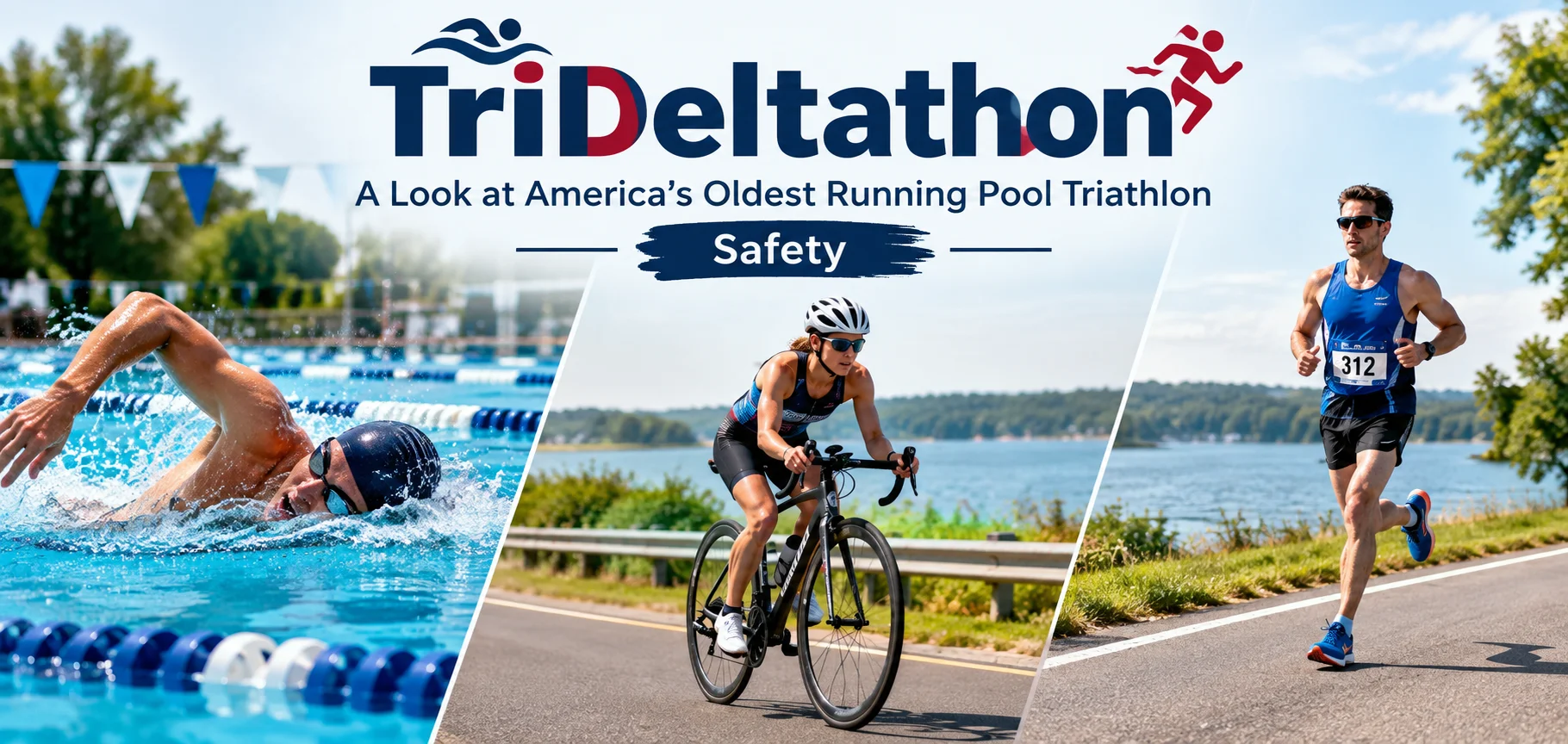
TriDeltathon is a distinctive name in Knoxville, Tennessee’s local endurance-racing history. Unlike many triathlons that begin with an open-water swim, this event became known for its indoor pool swim, followed by a bicycle ride and a campus-area run. Its connection with the University of Tennessee and Delta Delta Delta, commonly known as Tri Delta, gave the race a strong community identity.
The event was also built around charitable support, with historical race information identifying East Tennessee Children’s Hospital as its beneficiary. The 2020 race listing described TriDeltathon as being in its 36th year and called it the “oldest running pool triathlon in the country.” That distinction should be understood as an organizer’s historical claim, rather than an independently verified national record.
For people discovering the keyword TriDeltathon today, the history is especially interesting because the original swim-bike-run format is now mainly a historical reference, while a related running event has continued the charitable tradition.
TriDeltathon at a Glance
| Feature | Historical TriDeltathon Details |
|---|---|
| Location | Knoxville, Tennessee |
| University connection | University of Tennessee |
| Main swim venue | University of Tennessee Student Aquatic Center |
| Race format | Swim, bike, run |
| Swim | 400 meters |
| Bike | Approximately 6 miles |
| Run | Approximately 3 miles |
| Participation | Individual and relay divisions |
| Volunteer connection | Delta Delta Delta |
| Charity | East Tennessee Children’s Hospital |
| Historical distinction | Described by organizers as the oldest running pool triathlon in the country |
These details come primarily from archived race materials and historical event listings.
The History Behind TriDeltathon
The appeal of TriDeltathon was never simply about completing three athletic disciplines. Over time, the race developed into a recognizable Knoxville tradition involving students, local athletes, volunteers and community supporters.
Historical race listings show that the event had already been established for decades. In 2019, Fleet Feet Knoxville described it as returning for its 35th year, while the archived 2020 registration page referred to the 36th year. Those records suggest origins in the mid-1980s, although the available sources do not establish an exact inaugural date with complete certainty.
The race’s longevity is one of its most remarkable characteristics. Many local sporting events appear for a few seasons and disappear, but TriDeltathon developed a much more enduring presence.
The Tri Delta Connection
The name itself reflects the relationship between the event and Delta Delta Delta. Members of the sorority provided volunteer support during the race, helping create an atmosphere that was about more than athletic competition.
This connection also helped give TriDeltathon its recognizable identity. Rather than being an anonymous road race, it was associated with a university community and a charitable mission.
The combination of athletics, student involvement and fundraising created a powerful local tradition.
What Made the Pool Swim Different?
The indoor swim was arguably the most memorable feature of TriDeltathon.
Traditional triathlons frequently use lakes, rivers, bays or oceans for their swimming stages. Open-water racing can introduce waves, currents, changing visibility and crowded starts. TriDeltathon took a different approach by placing its opening discipline inside the University of Tennessee’s aquatic facility.
The historical format featured a 400-meter indoor pool swim. Participants were seeded according to their estimated swim times, and the event used multiple lanes. Historical instructions also described swimmers entering at intervals rather than starting together in one large group.
That format produced a very different racing experience.
Instead of fighting for position at an open-water starting line, athletes could focus on pacing, technique and efficient swimming. It also made the event potentially more approachable for participants who were interested in triathlon but uncomfortable with open-water swimming.
Why a Pool Triathlon Can Be Appealing
A pool-based race offers several practical advantages:
- Controlled conditions: Athletes avoid waves, currents and unpredictable water conditions.
- Clearer pacing: Pool lengths provide recognizable markers for managing effort.
- Approachable environment: Newer swimmers may feel more comfortable indoors.
- Organized starts: Individual starts can reduce congestion at the beginning.
- Distinctive experience: The format gives the race a character that ordinary road triathlons may not have.
The indoor setting therefore was not simply a substitute for open water. It became one of the defining elements of TriDeltathon.
The Three-Part Race Format
Although the swimming stage made the event unusual, the complete TriDeltathon still followed the familiar sequence of a triathlon: swim, bike and run.
The historic distances were relatively short compared with full-distance triathlon events. That helped make the race a compact challenge while still requiring participants to switch between three very different sports.
1. The 400-Meter Swim
The race began with a 400-meter indoor pool swim.
For swimmers, the key challenge was maintaining a steady pace while preparing for the disciplines that followed. Because the event used a pool rather than open water, technique and rhythm were particularly important.
The swim was short enough to be accessible to many recreational athletes but long enough to create a meaningful first test.
2. The Six-Mile Bike Ride
After swimming, participants moved to the cycling portion.
Historical descriptions identify the bike course as approximately six miles and describe it as traveling around the University of Tennessee campus and Neyland Drive.
The bike section added a completely different physical demand. Athletes had to transition from swimming muscles and breathing patterns to cycling while maintaining enough energy for the final run.
3. The Three-Mile Run
The final discipline was approximately three miles.
Historical descriptions mention a campus-area route passing landmarks including Neyland Stadium and Thompson-Boling Arena.
For competitors, this was the final opportunity to push toward the finish. After swimming and cycling, even a relatively short run could become demanding.
The compact format created an energetic race in which every stage mattered.
Individual and Relay Participation
Another useful feature of TriDeltathon was that participants were not limited to competing alone.
The archived race information included both individual and relay divisions.
Relay participation can make a multisport event more accessible. Instead of one person completing all three disciplines, team members can divide the swimming, cycling and running responsibilities.
This creates two different ways to experience the event:
- Individual athletes can challenge themselves across all three sports.
- Relay teams can combine different athletic strengths.
That flexibility helped the race appeal to a wider community rather than only experienced triathletes.
The Charitable Mission
TriDeltathon also had an important charitable purpose.
Historical race materials state that volunteer support came from members of Delta Delta Delta and that proceeds went to East Tennessee Children’s Hospital.
This charitable foundation added meaning to the competition. Participants were not simply racing for a personal time or finishing position. Their involvement contributed to a broader community cause.
This is one reason long-running local races can become so memorable. The strongest events often connect athletic achievement with something larger than the finish line.
TriDeltathon and the University of Tennessee
The University of Tennessee was central to the identity of the historic race.
The Student Aquatic Center served as the location for the swim, while the bike and run portions used areas around the university campus.
That campus setting created a recognizable environment for competitors and spectators.
For students, the event could feel like part of university life. For local residents, it offered an opportunity to participate in a distinctive Knoxville sporting tradition.
The setting also helped differentiate TriDeltathon from large commercial endurance races held in distant locations.
The 2020 Cancellation
One of the most important moments in the later history of TriDeltathon came in 2020.
The race was scheduled for April 19, 2020, but it was canceled after the University of Tennessee moved to an online academic model during the COVID-19 period. The archived race information confirms that organizers attempted to address the situation but could not hold the event as originally planned.
This cancellation is important when researching TriDeltathon today because older registration pages can still appear in search results.
Someone discovering those pages might assume the race is currently available in the same format. The historical record tells a different story.
What Happened to the Original TriDeltathon Format?
The original swim-bike-run event should now be viewed primarily as a historic race format.
A related event known as TriDeltaRUN has continued the connection between Tri Delta, running and charitable fundraising. The 2026 event was a 5K rather than the original pool-based triathlon.
This distinction is important for anyone researching the event.
TriDeltathon refers to the historic multisport tradition, while TriDeltaRUN represents a newer running-focused continuation of the community and fundraising connection.
Why the Distinction Matters
Search results can contain a mixture of old and newer information. Historical pages may show the 400-meter swim, six-mile bike ride and three-mile run, while newer listings may describe a 5K.
Readers should therefore check the date of an event listing before assuming that historic distances still apply.
There is not enough reliable documentation to state a specific reason why the original triathlon format did not return in exactly the same form. Claims about costs, insurance, participation or other causes would require stronger evidence.
Why TriDeltathon Still Matters
There are several reasons this race remains interesting even after its original format became historical.
First, it represents a distinctive approach to triathlon. The indoor pool swim separated it from many conventional races.
Second, its university connection gave it a strong local identity.
Third, the charitable mission added a meaningful community dimension.
Finally, its long history demonstrates how a relatively compact sporting event can become part of a city’s cultural memory.
For athletes and sports-history readers, these qualities make TriDeltathon more than a race listing. It is an example of how tradition, competition and community can develop around a local event.
What Participants Could Learn From the Race
Although the historic event is not necessarily a current race option, its format offers useful lessons for anyone interested in multisport competition.
A short triathlon still requires preparation across three different disciplines. Swimming develops a different physical rhythm from cycling, while running after a bike ride creates another challenge.
The event also demonstrates the value of accessible race design.
A controlled pool swim, relatively short bike course and three-mile run can create an exciting multisport experience without requiring the enormous distances associated with long-course triathlon.
That approach can help introduce more people to endurance sports.
Final Thoughts
TriDeltathon has earned a memorable place in Knoxville’s endurance-sport history because it combined a 400-meter indoor swim, six-mile bike ride and three-mile campus run with university involvement, volunteer support and charitable fundraising. Historical race materials described the event as the country’s oldest running pool triathlon, although that should be treated as an organizer claim rather than an independently verified national record.
Its story is especially fascinating because the race was not built around extreme distances. Instead, it created a compact and approachable multisport challenge with a distinctive indoor swimming format.
The later transition toward TriDeltaRUN shows how community traditions can evolve. Even when an original race format changes, its charitable purpose and local connections can continue.
For anyone searching TriDeltathon, understanding this history provides a much clearer picture: it was a remarkable Knoxville pool-based triathlon connected with the University of Tennessee and Tri Delta, remembered for its unusual format, long-running tradition and commitment to a good cause.
Frequently Asked Questions
What was TriDeltathon?
TriDeltathon was a pool-based triathlon associated with the University of Tennessee in Knoxville, featuring swimming, cycling and running.
How long was the historic TriDeltathon?
The documented format included a 400-meter swim, approximately six-mile bike ride and approximately three-mile run.
Why was TriDeltathon different from many triathlons?
Its swim took place in an indoor pool rather than open water, making it a distinctive pool-based triathlon.
What charity did TriDeltathon support?
Historical race materials identified East Tennessee Children’s Hospital as the beneficiary.
Is TriDeltathon the same as TriDeltaRUN?
No. The historic TriDeltathon was a swim-bike-run event, while the newer TriDeltaRUN format is a running event, including a documented 5K in 2026.