
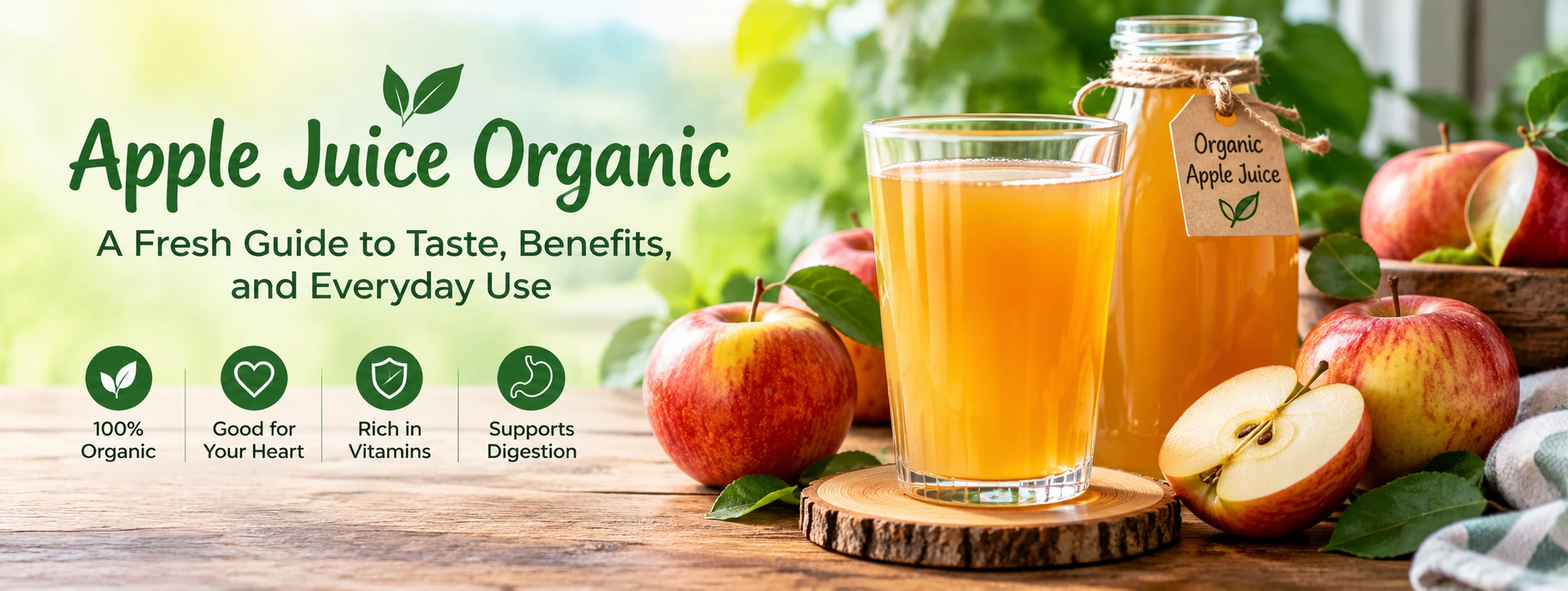
Apple juice organic is a refreshing drink made from apples grown using organic farming practices. For many people, it offers a simple way to enjoy the naturally sweet and crisp flavor of apples in a convenient form. Whether you drink it with breakfast, use it in recipes, or serve it as a chilled beverage, organic apple juice can be an appealing choice for people who pay attention to ingredients and food quality.
Unlike conventional apple juice, organic varieties are produced from apples grown under organic standards. These standards generally focus on farming methods, soil management, and restrictions on certain synthetic agricultural chemicals. However, organic does not automatically mean that every bottle is low in sugar or calories, so reading the nutrition label remains important.
This guide explores apple juice organic in detail, including its characteristics, nutritional considerations, potential benefits, selection tips, storage, and practical ways to enjoy it.
Understanding Apple Juice Organic
Organic apple juice begins with apples cultivated according to recognized organic farming requirements. Depending on the country and certification system, organic agriculture may place restrictions on synthetic pesticides, fertilizers, genetically modified organisms, and certain processing practices.
The apples are harvested, cleaned, crushed or pressed, and processed into juice. Some products are filtered to create a clear appearance, while others retain more natural apple solids and have a cloudy appearance.
The final flavor can vary considerably depending on the apple varieties used. Sweet apples can create a mellow and naturally sugary drink, while tart varieties may produce a sharper and more refreshing taste.
How Organic Apple Juice Is Made
Although production methods differ between brands, the general process may include:
- Apples are inspected and cleaned after harvesting.
- The fruit is crushed or pressed to release its juice.
- The juice may be filtered, clarified, or left cloudy.
- It can be pasteurized to improve safety and shelf stability.
- Some products are packaged directly, while others may be concentrated and later reconstituted.
The label can provide useful information about whether the product is made from concentrate, not from concentrate, filtered, cloudy, sweetened, or blended with other fruit juices.
Apple Juice Organic vs. Regular Apple Juice
The biggest difference is generally related to how the apples are grown and certified rather than the basic nutritional identity of the juice.
Organic apple juice comes from apples produced under organic agricultural standards. Conventional apple juice comes from apples grown using conventional farming methods. Both can be processed into similar types of juice.
It is also important to understand that organic does not necessarily mean healthier in every nutritional category. A product can be certified organic while still containing naturally occurring sugars and a significant number of calories.
For shoppers, the best approach is to consider several factors together: ingredient quality, added sugar, serving size, certification, processing method, and personal dietary goals.
Nutritional Profile of Organic Apple Juice
Apple juice naturally contains carbohydrates, primarily in the form of sugars. It may also provide small amounts of certain vitamins and minerals, although the nutritional profile depends on the apples, processing method, and brand.
Because juice contains much less fiber than a whole apple, drinking juice is not nutritionally identical to eating the whole fruit. Whole apples provide fiber and require chewing, which can contribute to a greater feeling of fullness.
Here is a general overview of nutrients commonly associated with a serving of apple juice. Exact amounts vary by product.
| Nutrient | Typical consideration | Why It Matters |
|---|---|---|
| Calories | Moderate | Contributes to daily energy intake |
| Carbohydrates | Relatively high | Main source of energy in the juice |
| Natural sugars | Present | Responsible for much of the sweet flavor |
| Fiber | Usually low | Much lower than in a whole apple |
| Vitamin C | May be present | Some products are fortified |
| Potassium | Small amount | Supports normal body functions |
| Fat | Very low | Apple juice naturally contains little fat |
| Protein | Very low | Not a significant protein source |
Always check the specific package because nutrition values can differ substantially among products.
Potential Benefits of Apple Juice Organic
Choosing organic apple juice may be appealing for several reasons. Some benefits relate to the qualities of apple juice itself, while others relate to organic farming practices.
A Convenient Source of Apple Flavor
Juice makes it easy to enjoy apple flavor without peeling, slicing, or preparing fruit. It can be particularly convenient during breakfast, family meals, or social occasions.
Naturally Sweet Taste
Good-quality apple juice can have a rich, crisp sweetness without requiring additional sweeteners. However, consumers should still check the ingredients because some products may contain added sugar or other sweetening ingredients.
Contains Plant Compounds
Apples contain naturally occurring plant compounds, including polyphenols. The amount remaining in juice depends on the apple variety and processing method.
Cloudy or less-filtered juices may retain different amounts of apple components than highly clarified products.
Easy to Use in Recipes
Organic apple juice is not limited to drinking. It can add sweetness and fruit character to smoothies, sauces, marinades, desserts, and baked recipes.
Suitable for Different Occasions
A chilled glass can be refreshing on a warm afternoon, while apple juice can also be served alongside breakfast or incorporated into seasonal recipes.
How to Choose High-Quality Apple Juice Organic
With many products available, selecting the right bottle can feel confusing. A few simple label checks can make the decision easier.
Check the Ingredient List
Look for products with a straightforward ingredient list. If your preference is pure apple juice, choose a product where apple juice is the primary or only ingredient.
Also check whether sugar, syrup, artificial flavors, or other sweeteners have been added.
Look for Organic Certification
A trustworthy organic certification or recognizable organic labeling system can provide additional assurance that the product meets the applicable production requirements.
The exact certification symbol varies by country, so shoppers should understand the organic labeling rules where they live.
Compare Sugar Information
Even when sugar is naturally present, apple juice can contain a substantial amount per serving. Compare serving sizes between brands because one bottle may contain multiple servings.
Consider Cloudy vs. Clear Juice
Clear apple juice has usually undergone additional filtration or clarification. Cloudy juice may retain more suspended fruit material.
Neither style is automatically the right choice for everyone. The preference largely depends on taste, texture, and product formulation.
Think About Packaging
Glass bottles, cartons, cans, and plastic containers are all used for juice. Consider freshness, storage convenience, recyclability, and portion size when selecting a package.
Apple Juice Organic for Everyday Drinking
Moderation is an important part of enjoying fruit juice. Because juice is easier to consume quickly than whole fruit, it can be easy to drink more than intended.
A practical approach is to use apple juice as one part of a balanced eating pattern rather than treating it as a replacement for all whole fruits.
For children, portion sizes are especially important. Parents and caregivers should consider age-appropriate dietary recommendations and prioritize whole fruits and water when appropriate.
Adults can also dilute apple juice with water or sparkling water if they want a lighter beverage with less concentrated sweetness per glass.
Creative Ways to Use Organic Apple Juice
Organic apple juice can become much more versatile when used as an ingredient.
Breakfast Drinks
Combine apple juice with sparkling water, cinnamon, or another fruit juice for a simple morning beverage.
Smoothies
A small amount can provide liquid and natural apple sweetness in a smoothie made with fruits such as bananas, berries, or peaches.
Baking
Apple juice can add moisture and fruity flavor to selected cakes, muffins, breads, and desserts.
Sauces and Glazes
Its natural sweetness can work well in certain savory sauces and fruit-based glazes. It can pair particularly well with cinnamon, ginger, cloves, or mustard depending on the recipe.
Frozen Treats
Apple juice can be frozen into homemade ice pops or used as a base for refreshing frozen desserts.
Storage and Freshness Tips
Proper storage helps maintain the flavor and quality of apple juice.
Unopened shelf-stable juice should generally be stored according to the package instructions. Once opened, it should normally be refrigerated and consumed within the period recommended by the manufacturer.
Fresh refrigerated juice may have a shorter shelf life than shelf-stable varieties. Always check the expiration or best-before information and follow storage instructions carefully.
If the juice develops an unusual smell, appearance, taste, or signs of fermentation, it should not be consumed.
Common Mistakes When Buying Apple Juice Organic
Many shoppers focus only on the word “organic,” but there are other details worth checking.
First, do not assume organic means sugar-free. Apples naturally contain sugar, and juice can concentrate that sweetness.
Second, do not confuse apple-flavored drinks with pure apple juice. Some beverages contain water, sweeteners, flavors, or other ingredients.
Third, do not ignore serving size. A large bottle may contain several servings, making it easy to consume considerably more sugar and calories than expected.
Finally, remember that juice and whole apples are different foods. Whole apples generally provide considerably more fiber and require more time to eat.
Frequently Asked Questions
Is apple juice organic healthier than regular apple juice?
Organic apple juice differs mainly in how the apples are produced. Nutritionally, the two can be similar, so compare the ingredient list and nutrition facts.
Does organic apple juice contain sugar?
Yes. Apples naturally contain sugar, and that sugar remains in juice. Some products may also contain added sugar, so check the label.
Is organic apple juice made from real apples?
Certified organic apple juice is made from organically produced apples or apple juice ingredients that meet the applicable organic requirements.
Is cloudy apple juice better than clear juice?
Not necessarily. Cloudy and clear juices use different processing methods. The better choice depends on your taste and nutritional preferences.
Can organic apple juice be used for cooking?
Yes. It can be used in smoothies, baked goods, sauces, marinades, glazes, and frozen treats.
Final Thoughts
Apple juice organic offers a convenient and flavorful way to enjoy the taste of apples while choosing a product made under organic farming standards. Its naturally sweet flavor makes it popular for breakfast, family meals, recipes, and refreshing drinks.
The most important point is to look beyond the word “organic.” Check the ingredients, serving size, sugar content, processing style, certification, and storage instructions before making a purchase. Organic apple juice can be an enjoyable part of a balanced diet, but whole apples remain an important option because they provide considerably more fiber.
With thoughtful label reading and moderate portions, a quality organic apple juice can be a delicious, convenient, and versatile addition to everyday meals.