
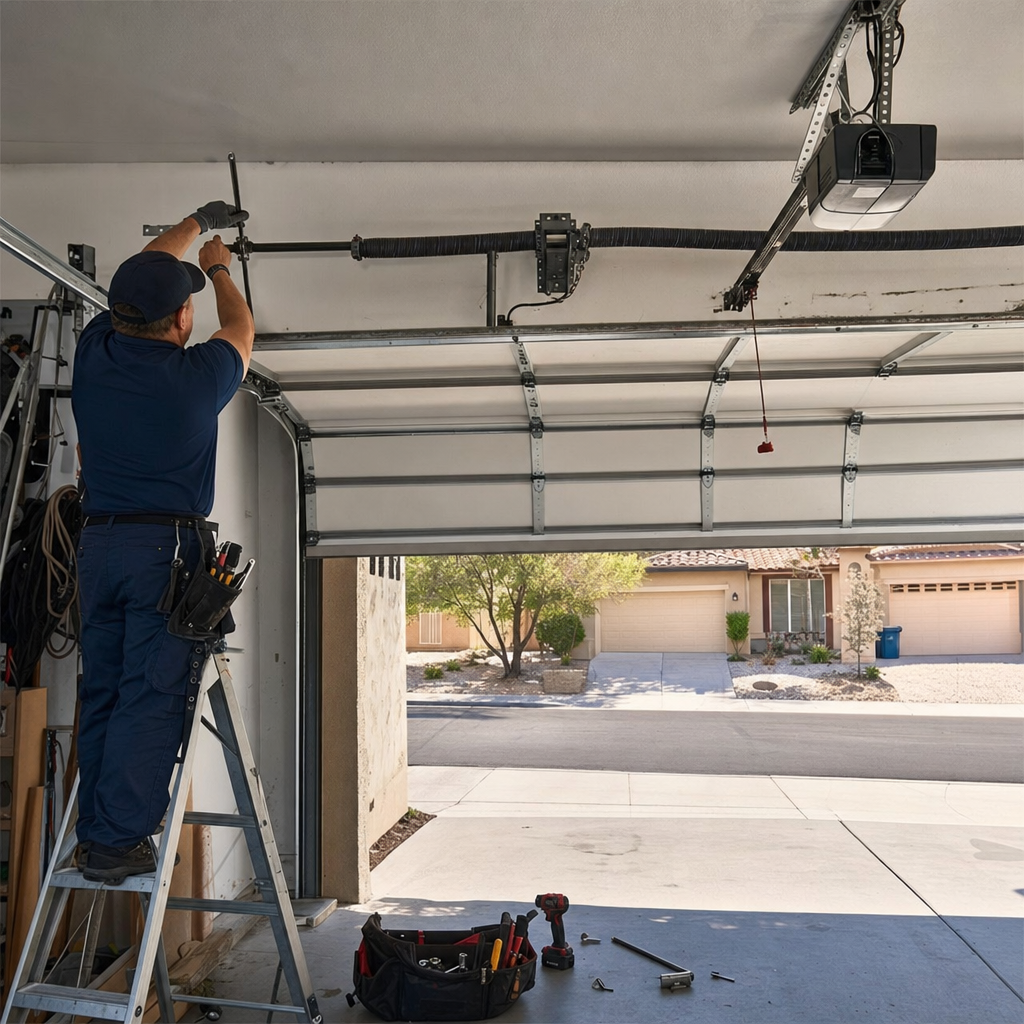
Every Dallas homeowner replacing a garage door faces the same three-way crossroads: pick the wrong material and you’ll be dealing with warping by July; pick the wrong brand and you’ll spend weekends hunting down proprietary parts; pick the wrong installer and a $1,800 door becomes a $2,600 headache. After more than a decade working garage door installation Dallas TX jobs — everything from mid-century ranch homes in Oak Cliff to new construction in Prosper — I’ve watched all three mistakes play out in real time. Here’s how to score your options before you commit.
Steel vs. Wood vs. Aluminum: Scoring the Three Most Popular Door Materials
Think of this as a criteria-based scorecard. Rate each material 1–5 across five factors that actually matter in North Texas:
| Criteria
|
Steel
|
Wood
|
Aluminum
|
| Heat & humidity resistance
|
5
|
2
|
4
|
| Curb appeal / customization
|
3
|
5
|
3
|
| Dent resistance
|
3
|
4
|
2
|
| Long-term maintenance cost
|
5
|
2
|
4
|
| Insulation compatibility
|
5
|
3
|
3
|
| Total (out of 25)
|
21
|
16
|
16
|
Steel wins for most Dallas homeowners on pure practicality. I’ve installed wood carriage-house doors that looked stunning in February and showed visible grain cracking by August after two good rain cycles. If you love the wood aesthetic, composite wood-look steel panels give you 90% of the visual result at a fraction of the maintenance headache.
Aluminum is the right call for contemporary homes with wide openings — it’s lighter, so it puts less torque stress on springs over time. Just budget for a thicker gauge (0.050″ minimum) if you’re in a neighborhood where hail is a real threat.
Single-Layer vs. Double-Layer vs. Triple-Layer Construction: What the Numbers Actually Mean
Layer count describes insulation, not just thickness. Here’s the short version:
- Single-layer (no insulation): Fine for a detached workshop or overhead shop door with no living space above. Expect an R-value of 0.
- Double-layer (polystyrene foam backed): R-6 to R-9. Cuts noise noticeably and keeps an attached garage about 10–12°F cooler in summer.
- Triple-layer (steel + polyurethane foam + steel): R-12 to R-18. This is what I recommend for any Dallas home with a conditioned room above the garage or a garage used as a workspace.
Polyurethane foam — used in triple-layer doors — bonds directly to both steel skins, which also adds about 20% more structural rigidity. That matters in Texas where afternoon thunderstorms can turn parking lot debris into projectiles.
Brand Breakdown: Clopay, LiftMaster, and Wayne Dalton Side by Side
| Brand
|
Strength
|
Watch Out For
|
| Clopay
|
Widest style range; good dealer network in DFW
|
Premium tiers get pricey fast
|
| LiftMaster
|
Best smart-home opener integration
|
Opener cost adds $250–$400 to project
|
| Wayne Dalton
|
Competitive pricing; TorqueMaster spring system
|
Proprietary springs mean fewer local parts sources
|
In my experience, Clopay’s Gallery Collection hits the sweet spot for most residential jobs — solid R-12 polyurethane insulation, steel construction, and a price point that doesn’t require a second mortgage. LiftMaster’s 87504 myQ opener pairs with almost every brand of door and is what I spec on about 70% of installs.
If you want to browse styles before calling anyone, searching “show me garage doors” on the Clopay or Wayne Dalton configurator tools lets you upload a photo of your actual home and preview the door live — genuinely useful before committing to a color or panel style.
What Custom Overhead Garage Doors Actually Cost in Dallas
Standard two-car steel door (16×7), installed: $900–$1,400
Triple-layer insulated steel, installed: $1,300–$2,000
Custom overhead garage doors (wood, glass, custom sizes): $2,500–$6,000+
Those ranges reflect real 2024 Dallas market pricing. Labor typically runs $200–$350 per door for a straightforward swap on an existing opening. If you’re widening or adding a new rough opening, add $400–$800 for framing work.
Material costs from overhead door suppliers have been volatile since 2021 — steel surcharges fluctuated as much as 18% quarter-over-quarter at the peak. Always ask for an itemized quote that separates materials from labor so you can comparison-shop intelligently.
For a detailed look at current pricing and what’s included in a professional install, the team behind garage door installation Dallas TX publishes transparent service breakdowns worth bookmarking before you call anyone.
How to Vet Overhead Garage Door Companies Near Me Before You Sign Anything
Searching “overhead garage door companies near me” or “garage door shops near me” will surface dozens of results in DFW. Here’s a fast five-point filter I’d use:
- Verify they pull permits for new installations. Dallas County requires a permit for new door openings — any company that skips this is cutting corners.
- Check their spring warranty. Industry standard is one year on labor; two-plus years signals confidence in their work.
- Ask if they stock parts locally. A company that relies on a regional warehouse can’t give you same-day service when a torsion spring snaps on a Sunday.
- Read responses to negative reviews, not just the star rating. How a company handles complaints tells you more than five-star testimonials.
- Confirm they carry general liability and worker’s comp. A door panel falling on your car is a $3,000+ problem without proper coverage.
The Dallas garage door service specialists at Metro Garage Door Repair check all five boxes and operate across the full DFW metro — useful context if you’re comparing your short list.
The Installation Day Checklist Every Dallas Homeowner Should Keep Handy
Before the crew arrives, run through these five items:
- Clear the garage floor at least 10 feet back from the door. Installers need working room for spring winding and track alignment.
- Locate your electrical outlet. The opener needs a dedicated 20-amp circuit within six feet of the header. If you don’t have one, schedule an electrician first.
- Photograph the old hardware. Springs, cables, and brackets make good “before” documentation for warranty purposes.
- Test your existing wall button and keypad. New openers reset all codes — note any gate or entry systems that sync to the same frequency.
- Plan for two to four hours of downtime. A clean residential swap rarely takes longer, but rushing an installer costs you in alignment quality.
A well-installed door should reverse smoothly when it contacts a two-by-four laid flat on the floor — that’s the standard auto-reverse sensitivity test. If it doesn’t pass on day one, call the company back before you accept the job as complete.