
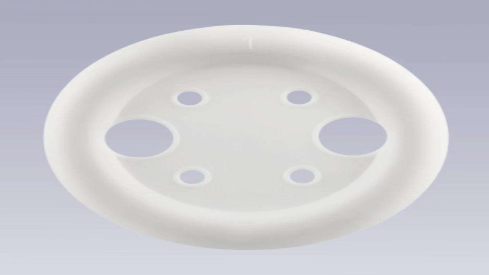
Custom medical-grade silicone parts are widely used in healthcare, medical devices, diagnostics, laboratory equipment, and patient-care products. Silicone is valued in medical manufacturing because it can be formulated for demanding applications that require flexibility, consistent performance, and compatibility with sterilization processes.
For manufacturers developing specialized medical components, LSR injection molding provides an efficient production method for creating precise silicone parts with complex geometries and repeatable dimensions. From seals and gaskets to valves, diaphragms, tubing components, and wearable medical products, liquid silicone rubber molding supports both prototype development and high-volume production.
What Are Custom Medical-Grade Silicone Parts?
Custom medical-grade silicone parts are components manufactured from silicone materials formulated for medical applications. Unlike standard silicone products, medical-grade materials are selected according to the requirements of the intended device, processing conditions, and applicable regulatory expectations.
Common Medical Silicone Components
Medical silicone can be molded into many different component types, including:
- Medical seals and gaskets
- Silicone valves
- Flexible diaphragms
- O-rings
- Catheter components
- Respiratory device components
- Medical tubing parts
- Surgical instrument components
- Drug delivery components
- Pump components
- Protective covers
- Medical device connectors
The exact material and manufacturing process depend on the product design, required mechanical properties, sterilization method, and intended use.
Why Medical-Grade Silicone Is Used in Healthcare Products
Silicone offers several characteristics that make it suitable for many medical applications. It can remain flexible over a wide temperature range and can be produced in different hardness levels to match the requirements of a specific component.
Flexibility and Elasticity
Many medical devices require components that can repeatedly compress, stretch, bend, or return to their original shape. Silicone rubber can provide the elasticity required for seals, valves, diaphragms, and flexible interfaces.
Temperature Performance
Medical components may encounter elevated temperatures during sterilization or processing. Silicone formulations can provide useful temperature resistance, depending on the selected grade and application.
Sterilization Compatibility
Medical products may require sterilization using methods such as steam, radiation, or other validated processes. Material selection must take the intended sterilization method into account because repeated exposure can affect the properties of some silicone formulations.
LSR Injection Molding for Medical Silicone Components
liquid silicone rubber injection molding or LSR injection molding, is a manufacturing process commonly used for producing precision silicone components.
LSR typically consists of two liquid components that are mixed in a controlled ratio before being injected into a heated mold. The material cures inside the mold and forms the final silicone component.
How LSR Injection Molding Works
The process generally includes several important stages:
- Liquid silicone components are stored in separate containers.
- The two components are metered accurately.
- The materials are mixed before entering the injection system.
- The mixed LSR is injected into the mold cavity.
- Heat causes the silicone to cure.
- The molded part is removed from the mold.
- The component is inspected and processed according to specifications.
Automation can help maintain consistent material mixing, injection, curing, and part handling throughout production.
Benefits of Custom LSR Injection Molding
LSR injection molding offers several advantages for manufacturers producing medical silicone components.
Complex Part Designs
Liquid silicone can fill detailed mold cavities, allowing manufacturers to produce components with intricate geometries, thin sections, undercuts, and integrated features when the mold design supports them.
Consistent Production
Automated injection molding provides controlled material dosing and processing conditions. This helps manufacturers maintain dimensional consistency across large production runs.
High-Volume Manufacturing
Once the mold and process have been validated, LSR injection molding can support repeated production of large quantities of components with consistent processing parameters.
Reduced Manual Handling
Automated systems can reduce manual material handling and support more controlled manufacturing environments, which is particularly important for medical component production.
Designing Custom Medical Silicone Parts
Good product design is important before manufacturing begins. Medical silicone components often contain small features that require careful consideration during mold development.
Material Hardness
Silicone hardness is commonly specified using Shore hardness measurements. A softer material may be appropriate for flexible interfaces, while a harder formulation may be selected for structural or sealing requirements.
Wall Thickness
Wall thickness affects filling, curing, flexibility, and dimensional stability. Maintaining appropriate thickness throughout the design can improve molding consistency.
Medical Silicone Material Selection
Selecting the correct silicone material is one of the most important stages in developing a medical component.
Application Requirements
Manufacturers may need to evaluate:
- Operating temperature
- Flexibility requirements
- Compression characteristics
- Tear resistance
- Chemical exposure
- Sterilization method
- Surface requirements
- Color requirements
- Transparency requirements
- Expected service life
Material selection should be based on the complete application rather than a single material property.
Quality Control for Medical Silicone Parts
Quality control is essential when manufacturing components intended for medical devices. A manufacturing program may include incoming material checks, process monitoring, dimensional inspection, visual inspection, and final product testing.
Dimensional Inspection
Precision silicone components may require tight dimensional control. Measurements can include outer diameter, inner diameter, wall thickness, length, hardness, and other product-specific dimensions.
Visual Inspection
Visual checks can identify issues such as flash, contamination, air marks, incomplete filling, surface defects, or other molding irregularities.
Process Monitoring
Monitoring injection pressure, temperature, curing conditions, cycle time, and material handling can help manufacturers identify process variation and maintain repeatable production.
Applications of Custom Medical-Grade Silicone Parts
Custom silicone components are used across many areas of healthcare and medical equipment manufacturing.
Medical Devices
Silicone parts can be incorporated into medical instruments, diagnostic equipment, fluid-management systems, and patient-care devices.
Respiratory Equipment
Flexible silicone components may be used in respiratory products, including seals, connectors, diaphragms, valves, and interfaces.
Fluid Management
Silicone valves, seals, tubing components, and pump elements can support controlled fluid movement in medical equipment.
Prototyping Custom Silicone Components
Before large-scale production, manufacturers often develop prototypes to evaluate the component design. Prototype molding can help identify problems related to dimensions, flexibility, sealing, assembly, and functionality.
Choosing a Custom Medical Silicone Manufacturer
Selecting an experienced custom silicone manufacturer can have a major impact on product development and manufacturing consistency. Companies should evaluate the manufacturer’s molding capabilities, quality systems, material knowledge, mold design experience, production capacity, and inspection processes.
Manufacturing Capabilities to Consider
When comparing suppliers, consider whether they offer:
- LSR injection molding
- Custom mold development
- Medical-grade silicone materials
- Prototype production
- Automated molding
- Precision inspection
- Secondary assembly
- Custom packaging
- Production scalability
- Technical design support
A manufacturer with experience in medical silicone applications can help identify practical solutions during the design and production stages.
Custom Medical Silicone Parts for OEM Applications
OEM companies often require silicone components designed specifically for their products. Custom manufacturing allows the component geometry, dimensions, hardness, color, and other characteristics to be developed according to the OEM’s specifications.
LSR injection molding can be particularly useful for OEMs that require repeatable production across large quantities while maintaining consistent component dimensions.
Conclusion
Custom medical-grade silicone parts play an important role in many medical devices and healthcare products. Their flexibility, material versatility, and compatibility with various manufacturing processes make silicone a practical choice for numerous specialized components.LSR injection molding provides a controlled method for producing precision silicone parts with complex shapes and repeatable dimensions. From seals and valves to diaphragms, connectors, respiratory components, and fluid-management parts, LSR technology can support a wide range of medical manufacturing requirements.
For companies developing new medical products, working with an experienced custom medical silicone manufacturer can simplify material selection, mold development, prototyping, quality control, and production planning. Careful engineering and controlled manufacturing processes are essential for producing silicone components that meet the technical requirements of their intended medical applications.