
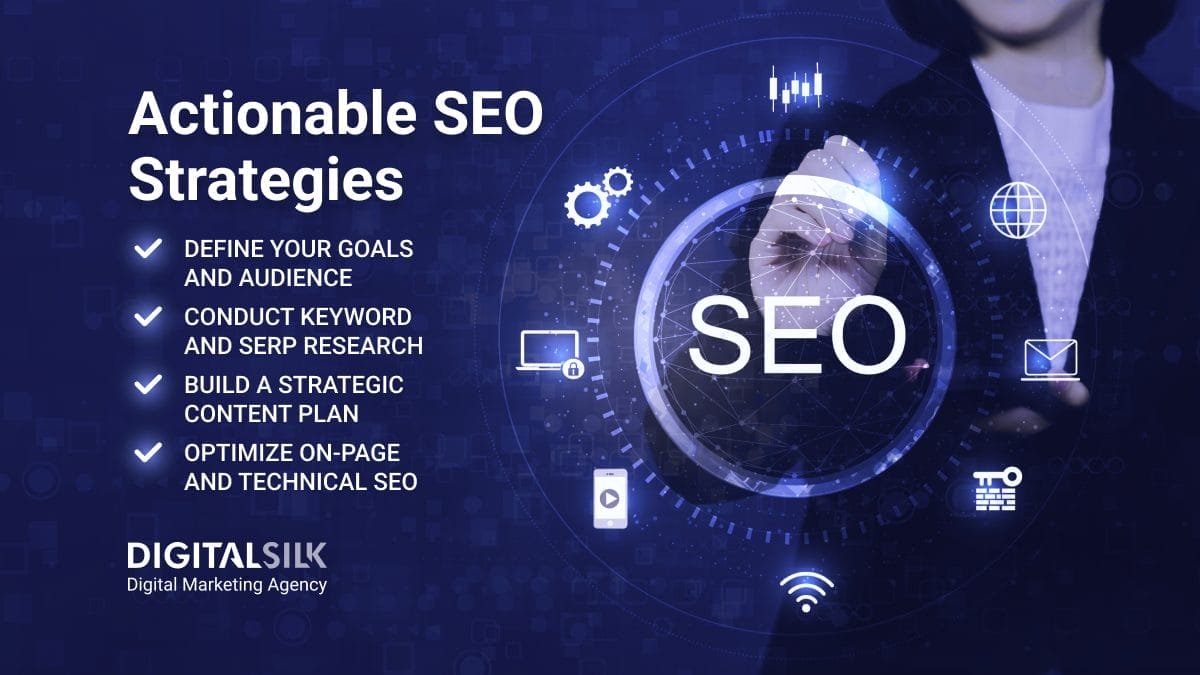
SEO strategies never lack for large websites. The trick lies in developing a replicable process on complex websites. An enterprise SEO firm assists such organizations in doing so by integrating technical SEO, content, internal linking, keyword analysis, and metrics.
Scalability in SEO is not the same as making all web pages follow the same optimization technique. It is all about developing a process which the teams can implement systematically as the size of the website increases. According to Google, SEO assists search engines in understanding the content of the page and enables the user to access the relevant pages via search.
Why Enterprise SEO Needs a Different Approach
Enterprise websites will have multiple categories for products, different regions, different languages, different platforms, and content producers.
This is a potential risk since changing templates can impact tens of thousands of URLs; migration can be poorly done and take away good search signals; poor internal linking can put crucial pages at a few clicks away from being discovered.
The first thing that an enterprise SEO agency does is learn about the existing systems before giving any recommendations for improvements.
1. Start With a Clear SEO Baseline
Scalability starts with a proper understanding of the website.
The baseline includes aspects such as traffic, ranking, indexation, site structure, interlinking, content, performance, and backlinks.
Such an assessment is useful to set priorities on issues based on impact and effort required to resolve them.
2. Build a Website Structure That Can Grow
Website architecture becomes increasingly important as a website grows. Search engines need clear paths to discover important pages, while visitors need an easy way to navigate the site.
Organizations can use enterprise SEO agency services to organize topics into categories, subcategories, and supporting content based on search intent.
Internal linking also becomes more difficult as an organization grows. Different teams may manage different sections of the website, leading to slower and less consistent link updates.
3. Create Scalable Keyword and Content Systems
Keyword research on a big website cannot be based on spreadsheets alone. It needs to be a system that recognizes search demand for keywords among products, demographics, geographics, and purchase cycle stages.
The strategy requires that keywords be classified according to intention and be assigned to the correct page type. It prevents other pages from competing against each other on the same keyword and provides clarity in content production.
Google advises creation of user-friendly content that helps users and uses the same language the users would use to search for information. It means that search intent is better basis for content creation than keywords.
4. Make Technical SEO Repeatable
The importance of technical SEO grows with the increasing number of URLs. A small error in one template can turn into a big problem since the template generates hundreds of pages.
Possible categories are:
- Crawl and indexing
- XML sitemap
- Canonical URL
- Page speed
- JavaScript rendering
- Structured data
- Faceted navigation
- Duplicate content
Google’s documentation on crawls and indexing provides information about how websites can deal with sitemaps, crawl management, canonicalization, and faceted navigation.
It is better to find the source of the problem instead of dealing with separate URLs all the time. One improvement in the template can save a lot of time.
5. Align SEO With Business Goals
Traffic does not equate to the success of SEO. Businesses require metrics that link the organic visibility of their company to the results that are important.
Such metrics may include leads generated, revenue, subscriptions for products, demos generated, and strategic category visibility.
| Approach | Focus | Scalability | Best use |
| Page-by-page SEO | Individual pages | Low | Small websites |
| Template-led SEO | Page groups and systems | High | Large websites |
| Enterprise SEO strategy | Systems, teams, content, and goals | Very high | Complex organizations |
The above comparison highlights the importance of systems in enterprise SEO that relate enhancements to business goals.
6. Create Clear Ownership and Workflows
SEO is commonly an area that involves marketing, content, products, engineers, design, analytics, and regions. Without defined ownership of responsibilities, solid recommendations may not always be implemented.
The enterprise SEO agency is able to define responsibilities for each task, processes of requests between departments, and integration of SEO needs into existing processes.
SEO verification will become a part of launches, content briefs, development tasks, and migration strategy. Such an approach decreases dependence on certain employees and allows SEO to evolve within a growing organization.
7. Measure, Learn, and Iterate
Scalable approaches should adapt to changing trends in search behavior, competition, products, and websites. Reporting should address such issues as: what pages have become visible; what pages have lost traffic; what content is valuable for the business.
Enterprise SEO best practices by Semrush also include continuous review, team coordination, scalability of the process, and SEO consistency when dealing with large websites.
Google Search Console offers reports that enable owners of websites and SEO specialists to better understand search results. The combination of Google Search Console with analytics offers more understanding of organic growth.
Where to Begin
Pose the following three questions:
- What sections of the website are most responsible for the development of business?
- What technical or content issues affect the work of these sections?
- What changes can be repeated by teams?
The enterprise SEO strategy will work best if it is integrated into the usual workflow. The process-oriented approach, planned content, internal linking, accountability, and measurement make SEO more manageable.
The objective is not to optimize everything. The objective is to create a system in which optimization becomes easier to perform and measure.
FAQs
1. What is an enterprise SEO agency?
Enterprise SEO firms help major companies enhance their search engine optimization efforts on their expansive websites. The job of an enterprise SEO agency may include various aspects of SEO such as technical SEO, content marketing, etc.
2. Why does enterprise SEO need a scalable strategy?
Large sites have thousands or even millions of URLs, many people involved, and complex technology. Scalability helps to create a process that is replicable, and thus allows for changes without having to do it page by page manually.
3. How long does an enterprise SEO strategy take to show results?
There is no set timeline. While some technological advancements might bring about changes quite fast, other tasks like content creation and authority building might take more time. As per Google, the changes could take a few hours to a few months to show up in the results, hence patience should be exercised.
4. What should an enterprise SEO strategy measure?
Some useful KPIs include organic traffic, rankings, indexed pages, conversions, qualified leads, sales, and visibility for strategic topics. KPIs need to correspond to business objectives and organic search’s place in the consumer decision-making process.
Sources
Google Search Central, SEO Starter Guide —
https://developers.google.com/search/docs/fundamentals/seo-starter-guide
Google Search Central, Crawling and Indexing —
https://developers.google.com/search/docs/crawling-indexing/overview
Ahrefs, Enterprise SEO Strategies For Maximum Growth —
https://ahrefs.com/blog/enterprie-seo/
Semrush, Enterprise SEO Guidance —
https://www.semrush.com/blog/enterprise-seo/