
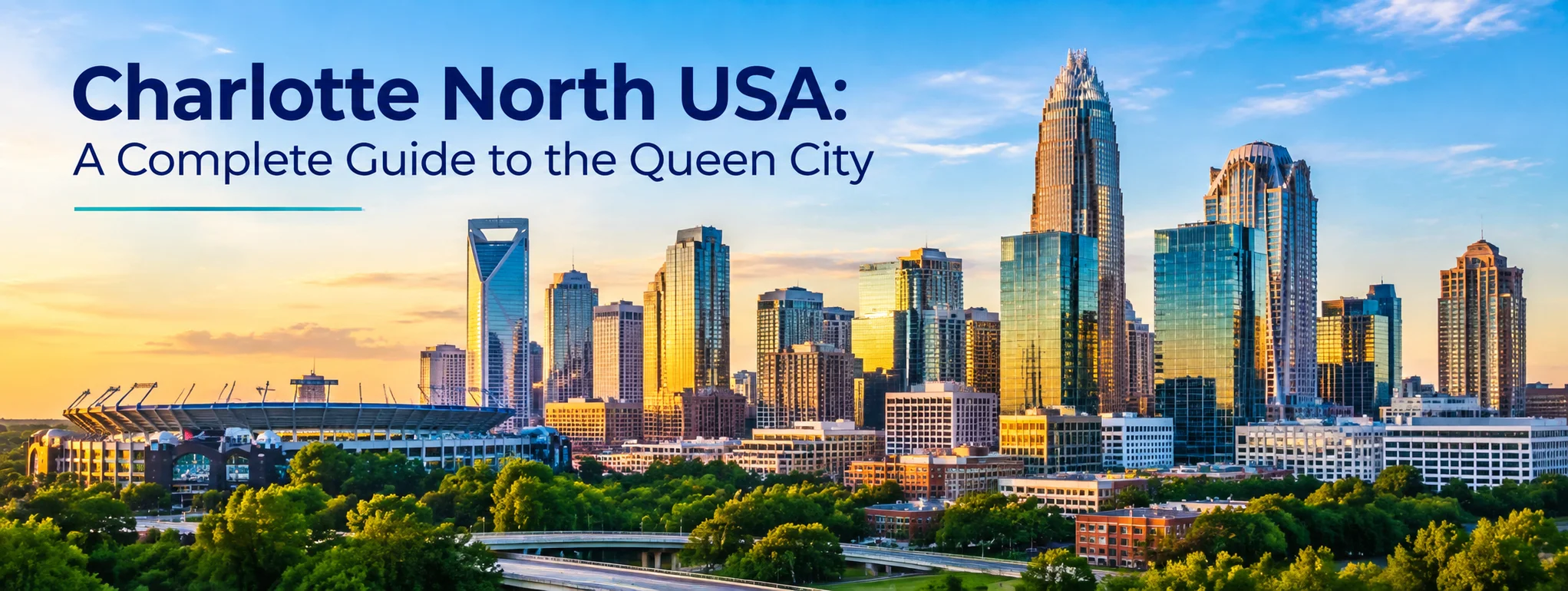
Charlotte, North Carolina, is one of the fastest-growing major cities in the United States and the largest city in North Carolina. Often called the “Queen City,” Charlotte combines a strong business environment, lively neighborhoods, professional sports, cultural attractions, outdoor recreation, and Southern hospitality. The city has grown considerably in recent years, with the U.S. Census Bureau estimating its population at about 964,784 in July 2025.
Whether you are considering a visit, planning a move, looking for business opportunities, or simply learning more about the city, Charlotte offers a diverse experience that goes well beyond its reputation as a banking center.
Where Is Charlotte Located?
Charlotte is located in the south-central part of North Carolina, close to the South Carolina border. Its location makes it an important transportation and commercial center for the wider Carolinas region.
Charlotte also benefits from Charlotte Douglas International Airport, which provides extensive domestic and international connections. The city government reports that the airport served 53.6 million passengers in 2025 and offers numerous nonstop destinations.
This connectivity makes Charlotte convenient for business travelers, tourists, students, and people relocating to the region.
Charlotte’s Economy and Job Market
Charlotte has developed into a major economic center with a diversified economy. Banking and financial services remain especially important, but the city’s economy also includes technology, healthcare, retail, manufacturing, education, transportation, and professional services.
The city is home to major corporate headquarters, including Bank of America, Lowe’s, and Duke Energy. Charlotte’s Economic Development Department also focuses on attracting businesses, supporting entrepreneurs, developing talent, and encouraging investment.
The city’s growing population has helped create additional demand for housing, restaurants, retail businesses, entertainment, transportation, and professional services.
Popular Areas and Neighborhoods
Charlotte has many neighborhoods with different personalities, making it possible for visitors and residents to find an area that matches their lifestyle.
Uptown is the city’s central business and entertainment district. It contains office towers, restaurants, museums, sports venues, hotels, and cultural attractions.
South End is known for restaurants, breweries, apartments, shops, and its connection to the light-rail system. It has become particularly popular with young professionals and people looking for an active urban lifestyle.
NoDa, short for North Davidson, has an artistic atmosphere with galleries, live music, murals, restaurants, and independent businesses. Plaza Midwood is another popular area known for its distinctive local businesses, dining options, and relaxed community atmosphere.
Things to Do in Charlotte
Charlotte provides activities for different interests. Sports fans can visit professional sports venues and experience the city’s strong connection to football, basketball, soccer, and motorsports.
The NASCAR Hall of Fame is one of the city’s best-known attractions. It offers interactive exhibits and explores the history and personalities behind NASCAR.
For outdoor enthusiasts, the U.S. National Whitewater Center provides opportunities for rafting, hiking, ziplining, and other recreational activities. Visitors can also explore parks, greenways, gardens, and natural areas around the city.
Art and culture are also important parts of Charlotte. The Mint Museum and Bechtler Museum of Modern Art provide opportunities to explore different forms of visual art and cultural collections.
Charlotte at a Glance
| Feature | Charlotte, North Carolina |
|---|---|
| Nickname | Queen City |
| State | North Carolina |
| Estimated population | 964,784 (2025) |
| Major industries | Finance, healthcare, technology, retail, education |
| Major airport | Charlotte Douglas International Airport |
| Popular attractions | NASCAR Hall of Fame, U.S. National Whitewater Center, museums |
| Notable areas | Uptown, South End, NoDa, Plaza Midwood |
| Main sports presence | Football, basketball, soccer, motorsports |
Population and demographic figures are based on U.S. Census Bureau estimates.
Living in Charlotte
Charlotte attracts people who want access to employment opportunities while still having plenty of recreational and cultural options. The city has a relatively young and growing population, and its neighborhoods range from dense urban areas to quieter residential communities.
The Census Bureau reports that Charlotte’s population increased by approximately 10.3% between the 2020 census base and July 2025. It also reports a median household income of $82,068 for 2020–2024 and an average commute time of about 24.7 minutes.
Housing costs and traffic can vary significantly depending on the neighborhood. People considering a move should compare housing prices, commute times, schools, public transportation, and access to everyday services before choosing an area.
Food, Entertainment, and Culture
Charlotte’s food scene has expanded alongside its population. Visitors can find Southern-inspired dishes, barbecue, international cuisine, modern restaurants, cafes, breweries, and casual dining throughout the city.
Entertainment is another major attraction. Uptown hosts major sports events, concerts, performances, and festivals, while neighborhoods such as NoDa and South End provide smaller venues and local events.
The combination of established institutions and newer businesses gives Charlotte a balance between traditional Southern character and modern urban culture.
Transportation in Charlotte
Driving remains an important part of everyday life in Charlotte, but the city also has public transportation options. The light-rail system connects several important areas, including Uptown and South End.
Charlotte Douglas International Airport is another major transportation advantage, particularly for people who travel frequently for work or leisure. The city’s location also provides convenient road connections to other parts of North Carolina and nearby states.
Why Charlotte Continues to Grow
Charlotte’s growth is supported by several factors, including employment opportunities, corporate investment, transportation connections, new development, and population growth.
Its combination of financial strength, business diversity, recreational opportunities, and expanding neighborhoods has made it attractive to both companies and individuals. The city continues to invest in economic development, infrastructure, community planning, and small-business support.
5 Short FAQs
1. Is Charlotte in North Carolina?
Yes. Charlotte is the largest city in North Carolina.
2. Why is Charlotte called the Queen City?
The name honors Charlotte of Mecklenburg-Strelitz, the queen consort of King George III.
3. What is Charlotte known for?
Charlotte is known for finance, professional sports, NASCAR, business growth, restaurants, and outdoor recreation.
4. Is Charlotte a good place to visit?
Yes. It offers museums, sports, restaurants, entertainment, neighborhoods, and outdoor attractions.
5. Does Charlotte have an international airport?
Yes. Charlotte Douglas International Airport provides extensive domestic and international air service.
Final Thoughts
Charlotte, North USA, has developed into a dynamic city where business, culture, sports, and outdoor recreation come together. Its growing population and diverse economy continue to shape new neighborhoods, businesses, attractions, and opportunities.
For travelers, Charlotte offers plenty to explore, from museums and sports venues to restaurants and outdoor adventures. For people considering relocation, its employment opportunities, transportation network, and variety of communities make it an interesting city to consider. With continued investment and growth, Charlotte is likely to remain an important destination in the southeastern United States for years to come.