
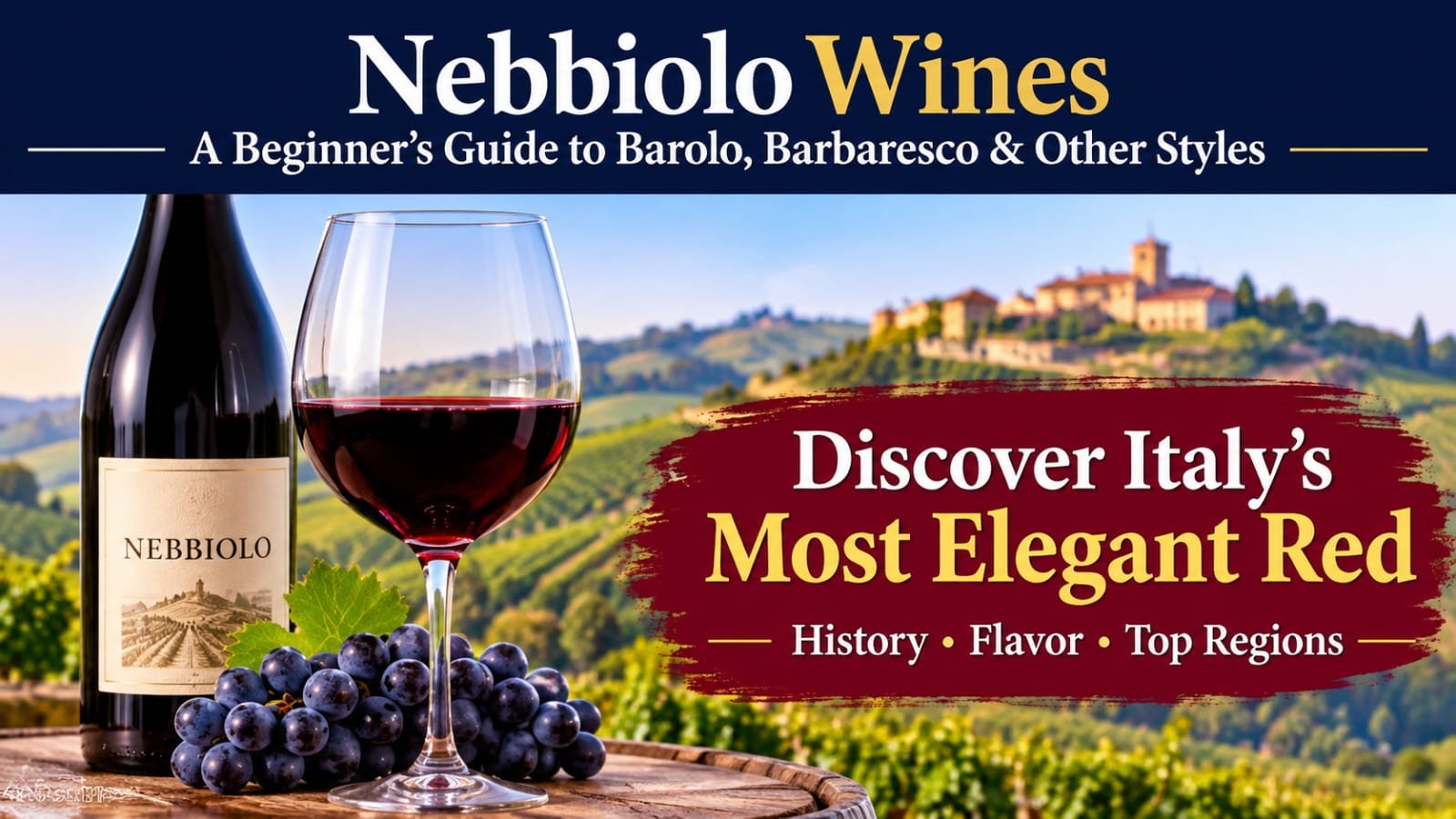
Nebbiolo is one of Italy’s most fascinating red wine grapes, famous for producing elegant wines with powerful aromas, firm tannins, and remarkable aging potential. Native to the Piedmont region of northwestern Italy, this grape is responsible for some of the country’s most celebrated wines, including Barolo and Barbaresco.
For beginners, Nebbiolo wines can seem a little mysterious. Their light-to-medium color may suggest a delicate wine, but the first sip often reveals impressive structure, bright acidity, and complex flavors of cherries, roses, herbs, and earthy spices.
Whether you are exploring Italian wine for the first time or looking to understand the differences between Barolo, Barbaresco, Langhe Nebbiolo, and other styles, this guide covers the essentials. You will learn about the grape’s characteristics, major wine regions, food pairings, serving tips, and what makes each style distinctive.
What Makes Nebbiolo Wines Special?
Nebbiolo is a red grape variety traditionally associated with Piedmont, Italy. Its name is often connected to the Italian word nebbia, meaning fog, which is common in the region during the autumn harvest season.
The grape is known for its relatively pale color, high acidity, and substantial tannins. These characteristics create wines that can feel structured and powerful even when their appearance is not particularly dark.
Nebbiolo also reflects its growing environment. Differences in vineyard location, soil, climate, and winemaking techniques can produce noticeably different styles.
Key Characteristics of Nebbiolo
Nebbiolo wines commonly display several recognizable features:
- Color: Typically pale ruby when young, developing garnet and orange tones with age.
- Aroma: Often includes roses, cherries, red berries, dried herbs, and floral notes.
- Taste: Red fruit flavors combined with earthy, spicy, and sometimes mineral characteristics.
- Acidity: Generally high, providing freshness and structure.
- Tannins: Often firm and noticeable, especially in traditional Barolo and Barbaresco.
- Aging potential: Many premium examples can develop complexity over many years.
These qualities make Nebbiolo different from fuller, darker red wines such as Cabernet Sauvignon or Syrah.
Barolo: The Powerful and Elegant Classic
<AsyncImage query=”Barolo red wine glass bottle vineyards Langhe Piedmont Italy” aspectRatio=”16:9″ width=”100%”/>
Barolo is among the most famous wines made entirely from Nebbiolo. It comes from a designated area in the Langhe hills of Piedmont and is often described as a powerful, structured, and age-worthy wine.
Barolo must be made from 100% Nebbiolo grapes. Its production rules also require extended aging before release.
Flavor Profile of Barolo
Young Barolo commonly shows aromas and flavors such as:
- Cherry and raspberry
- Rose petals and violets
- Licorice and dried herbs
- Earth and tar-like notes
- Baking spices and subtle oak
With bottle age, some examples develop more complex aromas of dried fruit, leather, tobacco, forest floor, and savory spices.
Traditional vs. Modern Barolo
Barolo producers use different winemaking approaches.
Traditional Barolo often involves longer maceration and extended aging in large oak vessels. These wines can have pronounced tannins and require patience to develop.
Modern styles may use shorter maceration periods and smaller oak barrels. Depending on the producer, these wines can offer a more approachable texture when younger.
Neither approach is automatically better. The choice depends on personal preference and the character of the individual wine.
Barbaresco: A Refined Expression of Nebbiolo
<AsyncImage query=”Barbaresco vineyards Piedmont Italy village wine landscape” aspectRatio=”16:9″ width=”100%”/>
Barbaresco is another celebrated Nebbiolo wine from Piedmont. It comes from a smaller production area near the town of Barbaresco and shares many characteristics with Barolo.
However, Barbaresco is often described as more approachable in its youth, with elegant fruit, floral aromas, and refined tannins. This is a general style description rather than a strict rule, since individual producers and vineyard sites can create powerful, long-lived wines.
Common Barbaresco Flavors
Barbaresco frequently displays:
- Red cherry and raspberry
- Rose and violet aromas
- Dried herbs
- Licorice
- Earthy and mineral notes
- Gentle spice
Its structure makes it suitable for food pairing, particularly with roasted meats, mushrooms, and dishes featuring herbs.
Barolo vs. Barbaresco
Both wines are made from Nebbiolo, but they differ in production requirements and typical regional expression.
| Feature | Barolo | Barbaresco |
| Main grape | 100% Nebbiolo | 100% Nebbiolo |
| Region | Langhe, Piedmont | Langhe, Piedmont |
| Minimum aging before release | Generally 38 months | Generally 26 months |
| Minimum aging for Riserva | 62 months | 50 months |
| Typical character | Structured and powerful | Often elegant and refined |
| Common flavors | Cherry, rose, tar, herbs | Cherry, rose, spice, earth |
| Aging potential | Often excellent | Often excellent |
The aging periods shown are general DOCG requirements, including the required wood-aging period. Individual producers may age their wines longer.
Other Nebbiolo Wine Styles to Explore
Barolo and Barbaresco receive much of the attention, but they are not the only expressions of this grape. Several other regions and classifications offer interesting alternatives.
1. Langhe Nebbiolo
<AsyncImage query=”Langhe Nebbiolo red wine glass Piedmont vineyard” aspectRatio=”16:9″ width=”100%”/>
Langhe Nebbiolo is often an excellent starting point for beginners.
These wines are produced in the wider Langhe area and can be made with Nebbiolo under the relevant regional rules. They are generally designed for earlier enjoyment than premium Barolo and Barbaresco.
Expect fresh cherry, raspberry, floral aromas, and noticeable acidity. Tannins may be softer, although the style varies by producer.
Langhe Nebbiolo can provide a useful introduction to the grape without requiring the same investment or extended cellaring as some prestigious examples.
2. Roero Rosso
<AsyncImage query=”Roero Nebbiolo wine vineyards Piedmont Italy” aspectRatio=”16:9″ width=”100%”/>
Roero is another important wine area in Piedmont, located north of the Tanaro River.
Roero Rosso is made primarily from Nebbiolo and can offer an expressive combination of red fruit, flowers, spice, and earthy notes.
The region’s sandy soils are often associated with a different texture and expression compared with some Barolo and Barbaresco vineyards. Roero can be a rewarding option for people who want to explore more regional diversity.
3. Gattinara
<AsyncImage query=”Gattinara Nebbiolo wine vineyards northern Piedmont Italy” aspectRatio=”16:9″ width=”100%”/>
Gattinara comes from northern Piedmont and is made primarily from Nebbiolo, locally known as Spanna.
The wines can display red fruit, floral aromas, mineral notes, and firm acidity. Some examples also have a distinctive earthy character.
Gattinara is worth exploring if you enjoy structured wines but want to discover a different expression of Nebbiolo outside the Langhe.
4. Ghemme
<AsyncImage query=”Ghemme wine vineyards northern Piedmont Italy” aspectRatio=”16:9″ width=”100%”/>
Ghemme is another northern Piedmont appellation where Nebbiolo plays the leading role, often blended with permitted local varieties.
These wines can offer elegant red fruit, earthy flavors, floral aromas, and noticeable acidity. Their style may be less immediately familiar than Barolo, making them interesting for wine enthusiasts who enjoy exploring regional differences.
5. Valtellina Nebbiolo
<AsyncImage query=”Valtellina Nebbiolo Chiavennasca terraced vineyards Lombardy Italy” aspectRatio=”16:9″ width=”100%”/>
Outside Piedmont, Nebbiolo is especially important in Valtellina, Lombardy, where it is locally called Chiavennasca.
The vineyards are located on steep Alpine slopes, creating a distinctive growing environment.
Valtellina wines can show bright red fruit, floral aromas, herbs, and fresh acidity. They often have an elegant profile that makes them particularly interesting alongside regional Alpine cuisine.
How to Taste Nebbiolo Wines
Nebbiolo rewards careful tasting because its aromas and structure can change as the wine opens.
Step 1: Observe the Color
Pour a small amount into a clear wine glass. Notice its ruby, garnet, or brick-like color.
Nebbiolo often appears lighter than people expect from a structured red wine. Older bottles may develop more orange or brown tones around the rim.
Step 2: Explore the Aromas
Swirl the wine gently and smell it.
Look for red cherries, raspberries, roses, violets, herbs, licorice, and earthy notes. Older examples may reveal leather, tobacco, dried flowers, and more complex savory aromas.
Step 3: Taste the Structure
Take a small sip and pay attention to the acidity and tannins.
Nebbiolo’s acidity often creates a refreshing sensation, while its tannins can make the mouth feel slightly dry. Notice how the fruit, acidity, and structure work together.
Step 4: Allow the Wine to Open
Some Nebbiolo wines benefit from time in the glass or decanting. Younger Barolo and Barbaresco, in particular, may become more expressive after exposure to air.
However, decanting is not necessary for every bottle. Older wines can be more delicate, so handle them carefully.
Best Food Pairings for Nebbiolo Wines
Nebbiolo’s acidity and tannins make it a natural partner for flavorful foods, particularly dishes with rich textures and savory ingredients.
Braised Beef
Slow-braised beef with herbs and vegetables pairs beautifully with structured Nebbiolo. The wine’s acidity helps balance the richness of the meat, while its tannins complement the savory flavors.
Mushroom Risotto
Mushroom risotto is a classic pairing idea for Nebbiolo. Earthy mushrooms, creamy rice, Parmesan, and herbs work well with the wine’s floral and savory character.
Truffle Pasta
Pasta with butter, Parmesan, and fresh truffles can create an elegant combination. The earthy aromas of truffles complement the complex flavors often found in aged Nebbiolo.
Roasted Lamb
Roasted lamb seasoned with rosemary, garlic, and black pepper can pair well with Barolo or Barbaresco. The meat’s savory character provides a good match for the wine’s structure.
Aged Cheese
Aged cheeses such as Parmesan and well-matured hard cheeses can complement Nebbiolo’s acidity and tannins. Serve moderate portions with bread, nuts, or dried fruit.
Serving and Storing Nebbiolo
Serving temperature and storage conditions can influence how Nebbiolo tastes.
Recommended Serving Temperature
A general serving range is approximately 16–18°C (60–64°F). Slightly cooler temperatures can help preserve freshness and prevent the alcohol from becoming too noticeable.
Avoid serving the wine excessively warm, particularly in a heated room.
Choosing the Right Glass
A large-bowled red wine glass allows aromas to develop and provides enough space for swirling.
For young, structured Barolo and Barbaresco, a generously sized glass can help make the wine’s aromas easier to appreciate.
Decanting
Younger Nebbiolo wines may benefit from decanting for approximately 30–90 minutes, depending on their structure and age.
Older bottles require more care. If sediment is present, gentle decanting can separate it from the wine, but extended exposure to air may reduce delicate aromas.
Storage Tips
Store unopened bottles in a cool, dark location with stable temperatures. Avoid direct sunlight, heat, and frequent temperature changes.
For bottles intended for longer aging, a temperature-controlled wine storage environment is preferable.
Beginner Tips for Exploring Nebbiolo
If you are new to this grape, start with approachable examples before moving toward more complex wines.
- Begin with Langhe Nebbiolo: It can introduce the grape’s fruit, floral character, and tannins in an approachable style.
- Compare Barolo and Barbaresco: Tasting them side by side can help you understand their similarities and differences.
- Explore northern Piedmont: Try Gattinara, Ghemme, and other regional expressions to discover different styles.
- Pair with food: Rich, savory dishes can make Nebbiolo’s acidity and tannins feel more balanced.
- Give the wine time: Allow structured examples to open in the glass and avoid judging them from the first sip.
Final Thoughts
Nebbiolo wines offer an exciting introduction to the diversity of Italian red wine. From the powerful structure of Barolo to the refined character of Barbaresco, this grape produces wines with distinctive aromas, bright acidity, firm tannins, and impressive complexity.
Beginners can start with Langhe Nebbiolo before exploring Roero, Gattinara, Ghemme, and Valtellina. Each region provides a different perspective on the grape and its relationship with local soils, climate, and winemaking traditions.
With the right food pairing, serving temperature, and a little patience, Nebbiolo can become one of the most rewarding wine styles to explore.
Frequently Asked Questions
1. Is Nebbiolo a Light or Full-Bodied Wine?
Nebbiolo often has a pale color and a medium-bodied feel, but its high acidity and firm tannins create a powerful structure. Barolo and Barbaresco can feel particularly concentrated and age-worthy.
2. What Is the Difference Between Barolo and Barbaresco?
Both are made from 100% Nebbiolo in Piedmont. Barolo generally has longer minimum aging requirements and is often described as more powerful, while Barbaresco is frequently considered more approachable and elegant.
3. Is Nebbiolo Good for Beginners?
Yes. Langhe Nebbiolo can be a good starting point because it often offers fresh fruit, floral aromas, and a less demanding structure than some premium aged examples.
4. What Food Goes Best With Nebbiolo?
Braised beef, roasted lamb, mushroom risotto, truffle pasta, and aged cheese are excellent choices. Their savory flavors complement Nebbiolo’s acidity, tannins, and earthy aromas.
5. Can Nebbiolo Wines Be Aged?
Yes. Many Barolo and Barbaresco wines have excellent aging potential. Depending on the producer, vintage, and storage conditions, premium bottles can develop complexity over many years.