
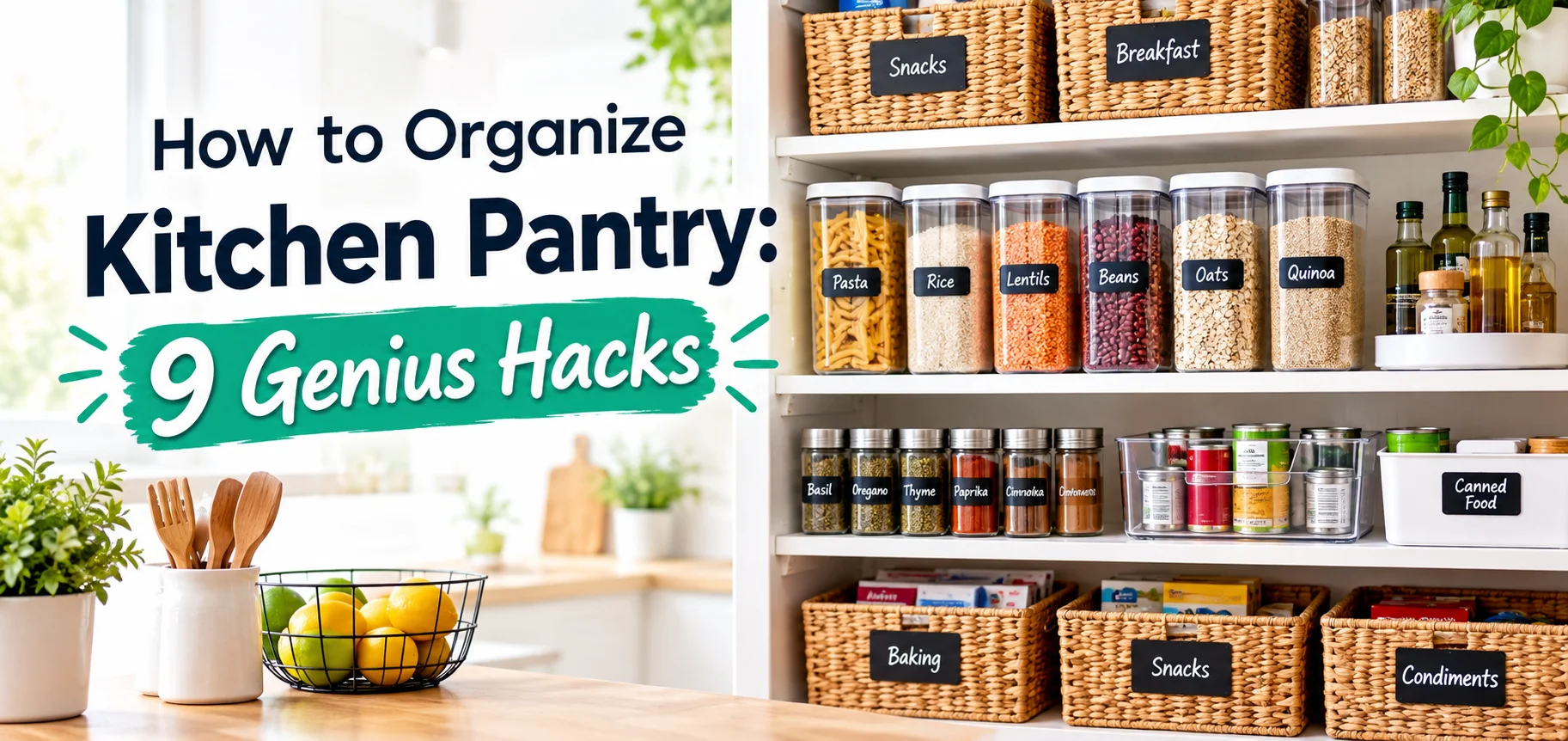
A cluttered kitchen pantry can make everyday cooking feel stressful, especially when ingredients disappear behind cans, snack bags, and half-empty packages. Learning How to Organize Kitchen Pantry spaces can transform your kitchen into a clean, practical, and beautiful area where everything has a proper place. With a few clever storage solutions, simple organizing habits, and affordable containers, you can create a pantry that saves time, reduces food waste, and makes meal preparation easier.
You do not need an expensive renovation or a large walk-in pantry to achieve impressive results. Even a small cabinet or narrow kitchen shelf can become an efficient storage space when arranged thoughtfully. The secret is to combine smart organization with easy-to-maintain systems.
In this guide, you will discover nine genius pantry organization hacks, practical storage ideas, and simple techniques that help keep your kitchen organized for the long term.
Why Learning How to Organize Kitchen Pantry Matters
Your pantry plays an important role in your daily kitchen routine. When ingredients are scattered across different shelves, you may purchase duplicate products, forget expiration dates, or waste valuable storage space.
A well-organized pantry offers several advantages:
-
Saves cooking time: Find ingredients quickly without searching through multiple containers.
-
Reduces food waste: Keep older products visible and use them before opening new packages.
-
Maximizes storage: Make better use of vertical space, corners, and deep shelves.
-
Improves cleanliness: Reduce crumbs, spills, and forgotten food packages.
-
Creates a peaceful kitchen: Enjoy a visually appealing space that feels easier to manage.
The best pantry organization system is not necessarily the most expensive one. It is the one that matches your cooking habits, available space, and household needs.
9 Genius Hacks for How to Organize Kitchen Pantry

1. Empty Your Pantry and Start With a Fresh Space
Before purchasing containers or rearranging shelves, remove everything from your pantry. This simple step allows you to understand exactly what you own and how much storage space is available.
Place all products on a clean counter or table. Check expiration dates, inspect packaging, and separate items that are no longer usable.
Create three groups:
-
Keep: Products that are fresh, useful, and regularly consumed.
-
Donate: Unopened, shelf-stable food that you will not use and is suitable for donation.
-
Discard: Expired, spoiled, damaged, or contaminated products.
After sorting, wipe shelves with a mild cleaning solution and allow them to dry completely.
This fresh start prevents unnecessary purchases and gives you a clear picture of your pantry’s actual storage requirements.
2. Create Zones for Different Food Categories
One of the most effective ways to organize a kitchen pantry is to divide it into functional zones. Instead of placing products wherever space is available, assign a specific area to each category.
For example, keep breakfast foods together, baking ingredients in another section, and everyday cooking essentials near eye level.
A practical pantry zoning system may look like this:
|
Pantry Zone |
Items to Store |
Best Placement |
|---|---|---|
|
Breakfast |
Cereal, oats, coffee, tea |
Eye-level shelves |
|
Baking |
Flour, sugar, baking powder |
Middle shelves |
|
Cooking essentials |
Rice, pasta, spices, oil |
Easy-to-reach shelves |
|
Snacks |
Chips, biscuits, nuts |
Lower accessible shelves |
|
Bulk storage |
Extra flour, rice, canned goods |
Bottom shelves |
|
Occasional items |
Seasonal ingredients, specialty foods |
Upper shelves |
Clearly defined zones make it easier for everyone in the household to return products to their correct location.
3. Use Clear Airtight Containers for Dry Goods

Original packaging often creates unnecessary clutter. Open bags of rice, flour, sugar, pasta, and cereal can become difficult to stack and may spill when handled.
Transfer suitable dry ingredients into airtight containers with secure lids. Transparent containers allow you to see the contents and estimate when supplies are running low.
Choose containers based on the quantity you regularly purchase rather than buying a large matching set without measuring your shelves.
Look for:
-
Airtight lids that protect food from moisture and pests.
-
Stackable shapes that use shelf space efficiently.
-
Wide openings for convenient scooping.
-
Food-safe materials suitable for the intended ingredients.
-
Easy-to-clean designs.
Keep original product information, including expiration dates and cooking instructions, accessible when transferring food. You can write the product name and date opened on each container.
4. Install Shelf Risers to Double Your Storage Potential
Deep pantry shelves often contain wasted vertical space. Small jars, canned foods, and spice containers may occupy only the bottom portion of a shelf, leaving unused room above them.
Shelf risers provide an additional level for organizing products without requiring a complete renovation.

Use risers for:
-
Canned vegetables and soups.
-
Small jars and condiment bottles.
-
Tea boxes and coffee supplies.
-
Spices and seasoning containers.
For deep shelves, place taller products toward the back and shorter items in front. This arrangement improves visibility and reduces the chance of forgotten ingredients.
Before purchasing a riser, measure the shelf width, depth, and vertical clearance to ensure it fits comfortably.
5. Add Pull-Out Bins for Deep Pantry Shelves
Deep pantry shelves can become frustrating when products disappear behind larger packages. Pull-out bins solve this problem by allowing you to bring stored items forward instead of reaching blindly into the back.

Choose bins according to the products you store. Small baskets work well for seasoning packets, snack bars, and baking supplies, while larger bins can hold packaged foods.
A useful arrangement includes:
-
One bin for breakfast snacks.
-
One for cooking packets and seasoning mixes.
-
One for pasta and noodle varieties.
-
One for packaged treats.
-
One for backup pantry supplies.
Add simple labels to each bin so family members can identify the correct category immediately.
Avoid overfilling baskets. When containers become too heavy or crowded, they are harder to pull out and maintain.
6. Make the Most of Vertical and Door Storage
When your pantry has limited shelf space, look beyond the shelves themselves. The inside of a pantry door can provide valuable additional storage for lightweight products.

Over-the-door racks, narrow hanging organizers, and mounted holders can store items such as:
-
Small spice jars.
-
Seasoning packets.
-
Lightweight kitchen wraps.
-
Measuring spoons.
-
Small packaged snacks.
You can also use vertical dividers to separate baking trays, cutting boards, or flat packages where appropriate.
Before installing a door organizer, check the door’s weight capacity, hinge strength, and clearance. Make sure stored items do not prevent the door from closing properly.
This clever technique is particularly useful for apartments, compact kitchens, and homes without a dedicated walk-in pantry.
7. Organize Spices With a Simple Labeling System
Spices are among the easiest pantry items to misplace. Similar-looking jars can make it difficult to identify ingredients quickly, especially when labels face different directions.

Use a tiered spice rack, drawer insert, or small rotating organizer to keep seasonings visible.
For a consistent look, place labels on the front or top of every container. Include the spice name and, where useful, the purchase or opening date.
Group spices according to how you cook:
-
Everyday seasonings such as salt, pepper, and garlic powder.
-
Baking spices such as cinnamon and nutmeg.
-
International seasonings such as cumin, turmeric, and paprika.
-
Specialty herbs and less frequently used blends.
Store spices away from heat, moisture, and direct sunlight to help preserve their quality.
8. Create a Dedicated Snack Station
A dedicated snack station is a practical solution for busy families. Instead of allowing snack packets to spread throughout the pantry, keep them in one accessible location.

Use small baskets or transparent bins to separate snacks by type. Keep frequently selected options at a convenient height and place heavier bulk packages on lower shelves.
For households with children, choose a safe shelf they can reach without climbing or pulling heavy containers.
You can also create a weekly snack basket and refill it during grocery unpacking. This prevents excessive searching and makes daily routines more manageable.
The goal is not simply to make snacks look attractive. It is to create a system that stays organized even during busy mornings.
9. Follow the First-In, First-Out Pantry Method
Even a beautifully organized pantry can become messy when older products are pushed behind new purchases.
The first-in, first-out method helps prevent forgotten ingredients and unnecessary food waste.
When bringing home groceries, place newer products behind older items of the same type. Move existing packages toward the front so they are used first.

Follow these simple habits:
-
Check existing supplies before shopping.
-
Place newly purchased products behind older ones.
-
Keep expiration dates visible whenever possible.
-
Review opened packages regularly.
-
Plan meals around ingredients that need to be used soon.
For foods transferred into containers, write the product name and relevant date on a removable label. Follow the package’s storage instructions and discard anything showing signs of spoilage.
This small routine makes pantry management more efficient and helps protect your grocery budget.
Smart Pantry Organization Ideas for Small Kitchens

A small pantry does not have to feel cramped. The right arrangement can make even a narrow cabinet surprisingly functional.
Use Adjustable Shelving
Adjustable shelves allow you to customize the distance between levels. Keep tall cereal containers or oil bottles on shelves with extra clearance and use tighter spacing for cans and small jars.
Choose Square or Rectangular Containers
Square containers generally make better use of shelf space than many round alternatives. Their flat sides sit close together, reducing unused gaps.
Store Heavy Items Below
Place bulk rice, large cans, and heavy containers on lower shelves. Keep frequently used ingredients within easy reach and avoid placing heavy objects overhead.
Keep Countertop Storage Minimal
Store only the products you use regularly on the counter. Moving extra packages into designated pantry zones creates a cleaner and more spacious kitchen.
Common Pantry Organization Mistakes to Avoid
Even with the best intentions, a few common mistakes can make pantry organization difficult to maintain.
-
Buying containers before measuring the shelves.
-
Storing food in unclean or damp containers.
-
Using too many categories for a small pantry.
-
Hiding expiration dates after transferring ingredients.
-
Overfilling shelves and baskets.
-
Placing heavy items on high shelves.
-
Organizing for appearance rather than daily convenience.
A successful pantry should be attractive, but functionality must always come first. Choose a system that makes sense for your household instead of copying a complicated design that requires constant maintenance.
How to Maintain an Organized Kitchen Pantry
Once your pantry is organized, a small amount of regular maintenance will keep it looking fresh and useful.
Weekly Maintenance
Spend five minutes returning misplaced items, wiping small spills, and checking whether frequently used products need replenishing.
Monthly Review
Inspect expiration dates, remove empty packages, clean containers, and reorganize any section that has become crowded.
Seasonal Refresh
Every few months, review bulk supplies, specialty ingredients, and products you rarely use. Adjust your storage zones as your cooking habits change.
A simple shopping list can also prevent duplicate purchases. Before visiting the grocery store, check your pantry and note which ingredients are genuinely running low.
Final Thoughts
Learning How to Organize Kitchen Pantry spaces does not require a major investment or complicated storage system. With nine practical hacks, including clear containers, functional zones, shelf risers, pull-out bins, and smart food rotation, you can turn a cluttered pantry into a clean and efficient kitchen essential.
Start with decluttering, organize products according to your daily routine, and choose storage solutions that fit your available space. Most importantly, build simple habits that make organization easy to maintain.
A well-organized pantry saves time, reduces waste, supports better meal planning, and makes everyday cooking feel more enjoyable. Start with one shelf today, and gradually transform your entire pantry into a space that works beautifully for you.
Frequently Asked Questions
1. What is the best way to organize a kitchen pantry?
Start by removing unnecessary items, grouping similar foods, assigning storage zones, and keeping frequently used products at eye level.
2. How can I organize a small pantry?
Use stackable containers, shelf risers, narrow baskets, and vertical storage to maximize available space without overcrowding shelves.
3. Are clear containers better for pantry organization?
Yes. Clear, food-safe airtight containers make ingredients easier to identify, help monitor supplies, and can reduce spills when used correctly.
4. How often should I clean my pantry?
Perform a quick weekly tidy-up and a more thorough cleaning and expiration-date review approximately once a month.
5. How do I keep my pantry organized for a long time?
Return products to their assigned zones, rotate older items forward, check supplies before shopping, and avoid purchasing unnecessary storage accessories.