
Chester has a unique mix of Roman, medieval and modern history that can be found in the compact city centre of this British city. Chester has some significant Roman ruins and its old streets and famous black-and-white buildings create a distinctive atmosphere in the city that is unmatched anywhere else in Britain.
Chester City Walls and Chester Rows are two of the best places to experience this history. The Walls enclose an area of about 2 miles around the historic centre and are of Roman origin but also Saxon, Norman and medieval in development.
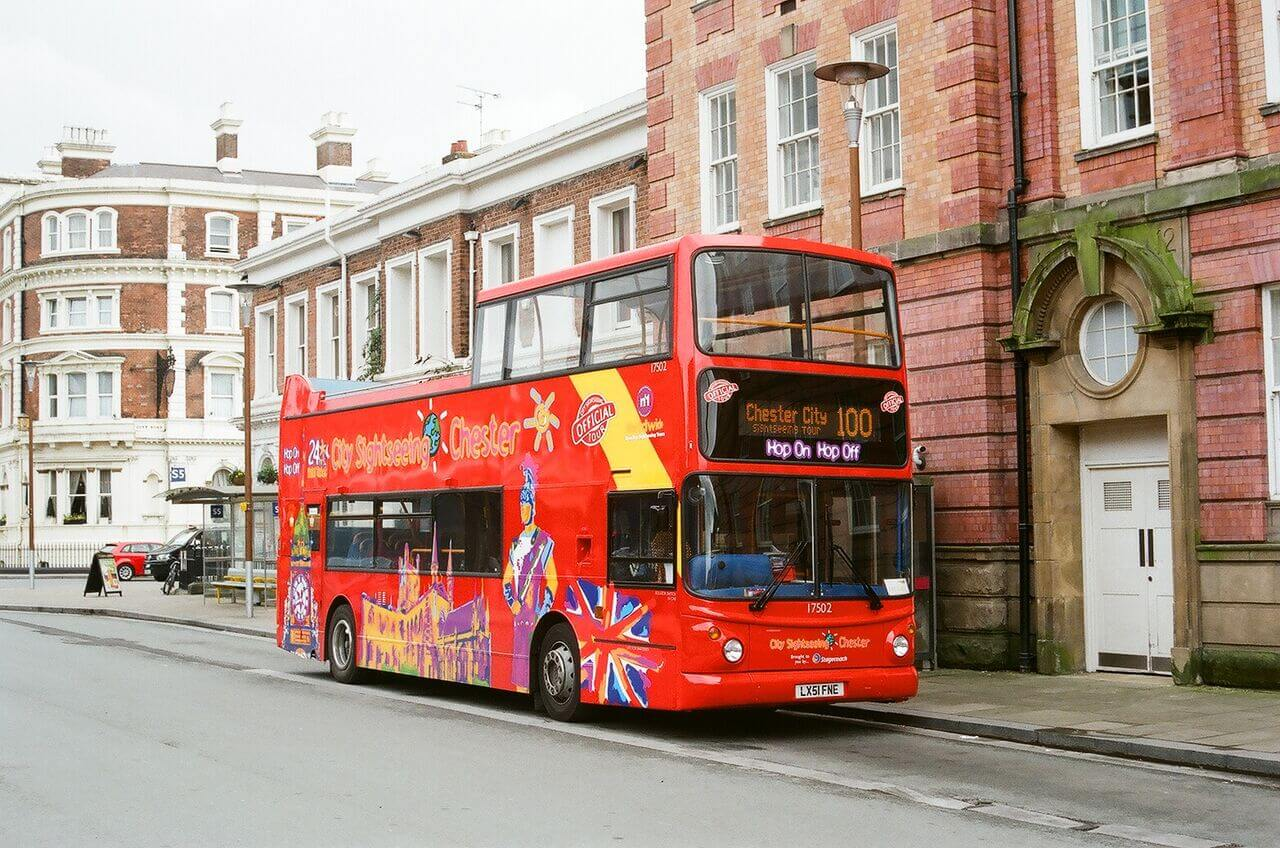
These historic sites can be accessed from other areas by a Chester Hop On Hop Off Bus which will visit the Roman Amphitheatre, Cathedral, Grosvenor Museum and River Dee. The best experience of the Walls and Rows is, however, by walking. The best way to do this is to take the Hop On Hop Off Bus Chester to get around the town and to and from the historic sites, then walk to explore.
It includes the best places to visit, walks around Chester, Roman and medieval history highlights, trip ideas and tips for making the most of the Roman and medieval history in Chester with the sightseeing bus.
Why Explore Chester’s Roman Heritage by Hop-On Hop-Off Bus?
When you don’t know a city’s best spots or need to know what to expect before you venture out, a Chester Hop On Hop Off Bus comes in handy. The open-top sightseeing tour offers an elevated view and commentary and links visitors to the main attractions of Chester. The Chester City Sightseeing service is currently running and the 2026 information states that the route planning includes the Roman Amphitheatre, Chester Cathedral, Grosvenor Museum and Chester Racecourse attractions.
Rather than walking from starting point to starting point each day, you could take an initial ride around the city and listen to the commentary and then choose the areas where you wish to spend more time. This is especially helpful for first time visitors.
If you are travelling to Chester with family, children, elderly visitors or are not keen on walking between attractions then the bus is also convenient.
The bus is the link, though: walking is the best option for experiencing Chester’s Walls and Rows.
The City Walls are worth walking around, the Rows are historic galleries, shops and streets that are best viewed up close. The sightseeing bus then is best used in conjunction, not in place of walking.
Chester’s Roman Walls & Rows at a Glance
| Attraction | Historical Period | Best Way to Explore |
| Chester City Walls | Roman & Medieval | Walking |
| Chester Rows | Medieval & Later | Walking |
| Roman Amphitheatre | Roman | Walking |
| Roman Gardens | Roman remains | Walking |
| Eastgate area | Medieval/Victorian | Walking |
| Chester Cathedral | Medieval | Walking |
| Grosvenor Museum | Roman–Modern | Walking/Bus |
Most of these attractions are concentrated around Chester’s historic core. That makes it practical to combine a sightseeing ride with a self-guided walking route.
The Walls can provide a broad perspective over the city, while the Rows reveal Chester’s unusual medieval commercial architecture at street level. The Roman Amphitheatre and Roman Gardens add another layer, allowing visitors to see physical evidence of Chester’s Roman past.
Best Hop-On Hop-Off Stops for Chester’s Roman & Medieval Sights
Choosing the right stop can make your sightseeing day much easier. The current Chester sightseeing route includes 12 stops, including St John’s Church/Vicar’s Lane, The Groves, Grosvenor Street, Lower Bridge Street and Chester Racecourse.
Roman Amphitheatre – Best for Roman Chester
For the Roman Amphitheatre and Roman Gardens, one of the most useful stops is St John’s Church, Vicar’s Lane. The Roman Amphitheatre is close to this area, while the Roman Gardens sit alongside the Walls.
The Amphitheatre is one of Chester’s most important Roman remains and provides a strong starting point for understanding the city’s role as a Roman military centre. From here, you can continue towards the Walls and historic centre on foot.
Lower Bridge Street – Best for Roman & Historic Chester
Lower Bridge Street is another useful stop for exploring historic Chester. It provides access to Bridge Street and the central historic area, including the Rows and the Deva Roman Experience.
The Deva Roman Experience is located on Pierpoint Lane, just off Bridge Street, and occupies a site within the original Roman fortress. Archaeological remains discovered beneath the attraction help visitors understand Chester’s Roman past.
Grosvenor Street – Best for Museum & History
The Grosvenor Street stop is useful for visitors interested in Chester’s wider history. It provides access to the Grosvenor Museum, where visitors can explore archaeological and local-history collections.
This is a good stop to add after walking the Walls and Rows if you want a more detailed historical perspective.
St Werburgh Street / Cathedral Area
For the Cathedral and central historic area, check the latest operating route and timetable before travelling, as stop names and routing can vary by service or operating period. The current sightseeing information confirms that Chester Cathedral is one of the principal attractions covered by the tour.
For a simple Roman-and-Rows itinerary, however, St John’s Church/Vicar’s Lane, Lower Bridge Street, Grosvenor Street and the central historic area are particularly useful points to remember.
Exploring Chester’s Roman Walls
A Brief History of the City Walls
Chester’s City Walls form a key characteristic of the city. The Walls are about two miles long and were originally built by the Romans about 2,000 years ago. They were later extended in the Saxon era and re-built and extended by the Normans in the 12th century.
They were more important during the medieval era when Chester was strategically important and heavily fortified.
Modernly, however, this defensive role has been eliminated, and the Walls are one of Chester’s most reveling strolls. Council says Chester is the only city in Britain with a full 400-year-old wall. No entry fee to walk the Walls, open year round (excluding access and maintenance restrictions).
The transformation from military defence to the public walkway is one of the many reasons why the Walls are interesting. This is not just an old landmark, it’s a building that’s been used, changed and changed again over the course of many centuries.
What Can You See Along the Walls?
Walking the Walls gives you a changing perspective of Chester.
Depending on the direction of your walk, you can see or approach:
- Eastgate Clock
- Chester Cathedral
- Roman Amphitheatre
- Roman Gardens
- River Dee
- Chester Racecourse
- Historic gates and towers
- Chester’s medieval and later architecture
The elevated sections also make it easier to understand how the historic city was organised inside its defensive boundaries.
The Eastgate Clock is particularly popular for photographs, while views towards the Cathedral and River Dee provide excellent reminders of how Roman, medieval and modern Chester overlap.
How Long Does the Walk Take?
Allow around 1.5 to 2 hours for a relaxed exploration of the Walls. You can complete the circuit more quickly if you walk continuously, but most visitors will want to stop for photographs, views and nearby attractions.
Remember that the Walls are not just a route between attractions. Take your time to look down into the historic streets, notice the changing architecture and appreciate the scale of Chester’s historic centre.
Chester Rows: The City’s Unique Medieval Shopping Streets
If the Roman Walls are Chester’s great historic walkway, the Chester Rows are its most unusual streetscape.
What Are Chester Rows?
The Rows are distinctive multi-level shopping galleries running through parts of Chester’s historic centre. Their origins are associated with the medieval city, and the structures seen today contain architectural features representing more than 800 years of development. The Rows are particularly recognisable because of their open galleries at first-floor level.
Unlike an ordinary shopping street, Chester Rows allow visitors to move between different levels. Shops and businesses can be found at street level and along the elevated galleries, while historic undercrofts add another architectural layer.
The Rows developed along Chester’s four principal streets:
- Eastgate Street
- Northgate Street
- Watergate Street
- Bridge Street
These streets were built around the foundations of the Roman fortress of Deva Victrix, creating a fascinating connection between Roman Chester and medieval Chester.
Eastgate Row
Eastgate Row is a natural place to begin exploring the central Rows. It is close to the famous Eastgate Clock and provides an excellent combination of historic architecture, shopping and photography.
Look beyond the modern businesses and pay attention to the upper levels, timber framing and galleries.
Bridge Street Row
Bridge Street Row is ideal for combining medieval architecture with Chester’s Roman story. Bridge Street follows the route of an important Roman road, and the area around Chester Cross was central to the Roman fortress.
The Deva Roman Experience is also located just off Bridge Street, making this a particularly useful area for visitors who want to connect Roman history with the Rows.
Watergate Row
Watergate Row offers another opportunity to appreciate Chester’s distinctive architecture while exploring shops and cafés. It is particularly enjoyable when you slow down rather than treating the Rows simply as a shopping area.
Northgate Row
Northgate Row completes the four main sections. It is another place to look closely at the combination of historic buildings, galleries and modern businesses.
What to Look For
As you explore the Rows, look for:
- Timber framing
- First-floor galleries
- Historic shopfronts
- Undercrofts
- Changes in architectural styles
- Medieval building fabric
- Modern businesses occupying historic spaces
The official Rows trail describes the area as a unique urban landscape and provides a route through the city’s historic four main streets.
Roman Chester vs Medieval Chester
One of the best things about exploring Chester is how easily you can move between different historical periods.
| Roman Chester | Medieval Chester |
| Roman Amphitheatre | Chester Rows |
| Deva Victrix | City Walls |
| Roman Gardens | Chester Cathedral |
| Roman remains | Medieval streets |
| Military fortress | Medieval commerce |
The Roman Amphitheatre demonstrates Chester’s military importance, while the Rows show how the city later developed as a centre of trade and commerce.
Even the Walls tell both stories. They began with Roman construction but were extended and rebuilt during Saxon, Norman and medieval periods.
This means you can experience nearly 2,000 years of history within a relatively compact area—often within a few minutes’ walk of one another.
A Walking Route from the Bus to the Roman Walls
Step 1: Hop Off at St John’s Church/Vicar’s Lane
Begin near St John’s Church, Vicar’s Lane, one of the useful stops for reaching Chester’s Roman attractions.
Walk towards the Roman Amphitheatre and spend time examining the remains before continuing to the nearby Roman Gardens.
Step 2: Walk Towards the City Walls
From the Roman area, make your way towards the City Walls. Join the walkway and begin heading towards the central historic area.
Look for changing views of Chester, including historic buildings, the Cathedral and the surrounding streets.
Step 3: Continue Towards Chester Cross
Follow the Walls towards the Eastgate area and Eastgate Clock. From there, descend into the historic centre and head towards Chester Cross.
This is a good point to begin exploring the Rows at street level.
Step 4: Explore the Rows
Walk through the main historic streets:
- Eastgate Street
- Bridge Street
- Watergate Street
- Northgate Street
Take time to explore the galleries and look for architectural details rather than simply walking from one shop to another.
Step 5: Rejoin the Sightseeing Bus
Once your walking exploration is complete, return to the most convenient current sightseeing stop. Check the day’s timetable before setting off so you know when the next bus is due.
A One-Day Chester Roman & Rows Itinerary
9:30 AM – Start the Bus Tour
Begin with a ride on the Hop On Hop Off Bus Chester. Use the first circuit to understand the city’s layout and hear the commentary.
10:00 AM – Roman Amphitheatre
Hop off around the St John’s Church/Vicar’s Lane area and explore the Roman Amphitheatre and Roman Gardens.
11:15 AM – Chester City Walls
Begin your walking exploration of the Walls. Allow plenty of time for photographs and views.
12:30 PM – Chester Cross
Move into the historic centre and begin exploring the Rows around Chester Cross.
1:00 PM – Lunch
Stop for lunch around the Rows or central Chester. This also gives you a chance to explore some of the shops and cafés.
2:00 PM – Continue Exploring the Rows
Walk through Eastgate, Bridge Street, Watergate and Northgate, taking time to examine the architecture.
3:30 PM – Grosvenor Museum
If you want more historical context, visit the Grosvenor Museum. Otherwise, use this time for additional sightseeing.
4:30 PM – Hop Back on the Bus
Rejoin the sightseeing route and continue exploring Chester from the open-top bus.
5:30 PM – River Dee / The Groves
Finish your day with a relaxed walk around the River Dee and The Groves. The sightseeing tour also provides a connection with the riverside area.
Other Historic Attractions to Add to Your Chester Bus Tour
Chester Cathedral
Chester Cathedral is an important addition for visitors interested in medieval architecture and religious history. Its position within the historic centre makes it easy to combine with the Rows.
Grosvenor Museum
The Grosvenor Museum is a useful stop for understanding Chester’s archaeology, Roman history and local development. It works particularly well after visiting the physical remains around the city.
Chester Castle
For military history, add Chester Castle and the surrounding Castle area to your sightseeing plans. Current Chester tour information highlights the Castle area among the historic attractions accessible from the route.
Roman Gardens
The Roman Gardens are an easy addition to a Roman-themed walking route and can be combined with the Amphitheatre and City Walls.
Chester Racecourse
Chester Racecourse, around the historic Roodee, adds another dimension to the city’s history. The sightseeing bus serves the Racecourse area, making it a convenient stop if you have extra time.
Best Photo Spots Along Chester’s Historic Route
Chester provides plenty of opportunities for historic photography.
Some of the best places to keep your camera ready include:
- Eastgate Clock – one of Chester’s most recognisable landmarks
- Chester City Walls – for elevated views across the historic centre
- Roman Amphitheatre – for Roman archaeological scenery
- Chester Rows – especially the galleries and timber-framed buildings
- Chester Cathedral – for medieval architecture
- River Dee – for relaxed riverside photographs
- Black-and-white historic buildings – ideal for capturing Chester’s distinctive character
The open-top bus offers a useful elevated perspective for photographing streets and buildings. However, walking is better for close-up details, particularly along the Rows and Walls.
Tips for Exploring Chester’s Walls & Rows
- Wear comfortable shoes. The Walls and historic streets involve plenty of walking.
- Start with the bus. An initial sightseeing ride helps you understand Chester’s layout.
- Explore the Walls on foot. The bus can connect you with the area, but the Walls themselves are a walking experience.
- Allow at least 1.5 hours for the Walls. More time is useful if you stop frequently for photographs.
- Do not rush through the Rows. Their architecture is as important as the shops inside them.
- Look above the shopfronts. The galleries, timber framing and upper floors reveal much of Chester’s character.
- Check the current bus timetable. Operating dates, frequencies and routing can change.
- Allow extra time for traffic. A sightseeing bus is convenient, but road conditions can affect journey times.
- Check attraction opening hours. Museums and paid attractions may operate different hours from the bus.
- Keep your ticket accessible. You may want to hop back on several times during the day.
The City Walls themselves are free to walk, but individual museums and attractions may have separate admission arrangements.
Can You See Chester’s Roman Walls and Rows in One Day?
Yes. Chester’s historic centre is compact enough to combine the Roman Amphitheatre, City Walls, Chester Rows, Cathedral and Grosvenor Museum during a well-planned day.
The key is not to spend the entire day sitting on the sightseeing bus. Instead, use the bus strategically.
A good formula is:
Bus → Hop Off → Walk → Explore → Hop Back On.
Start with a sightseeing circuit to understand the city, then hop off near the Roman attractions. Walk along the Walls, continue into the Rows and take a break for lunch. In the afternoon, you can visit a museum or Cathedral before returning to the bus.
With some planning, this approach lets you experience Chester from both perspectives: the panoramic view from an open-top bus and the close-up experience of walking through centuries-old streets.
Hop-On Hop-Off Bus vs Walking in Historic Chester
| Feature | Hop-On Hop-Off Bus | Walking |
| City overview | Excellent | Good |
| Roman Walls | Good access | Best |
| Chester Rows | Good access | Best |
| Commentary | Yes | No |
| Photography | Good | Excellent |
| Convenience | High | Moderate |
| Historic exploration | Good | Excellent |
The sightseeing bus is especially useful for connecting different parts of Chester and reducing unnecessary walking between attractions. Commentary can also provide useful background while you travel.
Walking, however, wins when it comes to detailed exploration. You can stop whenever you want, enter the Rows, examine architectural details and spend longer at the Roman remains.
Verdict
Use the bus to connect the attractions and walking to experience them properly.
Frequently Asked Questions
Can I see Chester’s Roman Walls from the Hop-On Hop-Off Bus?
The sightseeing route provides access to areas around Chester’s historic centre and attractions such as the Roman Amphitheatre and Racecourse. However, the best way to experience the City Walls is to hop off and walk them.
Which bus stop is best for Chester’s Roman Amphitheatre?
The current route includes St John’s Church, Vicar’s Lane, which is a useful stop for reaching the Roman Amphitheatre and nearby Roman Gardens. Always check the latest route information before travelling.
Which stop is best for Chester Rows?
Lower Bridge Street is particularly useful for reaching Bridge Street and the central historic area. From there, you can explore the Rows on foot.
How long does it take to walk Chester’s City Walls?
Allow approximately 1.5 to 2 hours for a relaxed exploration, although the exact time depends on your pace and how often you stop.
Are Chester’s City Walls free to visit?
Yes. Cheshire West and Chester Council states that there is no entry charge to walk the City Walls. They are open year-round, subject to access and maintenance conditions.
Where are Chester Rows located?
The Rows extend through sections of Chester’s four principal historic streets: Eastgate, Northgate, Watergate and Bridge Street.
Can I visit the Roman Gardens from the sightseeing bus?
Yes. The Roman Gardens are close to the Roman Amphitheatre and St John’s/Vicar’s Lane area, making them a practical addition to a Roman-focused walking route.
Can I hop off and get back on the Chester sightseeing bus?
Yes. The Chester sightseeing service operates as a hop-on hop-off tour, allowing visitors to leave the bus at stops, explore nearby attractions and continue later on the route. Check the current timetable and operating information for the day of your visit.
Can I see Chester’s Roman and medieval attractions in one day?
Yes. The Roman Amphitheatre, City Walls, Chester Rows, Cathedral and Grosvenor Museum can be combined into a full-day itinerary. The best approach is to combine sightseeing by bus with walking through the historic centre.
Conclusion
Chester is a city that allows you to experience Roman and Medieval History within a surprisingly small area. The Roman foundations are found in the remains of Deva Victrix (the City Walls), Roman Gardens and Roman Amphitheatre, and the Chester Rows, Cathedral and historic streets show the development of the city throughout the medieval period and beyond.
A Chester Hop On Hop Off Bus is available to help you get from point A to point B and explore more of Chester without using too much of your feet. The high vantage points and narration also provide first timers with a good introduction to Chester.
However, the best results are achieved when both methods are used together. Get off the bus close to the Roman sites, then stroll the city walls, enter the old town and wander the Chester Rows. Top it off with the Cathedral, museum or River Dee, depending on your interests.
For visitors searching for the best way to combine sightseeing and history, the Hop On Hop Off Bus Chester offers the ideal starting point—while Chester’s Walls and Rows provide the unforgettable walking experience.