
Cooking is often about balance. You need the right combination of flavors, textures, moisture, and structure to create a dish that holds together and tastes delicious. One ingredient category that quietly plays an important role in many recipes is the binder. But what is a binder in cooking, and why do so many recipes depend on it?
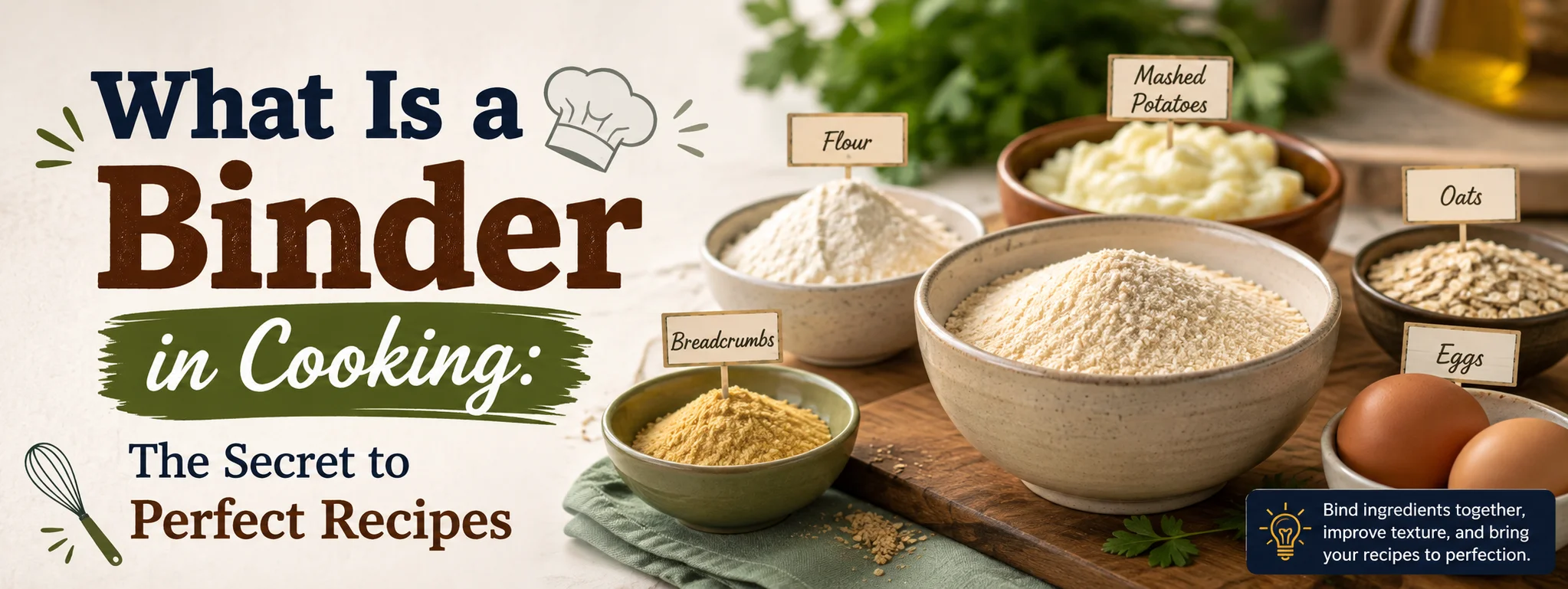
A binder is an ingredient that helps other ingredients stick together. It can improve the texture, prevent foods from falling apart, and give dishes a more cohesive consistency. From meatballs and veggie burgers to baked goods and sauces, binders are used in countless recipes.
What Is a Binder in Cooking?
A binder is an ingredient used to hold the components of a recipe together. It creates structure by connecting ingredients that might otherwise separate or crumble.
For example, when making meatballs, ground meat alone may not hold its shape perfectly. Adding breadcrumbs and eggs helps create a mixture that can be shaped into firm balls. Similarly, mashed potatoes can be combined with eggs or flour to help form patties that remain intact during cooking.
Binders are especially important in recipes where ingredients need to maintain their shape. They can also influence moisture, tenderness, crispness, and overall mouthfeel.
Why Are Binders Important?
The main purpose of a binder is to provide structure, but its benefits go beyond simply holding food together. Depending on the ingredient, a binder can:
- Keep ingredients from separating
- Improve texture and consistency
- Add moisture
- Help food maintain its shape
- Reduce crumbling
- Improve tenderness
- Help coatings stick to food
- Support the structure of baked goods
The right binder can make the difference between a recipe that works perfectly and one that falls apart.
Common Types of Binders
There are many different binders used in cooking. The best option depends on the type of dish, the desired texture, and dietary requirements.
Eggs
Eggs are among the most versatile natural binders. When heated, the proteins in eggs coagulate and create structure. This makes eggs useful in meatloaf, meatballs, casseroles, baked dishes, and many desserts.
Eggs can also help ingredients stick together before cooking. In breaded foods, beaten eggs are commonly used between the food and the breadcrumb coating.
Breadcrumbs
Breadcrumbs are another popular binder, particularly in savory recipes. They absorb moisture and help create a stable mixture.
They are frequently used in meatballs, meatloaf, croquettes, stuffing, and vegetable patties. Breadcrumbs can also contribute a pleasant texture to the finished dish.
Flour
Flour can act as a binder by absorbing liquid and creating structure. Wheat flour is especially important in baking because gluten can develop when flour is mixed with water.
Flour is also used to thicken sauces, soups, gravies, and fillings. In some recipes, it helps ingredients maintain their shape during cooking.
Cornstarch
Cornstarch is an effective binder and thickener, particularly for liquids. When heated with moisture, its starch molecules swell and create a thicker consistency.
It is commonly used in sauces, gravies, soups, puddings, and fruit fillings. Unlike wheat flour, cornstarch is naturally gluten-free, making it useful for many gluten-free recipes.
Gelatin
Gelatin is a protein-based binder that can create a firm or slightly springy texture. It is widely used in desserts such as jellies, panna cotta, marshmallow-style treats, and some chilled desserts.
It can also be used in savory recipes where a firm structure is desired.
Plant-Based and Vegan Binders
People following vegan diets have many alternatives to traditional egg-based binders. Several plant-based ingredients work remarkably well.
Chia Seeds and Flaxseeds
Ground flaxseed and chia seeds can absorb water and form a gel-like mixture. This makes them useful egg substitutes in certain baked goods and plant-based patties.
A mixture of ground flaxseed and water is often called a “flax egg.” It can help hold ingredients together while also adding fiber and nutrients.
Mashed Bananas
Mashed bananas can provide moisture and binding power in baked goods. They work particularly well in muffins, pancakes, quick breads, and cookies.
Because bananas have a naturally sweet flavor, they are best suited to recipes where their taste complements the other ingredients.
Applesauce
Applesauce can provide moisture and some binding ability in baking. It is commonly used as an egg substitute in selected recipes and can produce a soft, tender texture.
However, because applesauce adds moisture, the overall recipe may need adjustments to maintain the desired consistency.
Aquafaba
Aquafaba is the liquid found in cooked chickpeas and other legumes. It can act as a useful egg substitute in certain recipes because it can be whipped and can contribute to structure.
It is particularly popular in vegan baking and desserts.
How to Choose the Right Binder
Choosing a binder depends on what you are preparing. There is no single ingredient that works for every recipe.
For meatballs or meatloaf, eggs and breadcrumbs are common choices. For sauces, cornstarch or flour may be more appropriate. For vegan baking, flaxseed, chia seeds, applesauce, or aquafaba can provide useful alternatives.
You should also consider flavor. A banana may bind a mixture effectively, but its flavor would not be appropriate for every savory recipe.
Texture is another important factor. Some binders create firmness, while others provide softness or moisture. Using too much of a binder can make food dense, gummy, or overly dry.
How Much Binder Should You Use?
The amount of binder needed varies from recipe to recipe. Too little may result in food that falls apart, while too much can overpower the other ingredients or create an unpleasant texture.
When experimenting, add binders gradually. For mixtures such as patties or meatballs, you can test a small portion before cooking the entire batch.
If the mixture is too wet and difficult to shape, a little more breadcrumbs, flour, or another dry binder may help. If it is too dry and crumbly, additional moisture may be needed.
Binder Substitutions in Cooking
Knowing binder alternatives can save a recipe when you run out of an ingredient.
For example, an egg may sometimes be replaced with a flax egg, mashed banana, applesauce, or aquafaba, depending on the recipe. Breadcrumbs may be replaced with crushed crackers, oats, or certain gluten-free alternatives.
However, substitutions are not always one-to-one. Different binders absorb moisture differently and can change the final flavor or texture. It is best to consider the purpose of the original binder before choosing a replacement.
Common Mistakes When Using Binders
One of the biggest mistakes is using too much. A binder should support the recipe rather than dominate it.
Another mistake is failing to give the binder enough time to work. Ingredients such as chia seeds and flaxseed need time to absorb liquid and form their gel-like consistency.
It is also important to choose a binder that suits the cooking method. A binder that works beautifully in baking may not perform well in a high-heat frying application.
Final Thoughts
A binder may seem like a small part of a recipe, but it can have a major impact on the final result. Whether you are making meatballs, veggie burgers, baked goods, sauces, or desserts, the right binder helps ingredients work together and creates the desired structure and texture.
Eggs, breadcrumbs, flour, cornstarch, gelatin, chia seeds, flaxseed, applesauce, and aquafaba are just a few examples. Once you understand what each binder does, you can make better substitutions, troubleshoot recipes, and experiment more confidently in the kitchen.